
- Animated Videos
- Short slides with narrated text
- Interactive scenario exercises
- Real-life case examples
- Frequent knowledge checks / quizzes
- Final assessment / certificate generation

Learning Objectives
By the end of this course, learners will be able to:
- Define sexual harassment.
- Identify types of sexual and other forms of harassment.
- Differentiate between Hostile Work Environment and Quid Pro Quo harassment.
- Recognize what retaliation looks like and how to prevent it.
- Understand how to report sexual and other forms of harassment.
- List the available organizational and legal remedies.
Why Sexual Harassment Prevention Training for Employees in the US?
Reduces legal and financial risk under federal & state laws
Sexual harassment is considered unlawful discrimination under Title VII of the Civil Rights Act, the ADEA, and ADA. A failure to train and prevent harassment can lead to lawsuits, EEOC actions, compensation payouts, punitive damages, investigation costs, and reputational harm. Several states like California, Connecticut, Delaware, Maine, New York and others mandate training for workplaces.
Scenario-rich and relatable workplace simulations
The course includes practical examples such as hostile environment, quid pro quo, mutual relationships gone wrong, stereotyping, retaliation, bystander situations thereby helping employees identify misconduct in real life.
Empowers managers & teams to intervene as active bystanders
Staff learn how to recognize harassment, step in safely, support victims, and report issues even if they are not directly affected. This supports a workplace culture where employees look out for one another.
Enables early reporting & faster resolution of issues
Employees learn how, when, and where to report sexual harassment including internal reporting, managers/HR escalation, and federal/state complaint options (EEOC, DFEH, CHRO, etc.). Earlier reporting stops escalation and protects both the victim and the company.
Retaliation safeguards integrated into training
The course covers retaliation and why actions such as demotion, negative scheduling, or unfair treatment after a complaint are illegal. Employees gain clarity on rights and managers learn what actions are prohibited, reducing regulatory exposure.
Designed for policy alignment & customization
We can embed your company’s policies, complaint contacts, hotline details, culture-specific messaging, and tone for seamless fit into your workplace ecosystem.
Employee-friendly, accessible delivery
Interactive, self-paced, device-responsive format with knowledge checks, bite-sized lessons, and a final assessment that reinforces understanding.
Supports documentation for compliance audits
Completion tracking, certification, and reporting provide proof of reasonable action that is valuable for regulators, legal defense, and HR governance.
Focus on prevention, not just compliance
Moves beyond policy awareness to mindset change thus encouraging respect, empathy, boundaries, professionalism, and inclusive culture building.
Laws & Regulations Addressed in Sexual Harassment Prevention Training for Employees in the US
The course covers the U.S. federal legal framework on sexual harassment prevention, along with state-specific laws and complaint processes for California, Connecticut, Delaware, Maine, New York, Illinois, New Jersey, Washington, District of Columbia, Puerto Rico.
| Legislation / Concept | Relevance in the Course |
|---|---|
U.S.
| The course informs on the United States Equal Employment and Opportunity Commission that states harassment as a form of employment discrimination that violates
Thus, emphasizing the importance of robust training, supporting early reporting, and reducing risk liability. |
Course's Screenshots
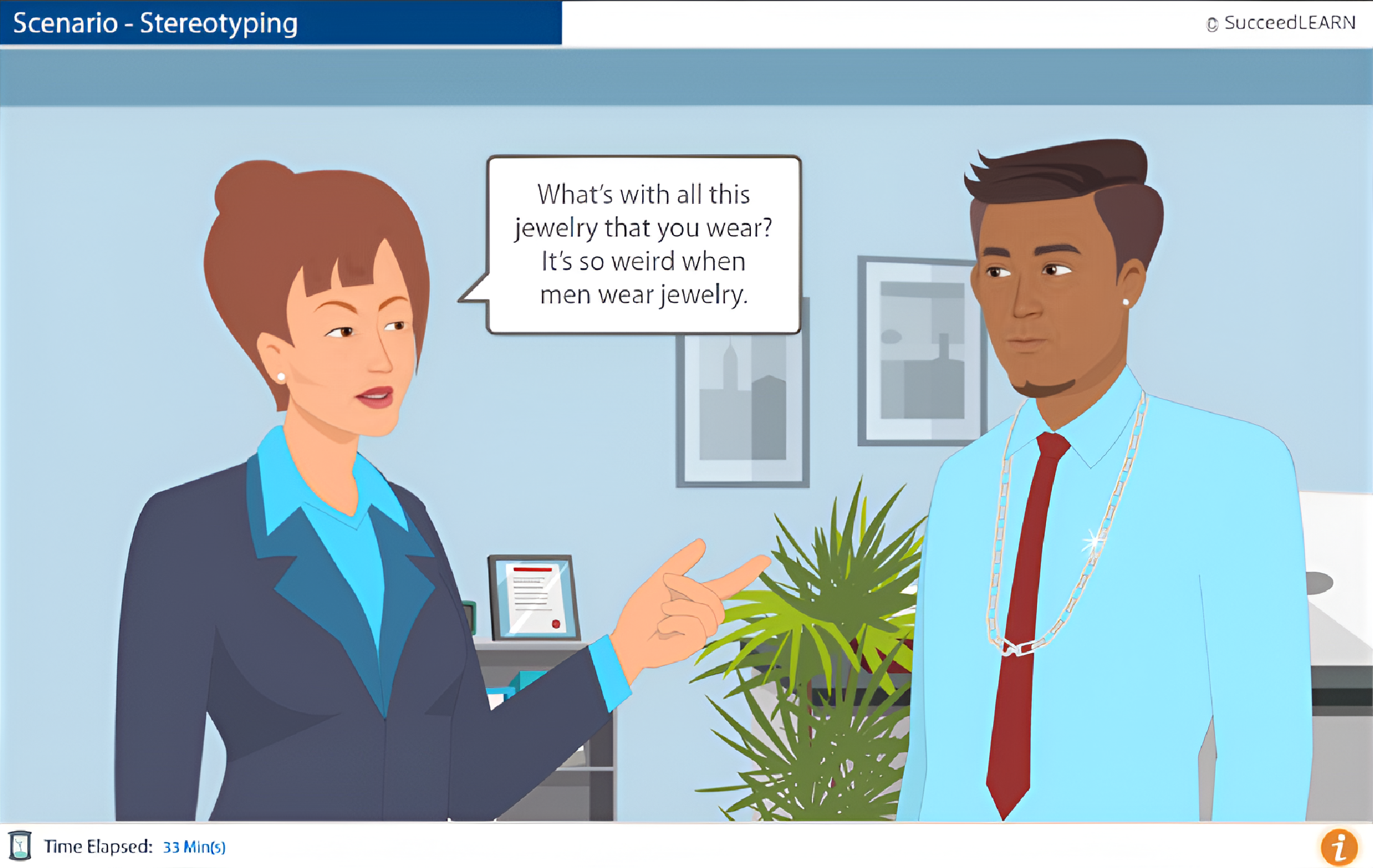
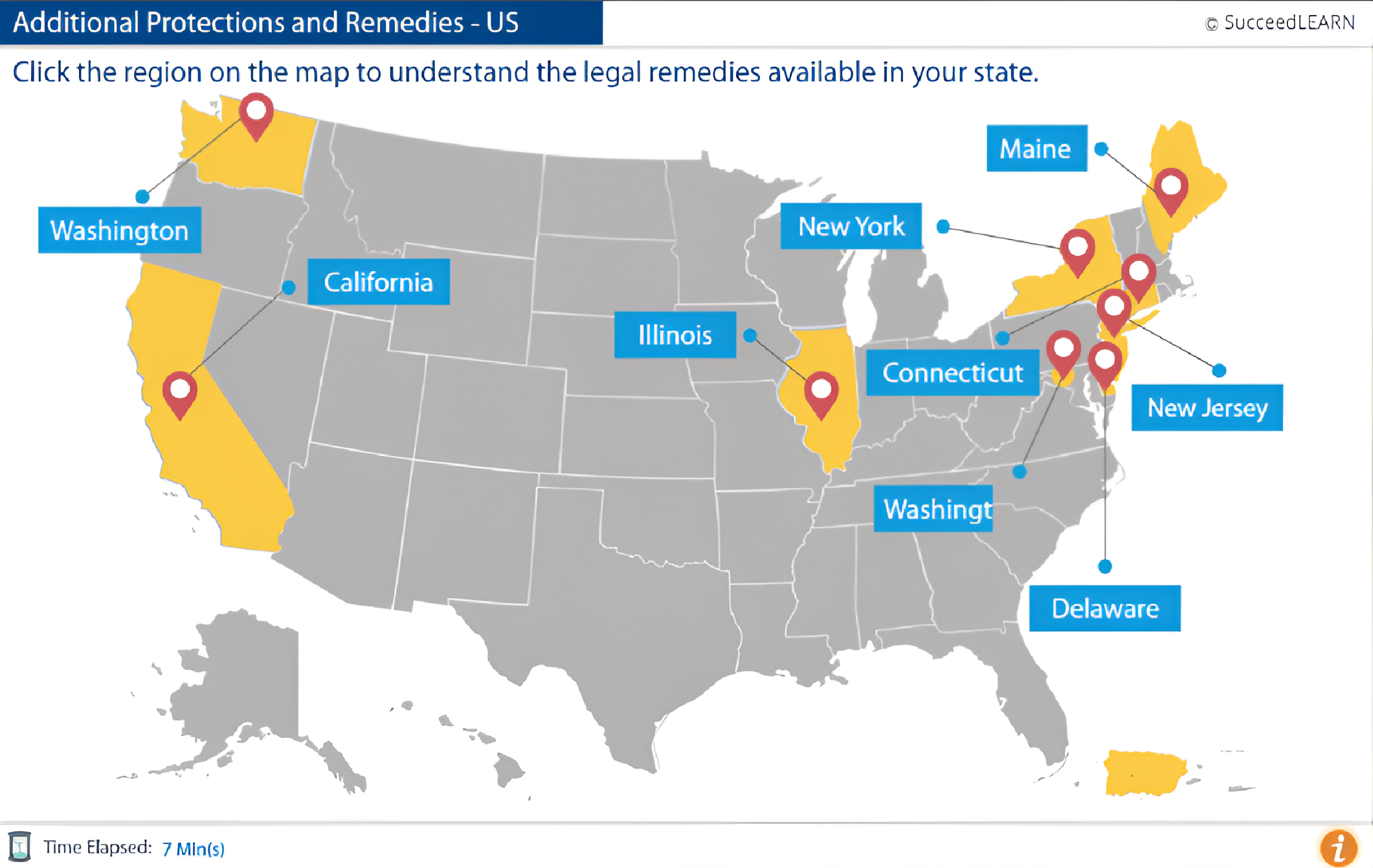
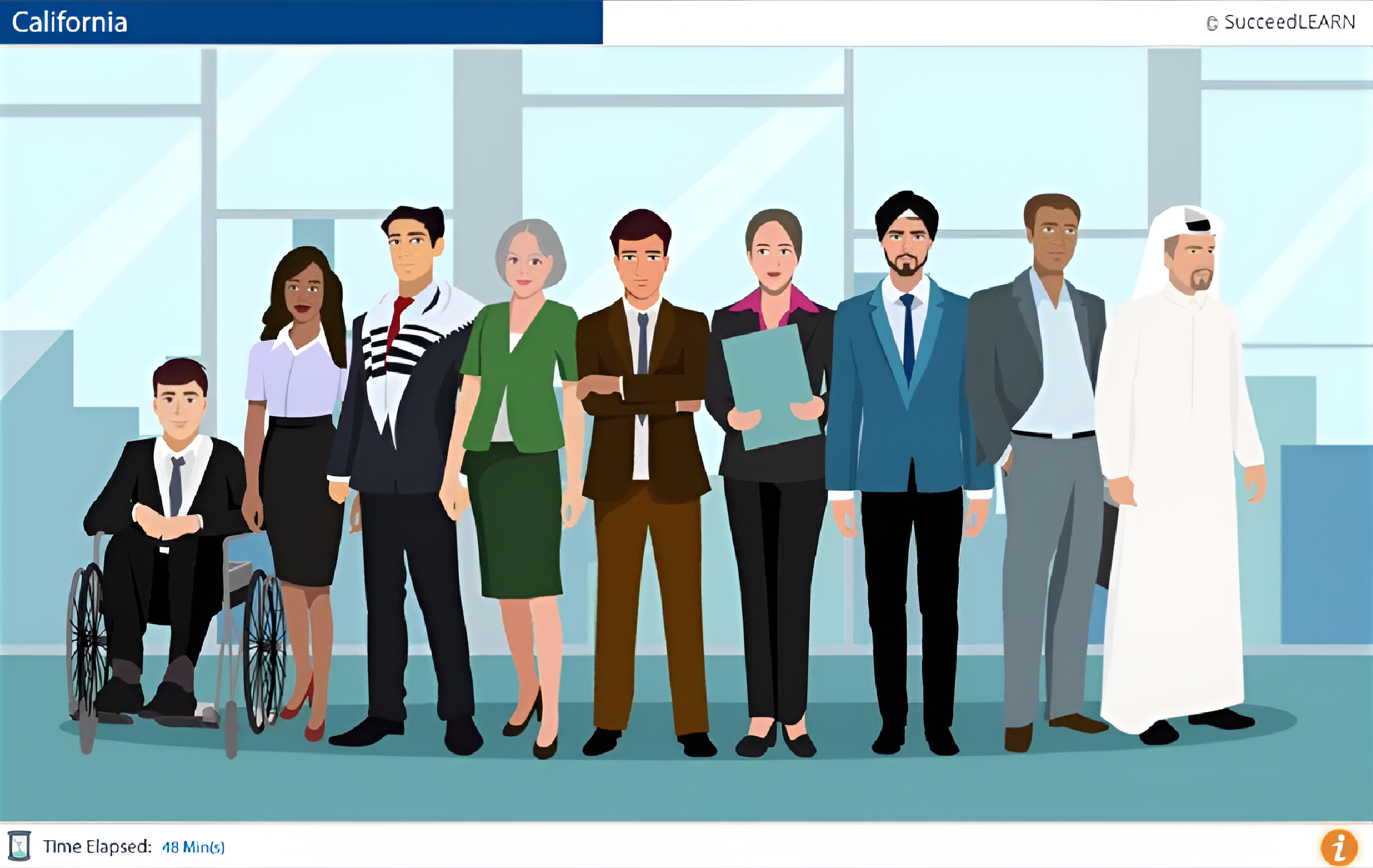
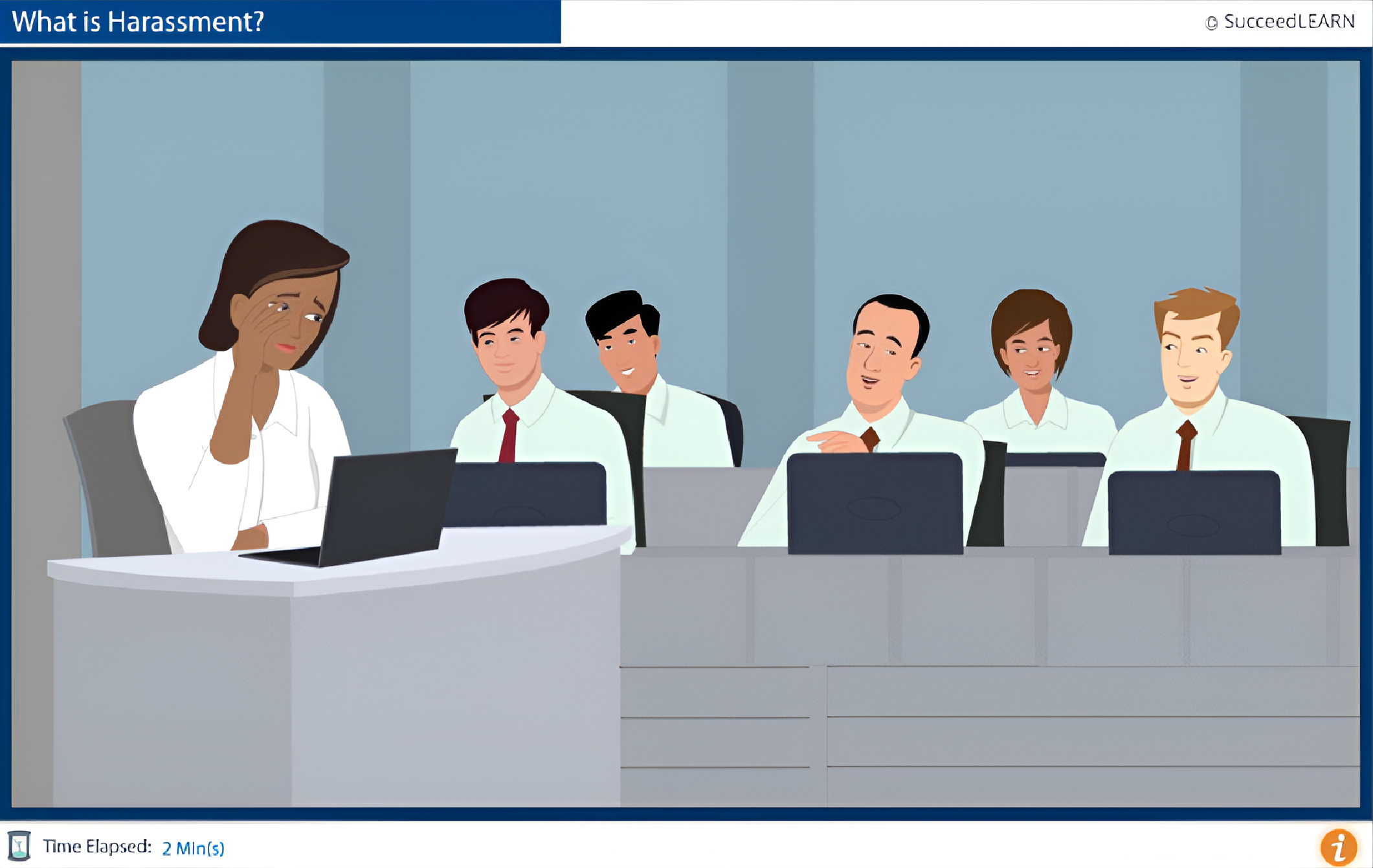

Course Structure
Learning elements
Format & accessibility
Fully responsive interface across desktop, tablet, and mobile -complete with a learner dashboard, progress tracking, automated reminder prompts, and seamless integration with your existing LMS or HR systems.
Target Audience
The Sexual Harassment Prevention Training for employees in the U.S is tailored for:
- Managers and supervisors
- Interns and non-employees providing services in the workplace (contractors, vendors, consultants)
- Staff working in any location related to company duties (office, remote, travel, events)
- Employees in states where training is mandated (e.g., Delaware, Washington and District of Columbia)
In short, for all employees across departments and levels.
Case Studies: Real Consequences of Non-Compliance
Sexual Harassment Prevention Training is mandatory in the states of Delaware, Washington (industry-specific) and District of Columbia (employers of tipped employees).
And the other states of the U.S. are required under legal obligation to train their employees on the prevention of sexual harassment than be faced with penalties and reputational harm.
Below are few cases where the companies faced severe backlash after having been charged with sexual harassment:
- The EEOC sued East Jordan Plastics (horticulture manufacturer) for allowing female workers to face ongoing sexual harassment and ignoring complaints. The company agreed to pay $460,000 and, under a three-year consent decree, must provide anti-harassment training to employees and supervisors, report annually on how complaints are handled, and post notices about employee rights. The decree explicitly treats training and complaint-handling as core remedial measures – signalling that regulators see robust training as a minimum expectation, not a “nice to have.”
- In 2024, Sunshine Raisin Corp. (also known as National Raisin) settled for a fine of US $2.0 million. The company faced a lawsuit by the U.S. Equal Employment Opportunity Commission (EEOC) over widespread sexual harassment of female farm-workers including groping, explicit comments, threats, and retaliation (termination) for reporting complaints. The settlement required the company to overhaul anti-harassment policies, improve reporting mechanisms, and conduct training.
Course Outline
What is harassment?
Scenario: An employee is at her first day of work at her new company. Her colleague, gets acquainted with her and is shocked to find that she is an atheist.
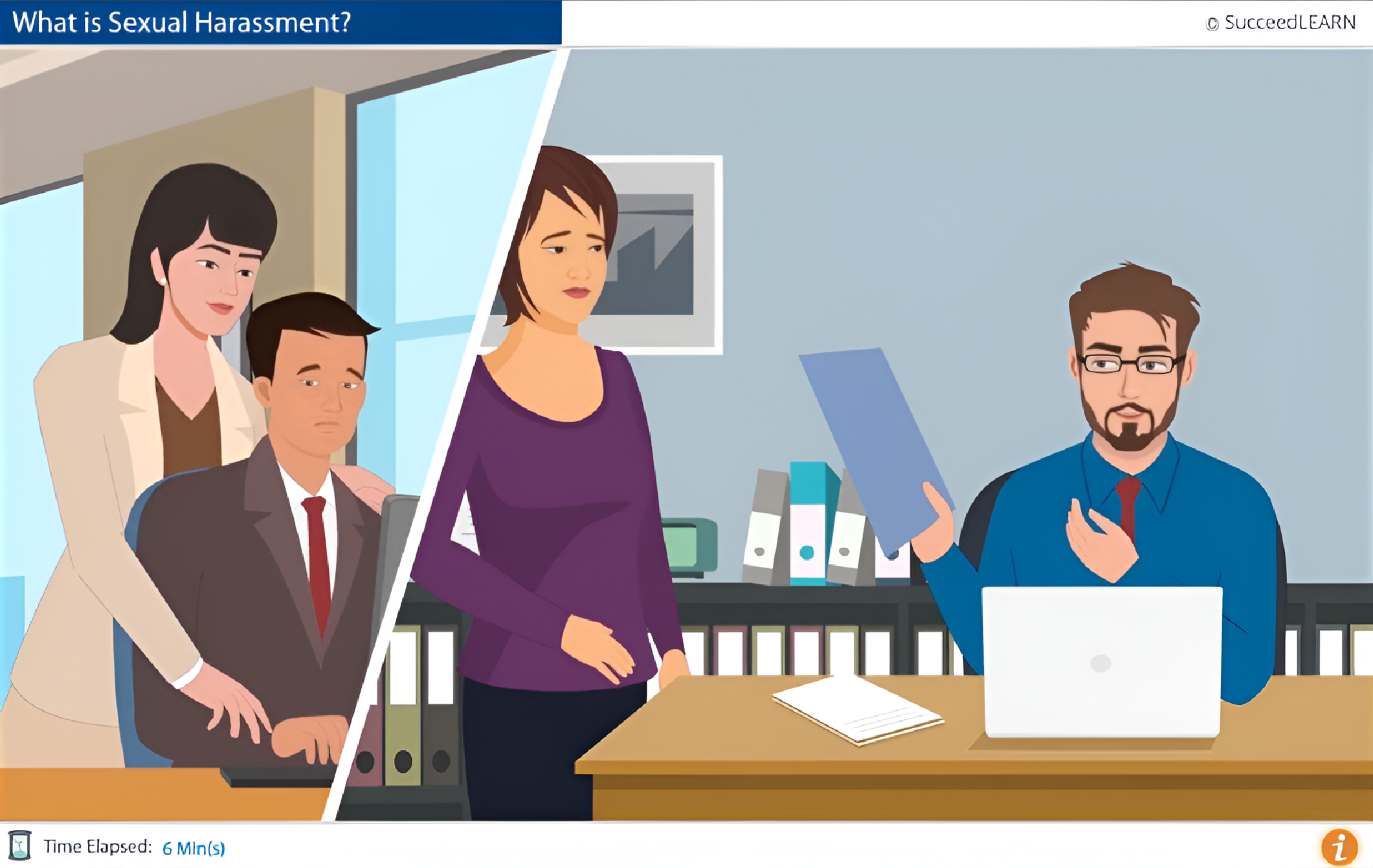
What is Sexual Harassment?
Two main types of sexual harassment:
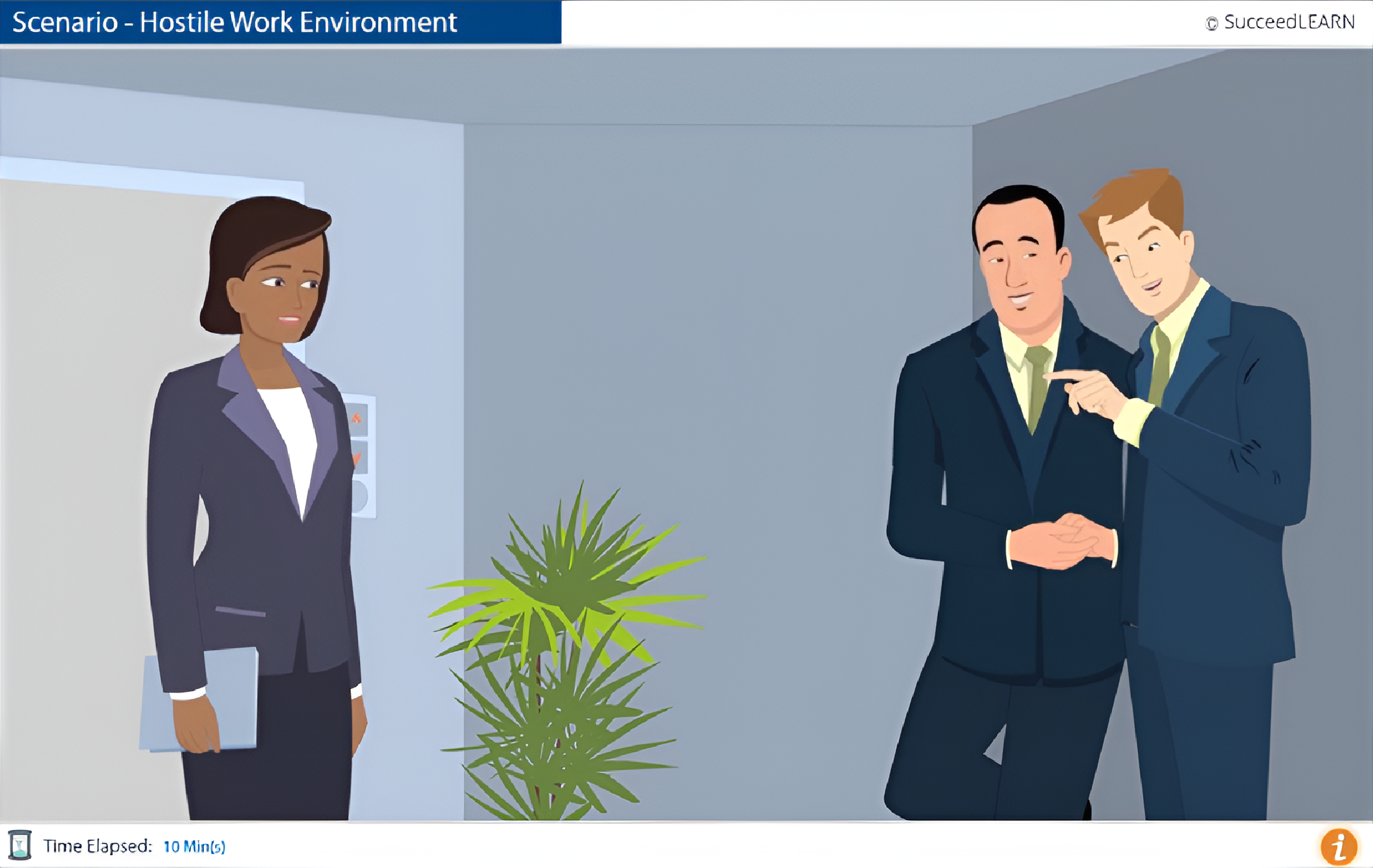
- Hostile Work Environment and
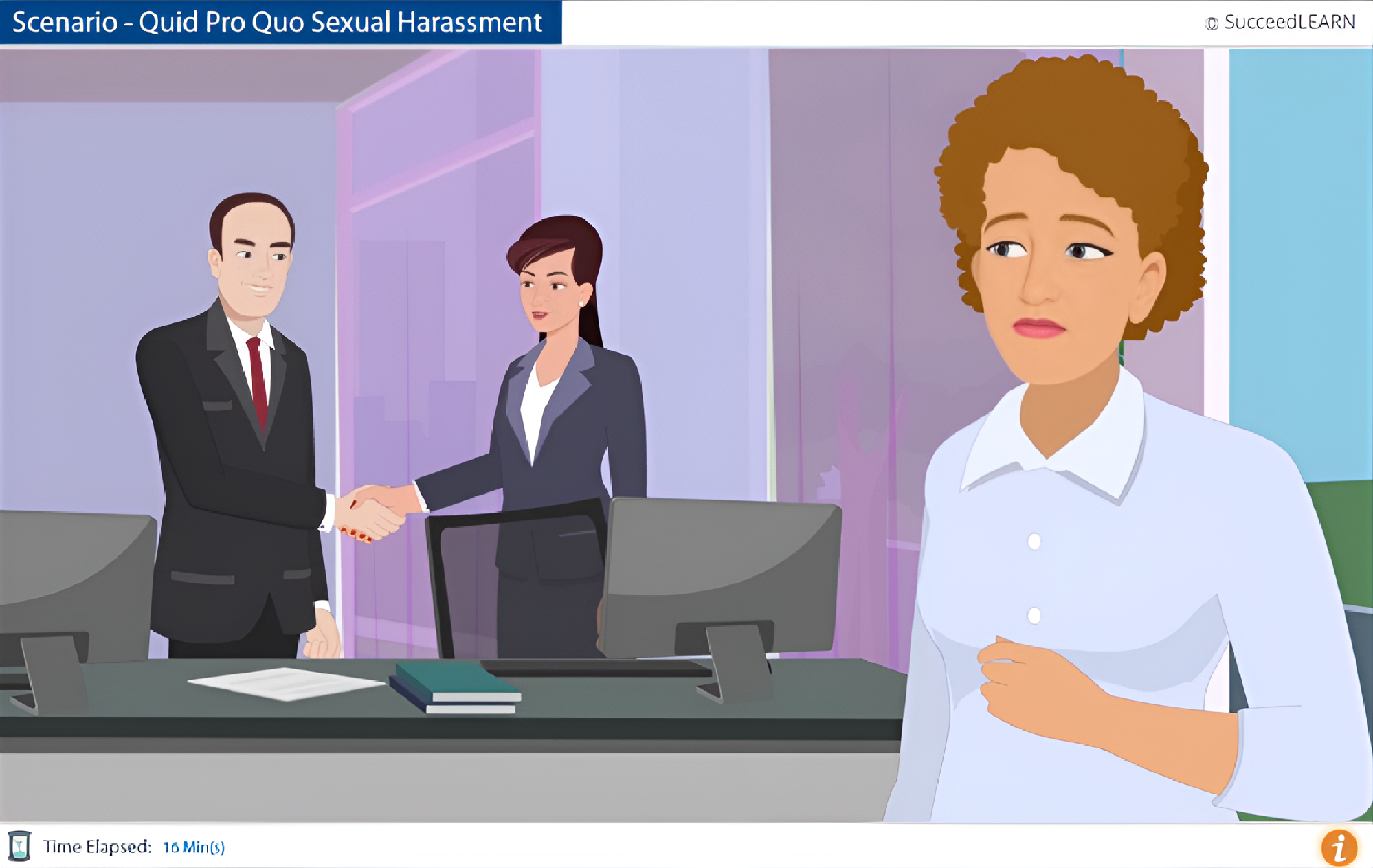
- Quid Pro Quo.
Who can be the Target of Sexual Harassment?
Who can be the Harasser?
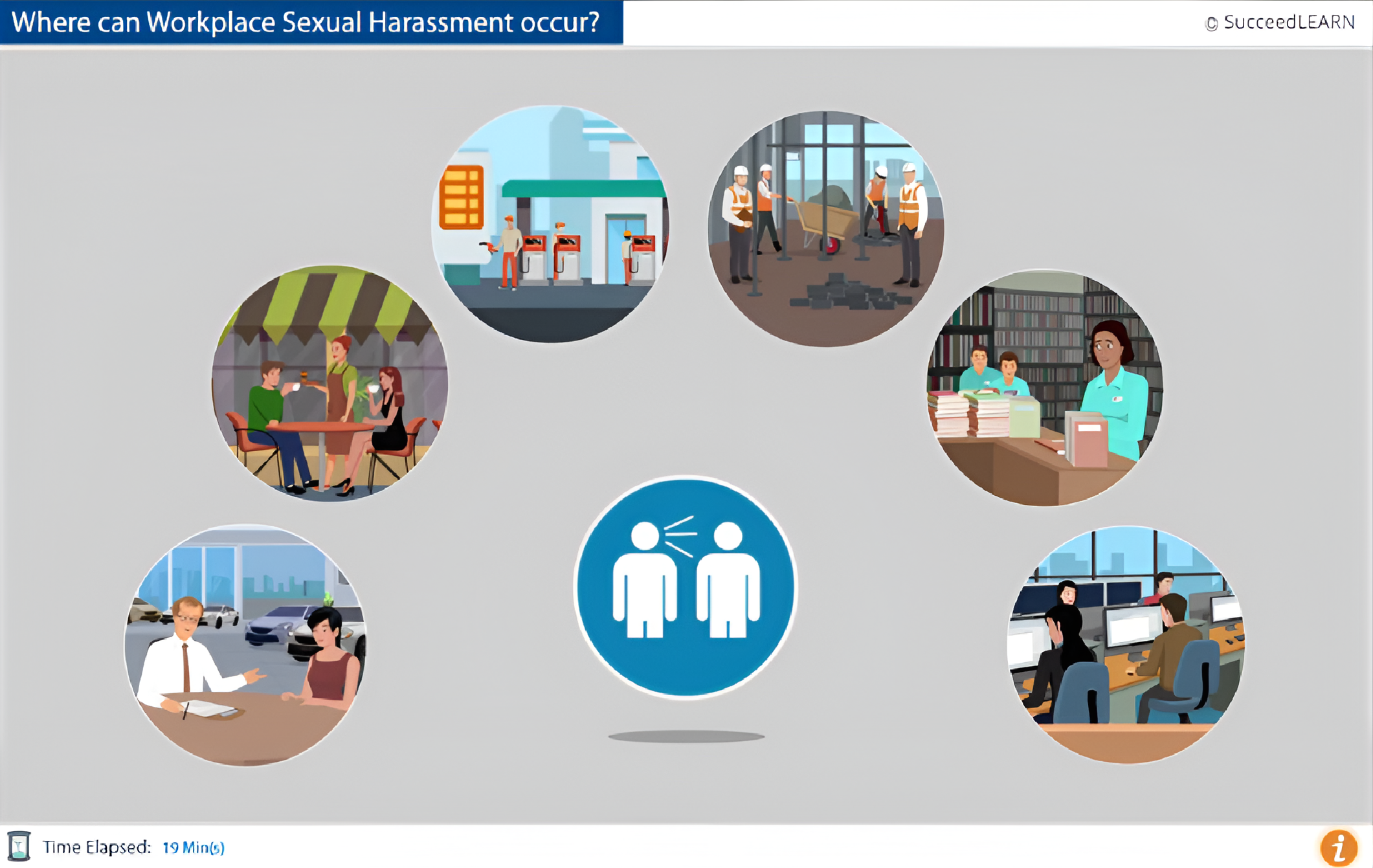
Where can workplace Sexual Harassment Occur?
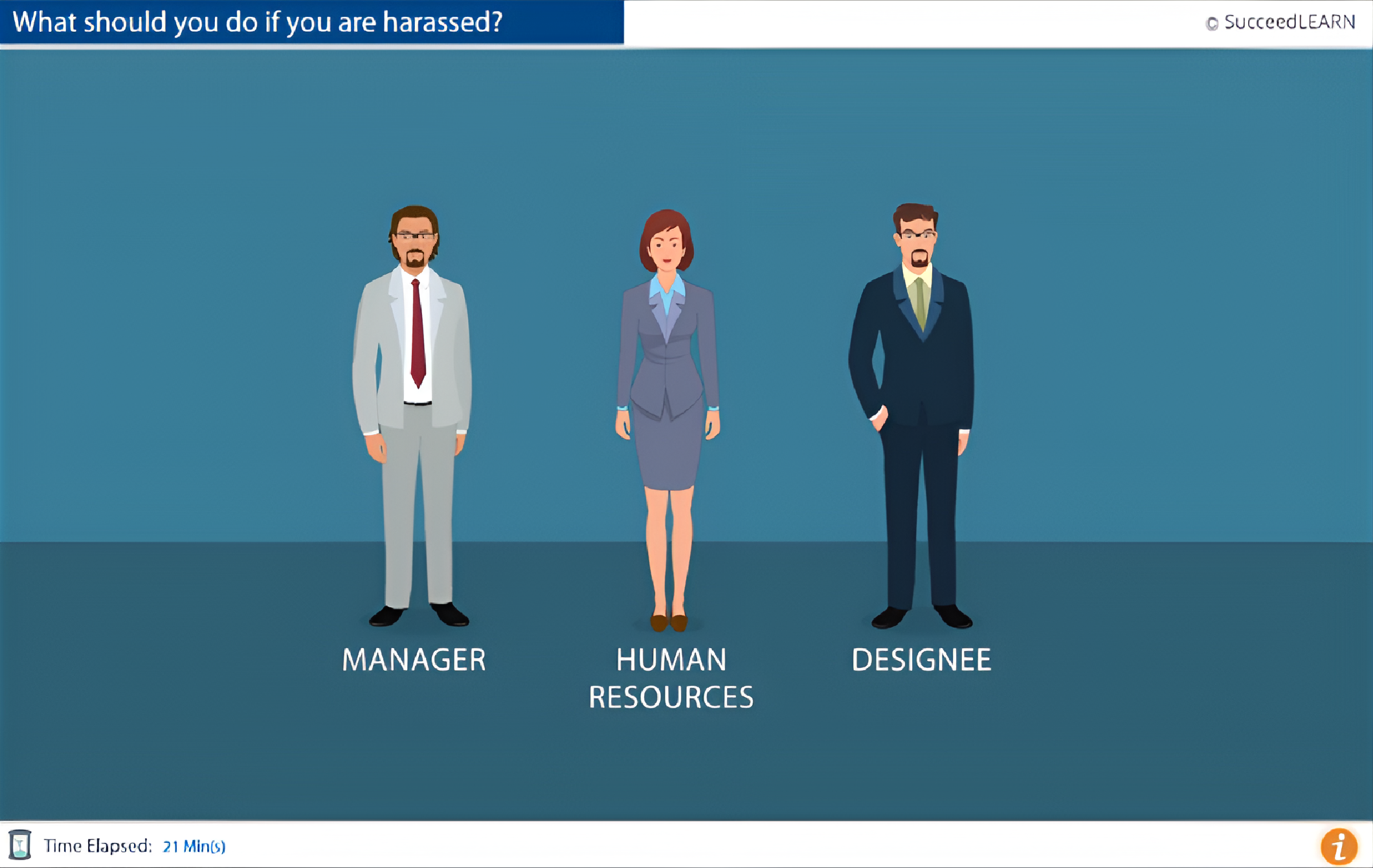
What should you do if you are harassed?
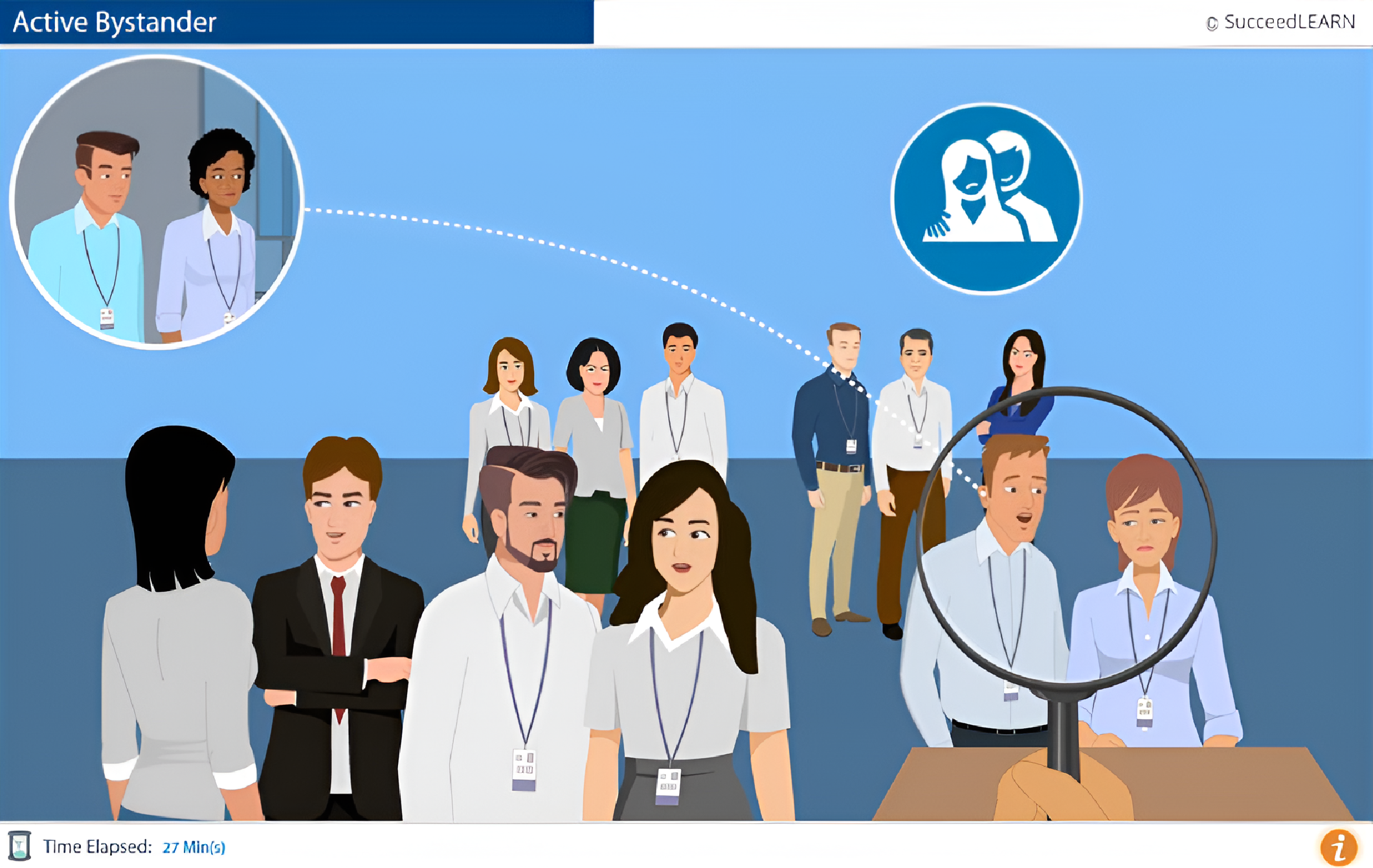
Active Bystander
Stereotyping
What is Retaliation?
What is not Retaliation?
Investigation and Corrective Action
Additional Protections and Remedies
- US
- EEOC (Equal Employment Opportunity Commission)
- Understand the legal remedies available in
- California
- Connecticut
- Delaware
- Maine
- New York
- Illinois
- New Jersey
- Washington
- District of Columbia
- Puerto Rico
Other types of harassment:
- Protected Categories or Characteristics
- Abusive Conduct
- Unconscious Bias
Total Duration: 90 Mins
FAQs
This training helps prevent unlawful harassment, clarifies acceptable behaviors, ensures employees understand reporting mechanisms, and protects the company from legal, financial and reputational risks. It also establishes a consistent understanding of sexual harassment, harassment types, remedies, retaliation rules, and employee rights.
Federal law under Title VII prohibits harassment but does not mandate training nationwide. However, several states (DE, WA industry-specific, DC for tipped workers, etc.) require sexual harassment training. Even in non-mandatory states, training is considered due-diligence and reduces liability during EEOC or internal investigations.
Employees will learn what sexual harassment is, the forms it takes (verbal, physical, visual), how hostile work environment and quid pro quo occur, how to report harassment, legal protections, retaliation prevention, and remedies available through internal systems and state/federal agencies.
All employees, managers, supervisors, interns, contractors, and third-party individuals who interact within the workplace or at work-related events. Anyone who can experience or witness harassment should be trained.
Yes. The training explains what to do when a complaint is raised, how to escalate it, conduct or support investigations, maintain confidentiality, and avoid retaliation-linked misconduct. Managers also learn how to recognize early signs rather than ignoring inappropriate behavior.
Every complaint must be taken seriously. The organization must investigate promptly, fairly, and confidentially (as far as possible). Relevant documents should be reviewed, witnesses interviewed, and corrective actions taken if harassment is confirmed.
Intent is irrelevant - unwelcome sexual jokes, comments, touches or displays can still be harassment even if meant as humor. Employees are trained to identify boundaries and behaviors that create hostile environments.
The course teaches employees to act as active bystanders by intervening, distracting, reporting or supporting someone being harassed. Small interventions can stop escalation and help protect colleagues early.
Yes, retaliation is explained clearly. Any negative action (reduced shifts, demotion, exclusion, unfair workload changes, intimidation, negative scheduling) for reporting or participating in an investigation is unlawful. The training helps leaders avoid retaliation-based liability.
Yes, employees are taught when they can escalate issues to federal agencies like the EEOC, and state-specific departments such as DFEH (California), CHRO (Connecticut), DDOL (Delaware), Maine Human Rights Commission, NY DHR, etc. including timelines and filing processes.
Yes. If internal handling is unsatisfactory, employees have the right to file a complaint directly with state or federal agencies, even without notifying the company first.
Training completion reports, certificates, assessment results and reminders help employers maintain documentation - critical during audits, lawsuits or EEOC investigations as evidence of preventive action.
California enforces sexual harassment laws under the Fair Employment and Housing Act (FEHA) via DFEH (Department of Fair Employment and Housing), requiring employers to provide prevention training, allowing employees to file complaints internally or directly with DFEH/EEOC within one year, and enabling remedies such as compensatory damages, punitive damages, mandatory training orders, and litigation-related costs.
Regulated by the CHRO (Commission on Human Rights and Opportunities), Connecticut mandates workplace sexual harassment training and allows employees to file complaints within 180 days, with possible remedies including reinstatement, promotion, compensatory damages, back pay, and cease-and-desist orders.
Under the Delaware Discrimination in Employment Act, enforced by DDOL (Delaware Department of Labor), training is required and complaints may be filed within 300 days with EEOC or DDOL, with remedies such as reinstatement, hiring, promotion, back pay, attorney fees, and court costs.
Maine’s Human Rights Act mandates harassment training and allows complaints through the Maine Human Rights Commission (300-day window) or directly in superior court within two years, with investigation and corrective actions required where misconduct is proven.
New York requires annual training and complaints can be filed with NY State DHR (New York State Division of Human Rights), the NYC Commission on Human Rights, or EEOC; cases may be filed up to three years depending on the venue, and violations can result in mandatory policy changes and corrective actions.
Illinois enforces anti-harassment laws through the Illinois Department of Human Rights (IDHR), requires annual training statewide, and permits filing within 300 days by phone, fax, mail or in-person, triggering formal investigation and potential corrective orders.
The LAD (Law Against Discrimination) prohibits workplace harassment, allows claims to be filed with NJDCR within 180 days or civil litigation within 2 years, and requires employers to act promptly on complaints and prevent discrimination-based retaliation.
The WSHRC (Washington State Human Rights Commission) enforces harassment prevention laws in Washington, with mandatory training for specific industries like hotels, retail, security, janitorial & property services, and a filing limit of up to 3 years for discrimination complaints.
The Human Rights Act (1977) and the Tipped Wage Workers Fairness Act (2018) require training for tipped employees, allow complaints through OHR (Office of Human Rights) or EEOC within 180 days, and ensure investigation and corrective action if harassment is proven.
Protected under the Act to Prohibit and Prevent Workplace Harassment (APPWH), employees may first report internally, then escalate to mediation, and file in court if unresolved - ensuring workplace bullying and harassment are legally actionable.
The delivery is fully flexible. If you have an in-house LMS, we can provide the course as a SCORM-compliant package. If not, we offer a seamless SaaS-based hosting option for easy access and deployment.