- Animated Videos
- Short slides with narrated text
- Interactive scenario exercises
- Real-life case examples
- Frequent knowledge checks / quizzes
- Final assessment / certificate generation
Learning Objectives:
By the end of this secure coding training learners will be able to:
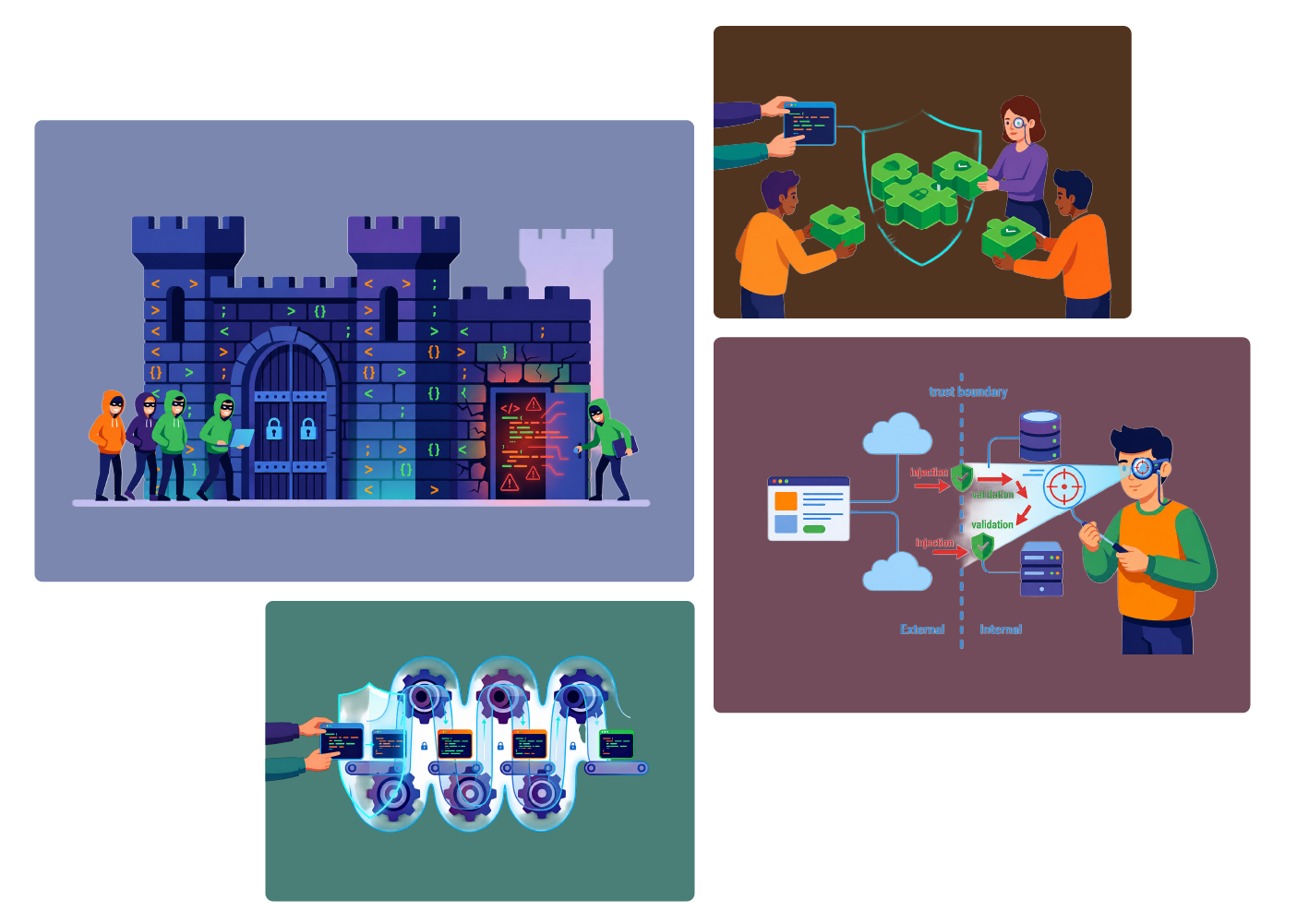
- Explain the importance of secure coding in modern development
- Describe the role of secure coding within Secure SDLC
- Identify and apply core secure coding principles
- Define how everyday coding decisions impact application security
Why This Course?
Address a critical security risk
Most application vulnerabilities arise from everyday coding decisions, not advanced attacks. Companies are increasingly expected to adopt secure coding practices as part of their overall cybersecurity strategy.
Support compliance and due diligence
Aligns with frameworks like GDPR, ISO 27001, SOC 2, and PCI-DSS, which require companies to implement strong security controls and demonstrate proactive risk management.
Protect reputation and reduce costs
Security flaws can lead to data breaches, regulatory penalties, and loss of customer trust. Early awareness helps avoid expensive fixes and incident response efforts.
Bridge the knowledge gap
Developers and engineers may not always identify how common coding patterns introduce risks. This course builds practical, real-world awareness.
Practical & scenario-based learning
Go beyond theory with relatable examples, decision-based scenarios, and knowledge checks that reinforce secure coding habits.
Concise yet impactful
Designed for busy professionals, the course delivers focused, high-value insights without overwhelming technical depth.
Build a security-first mindset
Helps teams write code that is not just functional, but resilient, secure, and ready for real-world use.
Course Highlights






Course Structure
Learning elements
Format & accessibility
Responsive design (usable on desktop, tablet, mobile), learner dashboard, progress tracking, reminders for employees, integration with your existing systems.
Target Audience
This course is designed for developers, QA engineers, DevOps teams, software architects, engineering managers, and fresh graduates entering software development. Regardless of prior experience, the content is designed to be simple, practical, and easy to follow, without heavy jargon, making it accessible even for those from non-technical backgrounds who want to better understand and improve how secure applications are built.
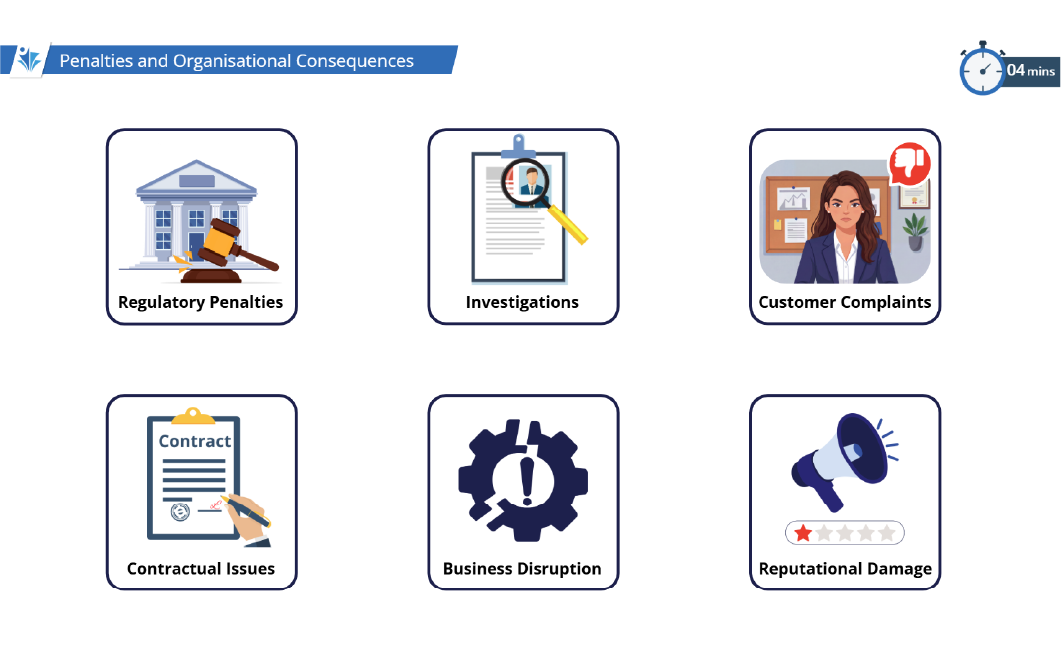
Risks of Insecure Coding Practices Insecure coding practices can lead to serious technical, financial, and reputational consequences.
Fines & legal penalties: Non-compliance with frameworks like GDPR and PCI DSS can result in significant fines, legal action, and mandatory audits
Higher breach risk: Insecure coding practices increase the likelihood of data breaches, unapproved access, and exploitation
Reputation damage: Security incidents can quickly erode customer trust and harm long-term brand credibility
Operational impact: Breaches often lead to system downtime, delayed releases, and resource-intensive remediation efforts
Loss of business: Failure to meet compliance standards can result in losing certifications, clients, and partnership opportunities
Increased costs: Firms face rising costs from incident response, legal proceedings, and ongoing compliance requirements
Course Outline
From SDLC to Secure SDLC
- Overview of Shift-left approach and secure SDLC
- Knowledge Check
The CIA Triad
- Overview of CIA Triad and its importance
Secure Coding Principles
- List of major secure coding principles
- Brief explanation of each principle
- Knowledge Checks
See how Succeed will work for your Organization

Request a Demo
FAQs:
Think of secure coding as writing code that not only works but also doesn’t accidentally create problems later. It’s about handling inputs carefully, protecting data, and making sure your application can’t be easily misused. It matters because even small coding oversights can turn into real security issues like data leaks.
It helps developers avoid common mistakes that can lead to security issues in real-world applications.
Secure coding is part of application security, and it focuses specifically on writing safe code.
No, basic development knowledge is enough to get started.
No, it applies to frontend, backend, APIs, anywhere code is written.
Secure coding is a key part of the development phase in the Secure Software Development Life Cycle (SSDLC). Instead of waiting until testing or after release to find issues, it brings security into the way code is written from the start. By applying secure coding practices early, developers can catch and prevent vulnerabilities when they’re easier (and cheaper) to fix, leading to more secure and stable applications overall.
Developers, QA engineers, DevOps teams, and anyone involved in building software.
Yes, it’s designed to be simple and easy to follow.
Yes, it uses practical examples and decision-based scenarios.
Not really, you’ll still write code the same way, just with a bit more awareness of security risks and how to avoid them.
Secure coding gives you a clearer lens during code reviews. Instead of only checking if the code works, you start looking for patterns that could introduce risks, like improper input handling, excessive permissions, or missing validations. It helps you ask better questions, spot issues early, and provide more meaningful, security-aware feedback. Over time, this not only improves code quality but also builds a stronger, more consistent security mindset across the team.
Security tools like SAST and DAST are great for identifying vulnerabilities, they scan your code or application and point out issues after they exist. But secure coding works a step earlier. It helps you understand why those issues happen and how to avoid introducing them in the first place. Instead of relying only on tools to catch mistakes later, secure coding builds the habit of writing safer code from the start. This not only reduces the number of issues tools find, but also makes your development process smoother, with fewer surprises during testing or after release.
No, the principles apply across languages and technologies.
Even more so, quick releases need built-in security awareness to avoid repeated issues and rework later.
Yes, it creates a shared understanding of security, making discussions during development and reviews more effective.
Secure coding principles include input validation, output encoding, least privilege, secure defaults, proper error handling, authentication controls, and secure session management.
Developers should refresh secure coding knowledge regularly, especially when new risks, frameworks, tools, or compliance requirements are introduced.
Yes. Secure coding helps prevent common vulnerabilities before they reach testing, reducing rework and making SAST, DAST, and penetration testing more effective.