
- Visually engaging Animated Videos
- Structured micro-learning modules with narrated guidance
- Scenario-based interactive decision-making exercises
- Real-world enforcement and regulatory case illustrations
- Embedded knowledge checks and compliance quizzes
- Comprehensive final assessment with certification

Learning Objectives
By the end of this course, learners will be able to:
- Define insider trading and UPSI (Unpublished Price Sensitive Information)
- Identify who insiders and designated persons are
- Explain the negative consequences of insider trading
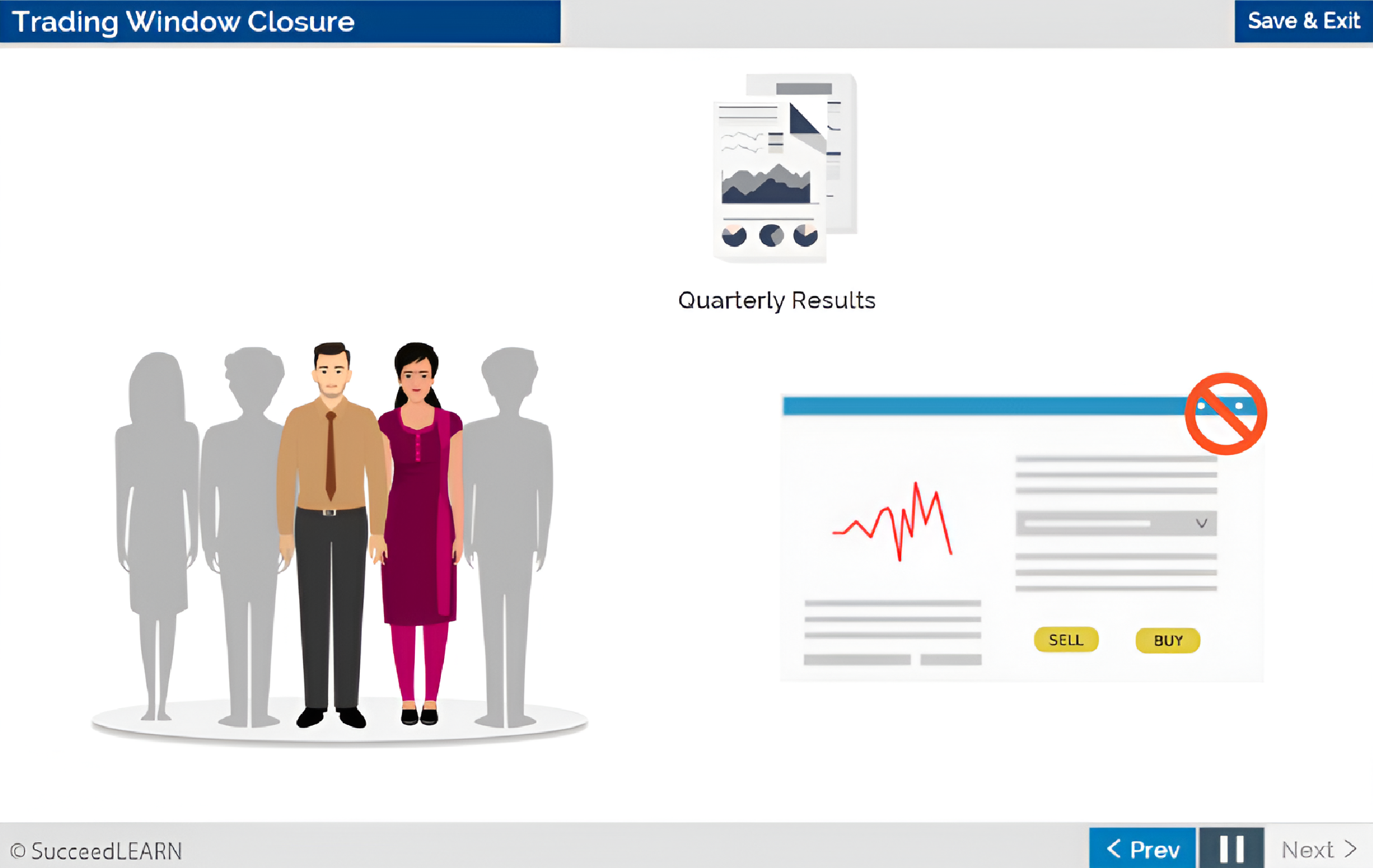
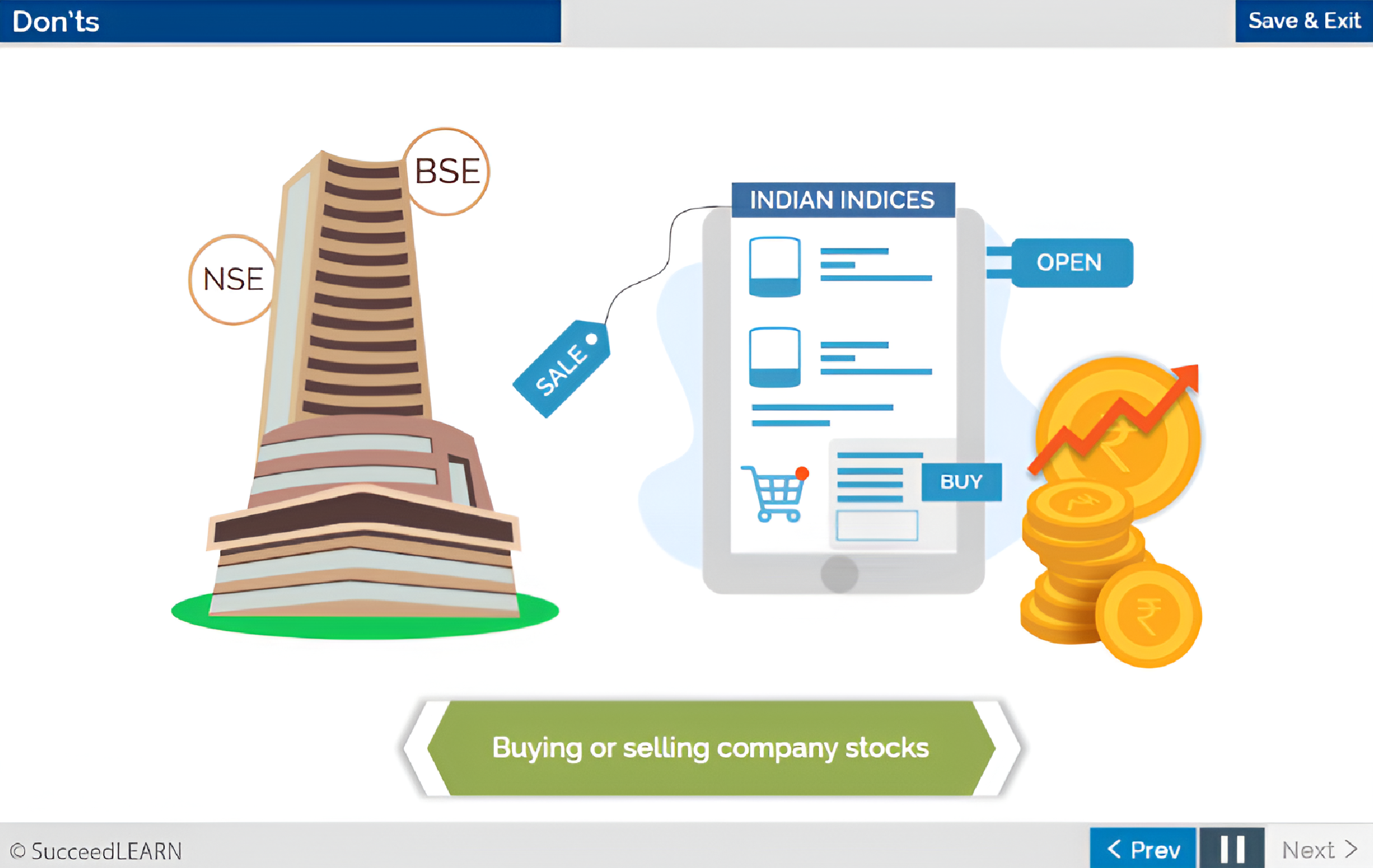
- List the dos and don’ts during trading window closure
- Explain the processes of pre-clearance of trade and recording of UPSI
Why Prevention of Illegal Insider Trading Training?
Demonstrates regulatory due diligence under SEBI PIT Regulations, 2015
The training equips employees, designated persons, and insiders with a clear understanding of insider trading, UPSI, connected persons, and related parties, enabling the organisation to evidence that it has taken reasonable and proportionate steps to reduce the risk of misuse or leakage of unpublished price sensitive information, as required under SEBI regulations.
Reduces the risk of severe SEBI penalties, prosecution, and reputational damage
By clearly explaining what constitutes illegal insider trading, UPSI sharing, and trading during restricted periods, the course directly mitigates the risk of regulatory investigations, monetary penalties, market bans, and criminal proceedings that may arise from employee misconduct or ignorance.
Establishes clear accountability for designated persons, insiders, and relatives
The module clarifies that designated persons are responsible not only for their own trades but also for trades executed by relatives and portfolio managers on their behalf. This clarity helps employers close accountability gaps that regulators frequently scrutinise during insider trading investigations.
Protects the organisation through pre-clearance of trades and contra-trade controls
By educating employees on mandatory pre-clearance processes, contra-trade restrictions, and six-month cooling-off periods, the course helps employers proactively reduce the risk of suspicious trading patterns that could otherwise trigger regulatory suspicion, even where intent to misuse UPSI may not exist.
Practical, scenario-driven learning approach
Uses realistic workplace scenarios and decision-based activities to help employees apply insider trading rules in day-to-day situations, reducing inadvertent violations.
Assessment, certification, and declaration for evidentiary compliance
Knowledge checks, final assessment, and employee declarations provide tangible proof of training completion, awareness, and policy acknowledgment for audits and inspections.
Laws & Regulations Addressed in this Course
| Legislation / Concept | Relevance in the Course |
|---|---|
| Prohibition of Insider Trading Regulations, 2015 | The course covers Securities and Exchange Board of India’s Prohibition of Insider Trading Regulations, 2015, according to which, it is illegal for an employee to use the unpublished price sensitive information (UPSI) to trade in their org’s stocks. These regulations impose explicit organisational duties that make structured insider trading training a practical compliance necessity, not merely a best practice. |
Course's Screenshots


Course Structure
Learning elements
Format & accessibility
Fully responsive interface across desktop, tablet, and mobile -complete with a learner dashboard, progress tracking, automated reminder prompts, and seamless integration with your existing LMS or HR systems.
Certificate
Upon successful completion, you receive a CPD certificate valid as proof of training.
Target Audience
The Prevention of Illegal Insider Trading Training is tailored for:
- Designated Persons identified based on role, seniority, or access to UPSI
- Board of Directors and Key Managerial Personnel (KMP) including the Managing Director, senior leadership, and function heads
- Employees up to two levels below the Managing Director who may routinely handle strategic, financial, or operational UPSI
- Promoters and persons in control of the company, as defined under the insider trading code
- Support and enabling staff such as IT, secretarial, finance, legal, and HR teams with access to UPSI systems or documents
- Compliance Officers and Company Secretaries
- External parties and advisors (where required) such as auditors, consultants, recruiters, or portfolio managers who may be exposed to UPSI during legitimate business engagements.
In short, for all employees of the organisation who may come across non-public or sensitive company information in the course of their work.
Case Studies: Real Consequences of Non-Compliance
Under the SEBI (Prohibition of Insider Trading) Regulations, 2015, listed companies must ensure that insiders and designated persons clearly understand their obligations relating to UPSI, trading windows, pre-clearance, contra trades, and information sharing. Structured training is the most defensible way to evidence this compliance obligation.
Indian enforcement cases reinforcing the need for insider-trading training include:
- HDFC Bank (2021)
SEBI imposed a ₹1 crore penalty for delayed and improper disclosures under insider trading regulations, highlighting gaps in awareness around disclosure timelines and compliance controls, underscoring the need for regular training on disclosure duties and trading window restrictions. - Reliance Industries Limited (2017)
SEBI ordered disgorgement of approximately ₹447 crore and barred the company from derivatives trading for one year for dealing while in possession of UPSI, demonstrating the risks of weak insider controls and inadequate employee awareness.
These cases clearly demonstrate that ineffective awareness and control mechanisms significantly increase regulatory exposure, making insider trading training a critical compliance safeguard rather than a discretionary measure.
Course Outline
Terms and Definitions
Activity: Press the appropriate button to identify if a statement is UPSI or not.
Insider Trading
- Code on Insider Trading
- Rules on Insider Trading
- Trading Window Closure
- Dos
- Don’ts
Pre-clearance of Trade
Do not Contra Trade
Recording of UPSI
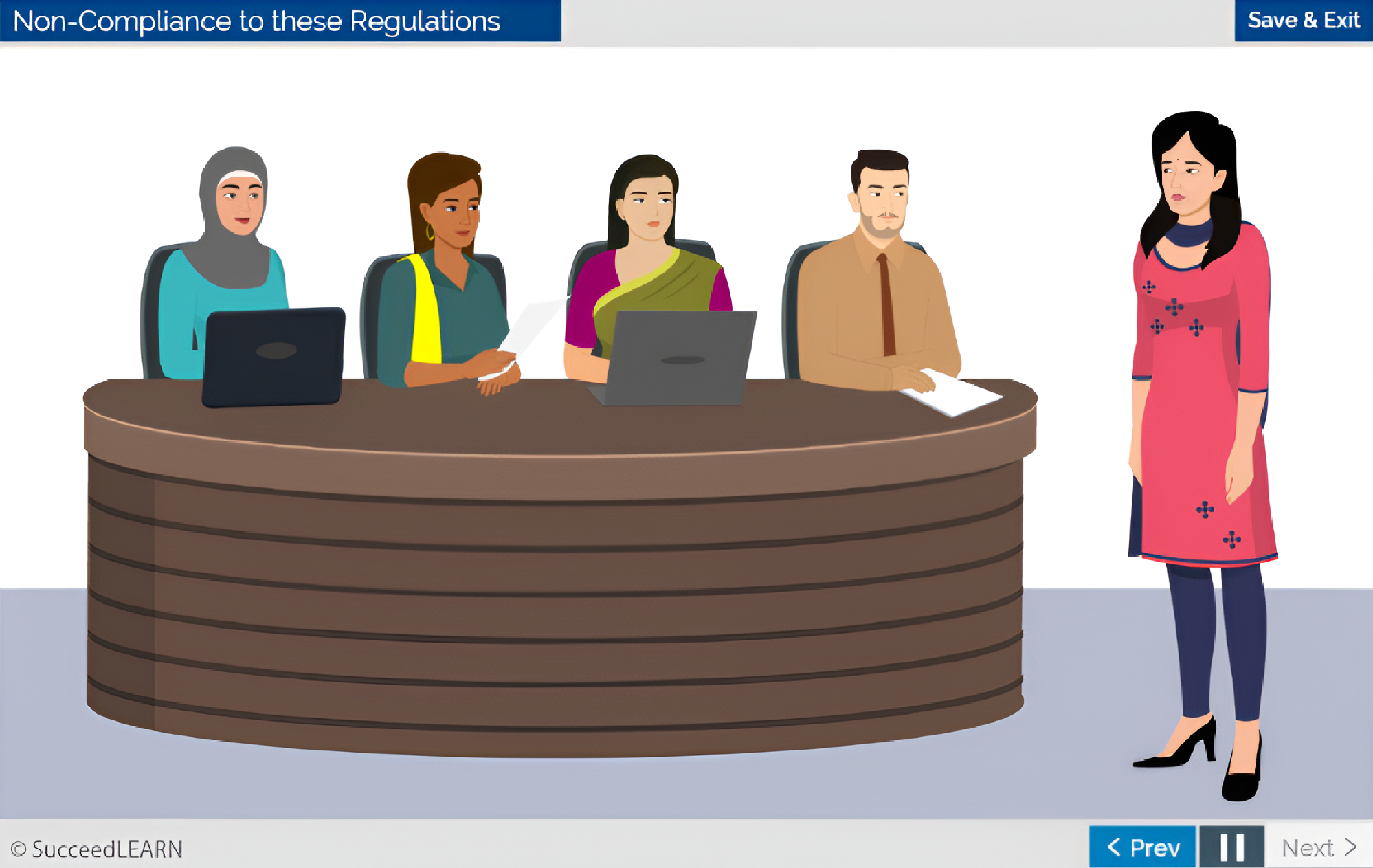
Non-Compliance to these Regulations
See how Succeed will work for your Organization

Request a Demo
FAQs
Illegal insider trading occurs when a person trades in securities while in possession of Unpublished Price Sensitive Information (UPSI), in violation of the SEBI (Prohibition of Insider Trading) Regulations, 2015.
UPSI is information that:
- Is not publicly available, and
- Is likely to materially affect the price of securities if made public.
Examples include:
Financial results, dividends, changes in capital structure, mergers, acquisitions, or delistings, changes in key managerial personnel, major expansion plans or regulatory actions.
As a listed company, your organisation is legally required to reduce the risk of misuse and leakage of Unpublished Price Sensitive Information (UPSI). This training ensures employees, designated persons, and insiders clearly understand their responsibilities, helping the organisation demonstrate due diligence and regulatory compliance under SEBI regulations.
The training is relevant for all employees, with heightened importance for designated persons, directors, key managerial personnel, promoters, compliance officers, and support staff who may have access to UPSI due to their role or seniority.
The course educates employees on what constitutes UPSI, insider trading violations, trading window closures, pre-clearance requirements, contra-trade restrictions, and legitimate information sharing. This directly reduces inadvertent breaches that often trigger SEBI investigations and penalties.
Yes. The training clearly explains that designated persons are accountable for trades executed by their relatives and portfolio managers, and also addresses sharing of UPSI with external parties such as auditors, consultants, recruiters, and advisors for legitimate purposes only.
Employees learn when and why trading windows are closed, what transactions are permitted during closure, and when pre-clearance of trades is mandatory. This helps employers enforce controls consistently and avoid suspicious or non-compliant trades.
The training clarifies approval hierarchies, escalation protocols, and documentation requirements, helping Compliance Officers and senior leaders discharge their duties effectively while reducing personal and organisational liability.
Assessments, knowledge checks, quarterly certifications, and employee declarations generated through the training provide documented evidence that the organisation has taken reasonable steps to educate employees and enforce insider trading controls.
No. Insider trading risk is ongoing. The regulations expect organisations to have periodic certifications and continuous awareness, making refresher training essential to maintain compliance as roles, regulations, and business circumstances evolve.
The delivery is fully flexible. If you have an in-house LMS, we can provide the course as a SCORM-compliant package. If not, we offer a seamless SaaS-based hosting option for easy access and deployment.