
- Animated Videos
- Short slides with narrated text
- Interactive scenario exercises
- Real-life case examples
- Frequent knowledge checks / quizzes
- Final assessment / certificate generation

Learning Objectives
By the end of this course, learners will be able to:
- Learn the role of senior management in preventing tax evasion.
- Explore preventive measures against tax evasion.
- Conduct effective risk assessments within the organization.
- Develop comprehensive anti-tax evasion policies.
- Implement effective communication and training strategies.
- Establish robust internal reporting mechanisms.
- Engage in regular monitoring and review of prevention strategies.
Why Preventing facilitation of tax evasion training?
Address a pressing legal risk
With the Criminal Finances Act, both UK and foreign tax evasion facilitation can trigger corporate offences. Organisations are increasingly expected to have “reasonable prevention procedures.”
Protect reputation and finances
The course is designed around Part 3 of the Criminal Finances Act 2017, where orgs can be held criminally liable for failing to prevent the facilitation of tax evasion, regardless of intent. Training senior management demonstrates that the org has taken reasonable prevention procedures, a critical statutory defence.
Supports the drafting and implementation of defensible anti-tax evasion policies
Employers are guided on how to design policies with clear scope, reporting matrices, secondary audit mechanisms, red flags, and disciplinary consequences—ensuring policies are not merely documented but operationally effective.
Bridge the knowledge gap
Many staff involved in finance, client management, or third-party liaison may not immediately recognise facilitation behaviour. This course ensures clarity.
Practical & scenario-based learning
Not just theory—learn through real examples, interactive decision points, and quizzes to reinforce retention.
Short but impactful
In just about 30 minutes, the course delivers concentrated, high-value content suitable for busy professionals.
Certified quality
The CPD certification confirms that the course meets recognized standards in content, delivery, and learning outcomes.
Laws & Regulations Addressed in Anti-tax evasion eLearning Training
This course covers key legal frameworks, statutory duties, and case law related to tax evasion and facilitation. Major legal references include:
| Legislation / Concept | Relevance in the Course |
|---|---|
| UK Criminal Finances Act 2017 | The central law creating the offence of “failure to prevent facilitation of tax evasion,” for both UK and foreign tax evasion. |
| HMRC’s Six Guiding Principles | The six pillars that orgs should consider when designing their prevention procedures. |
Course's Screenshots
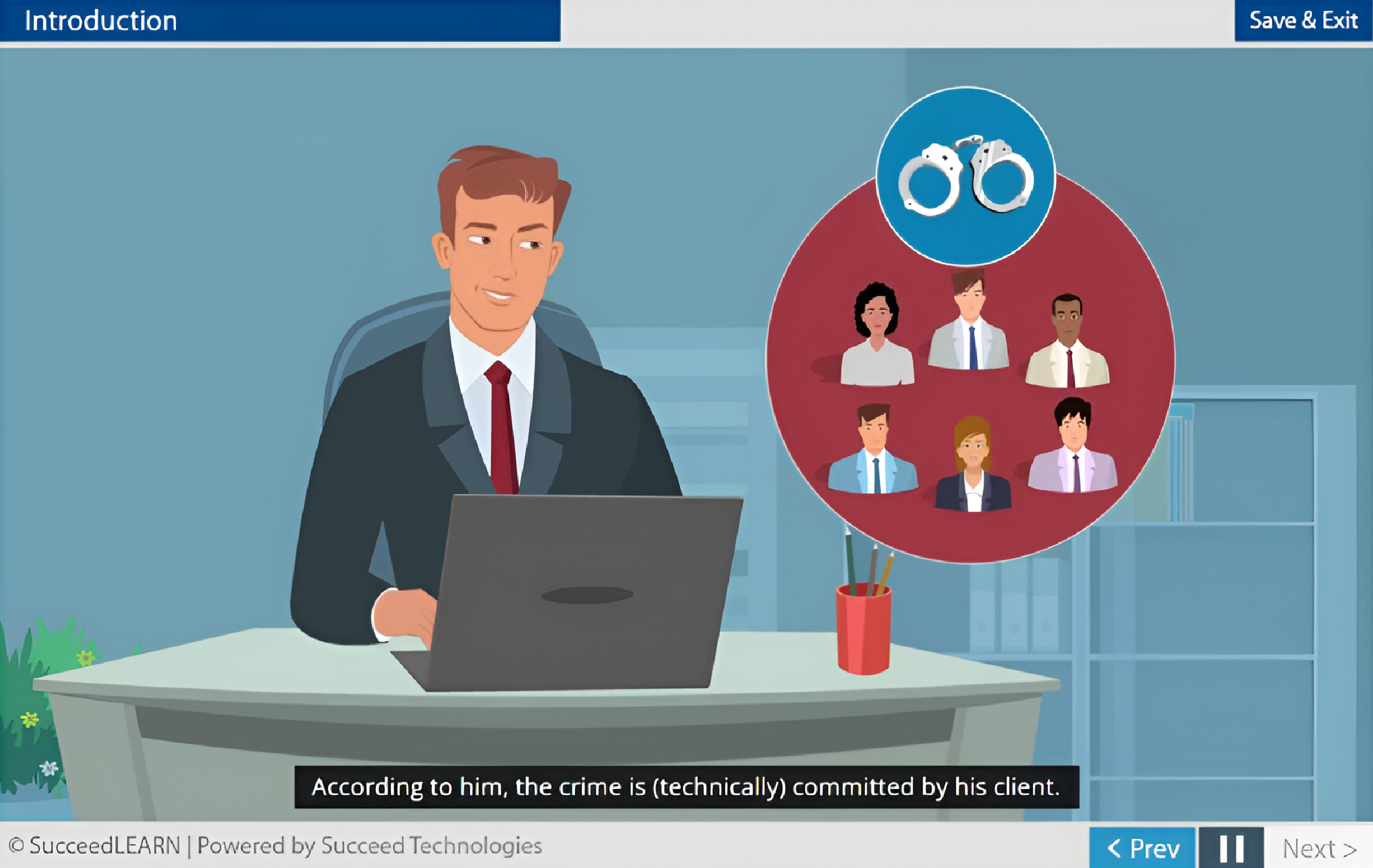
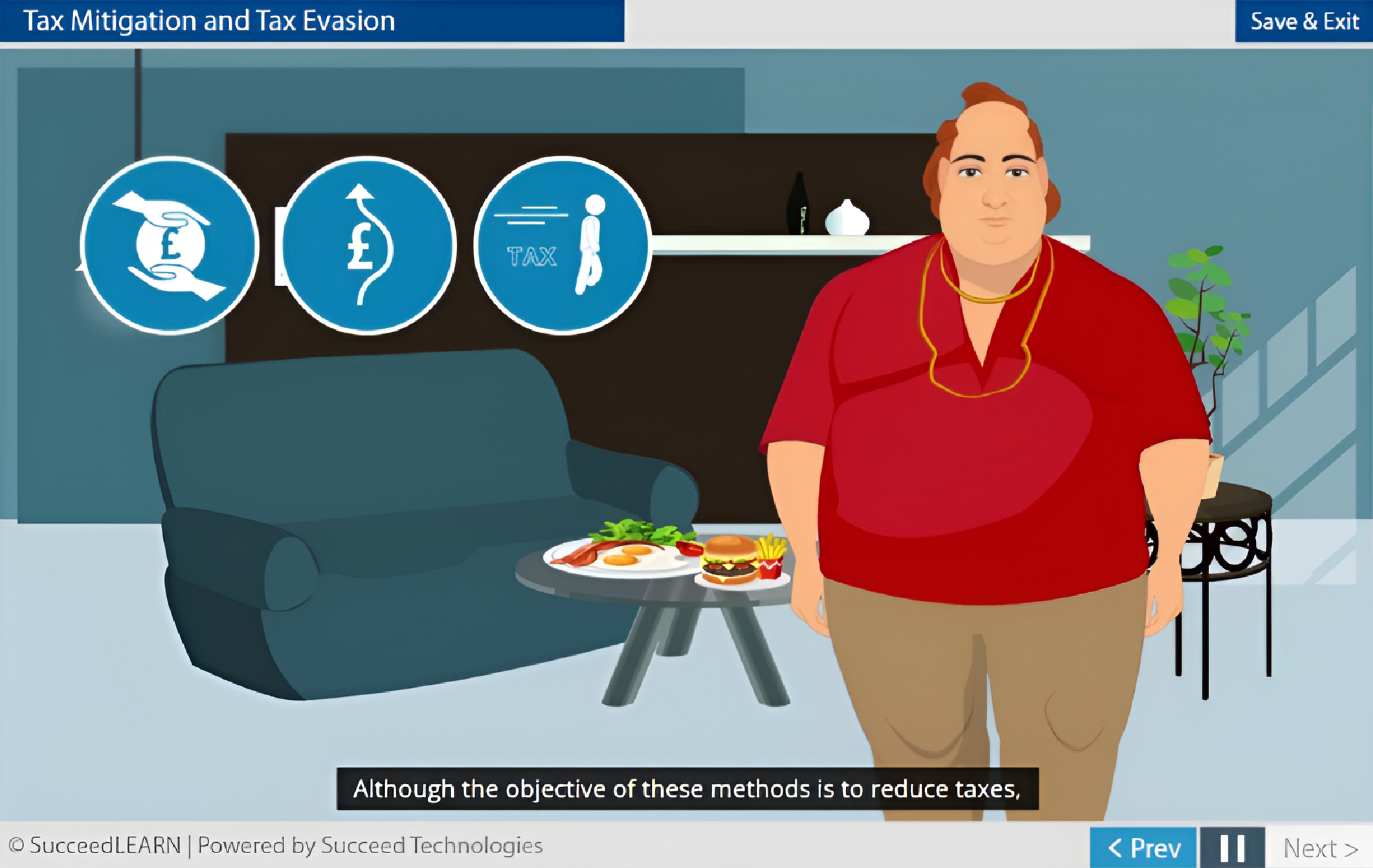
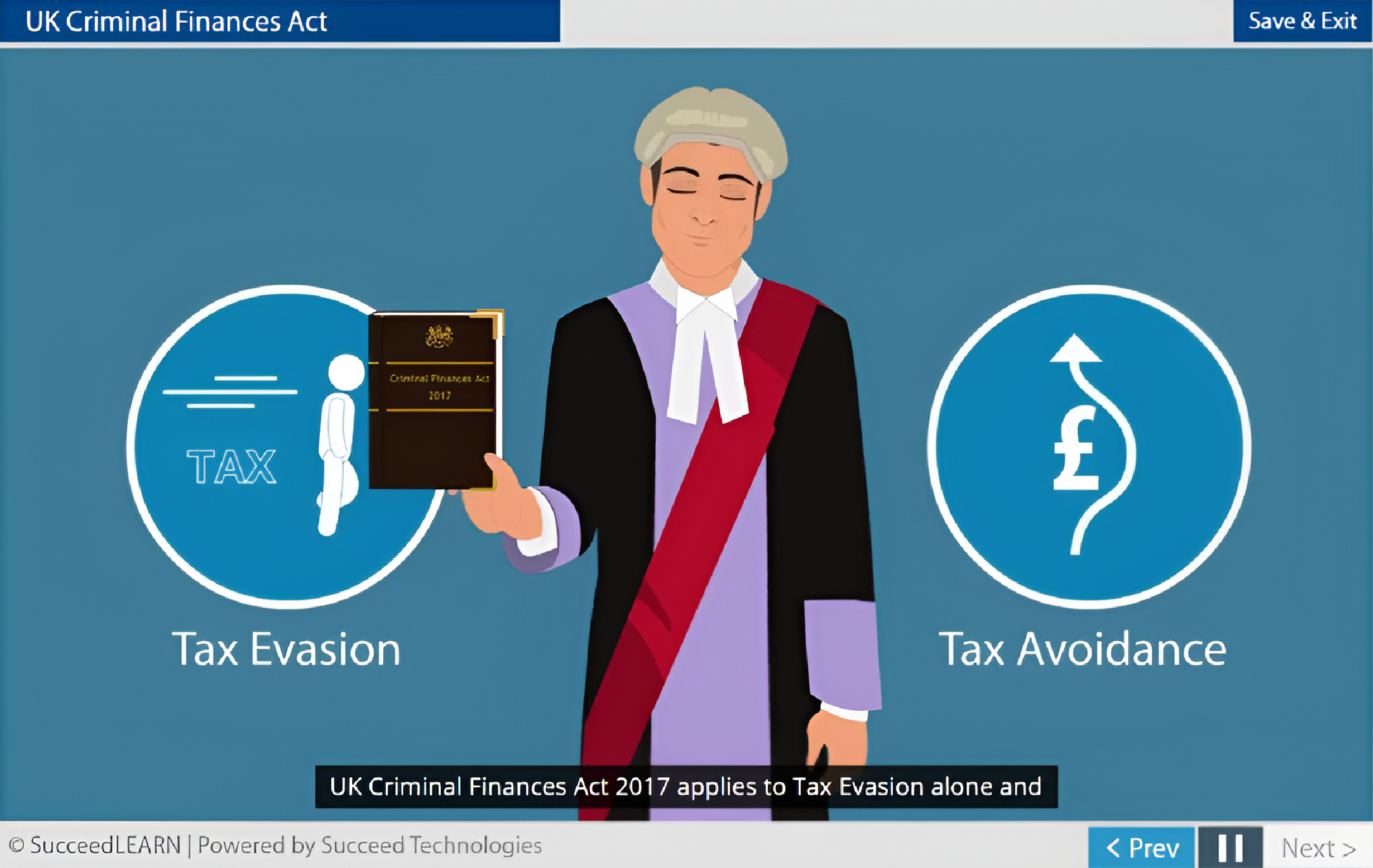
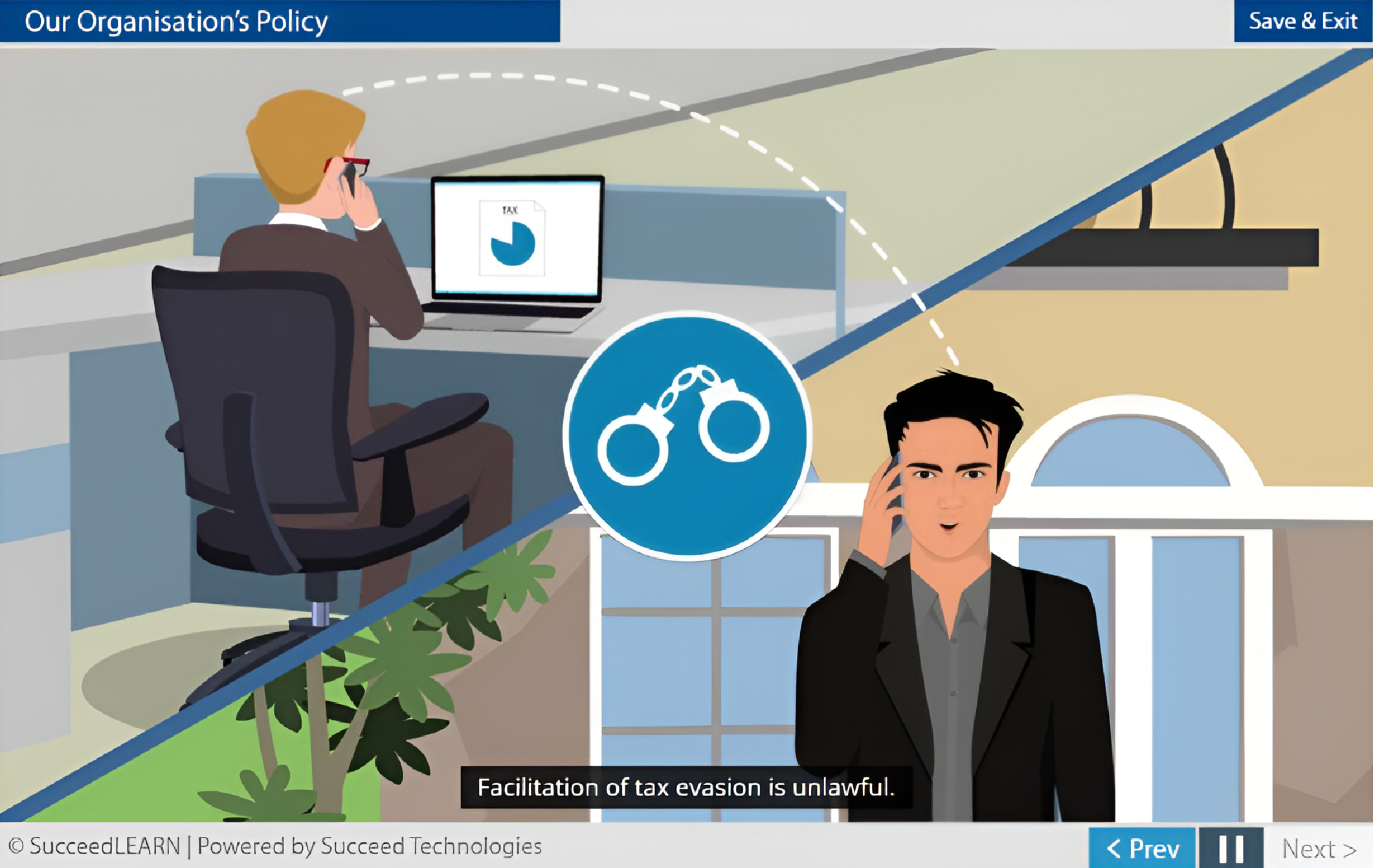
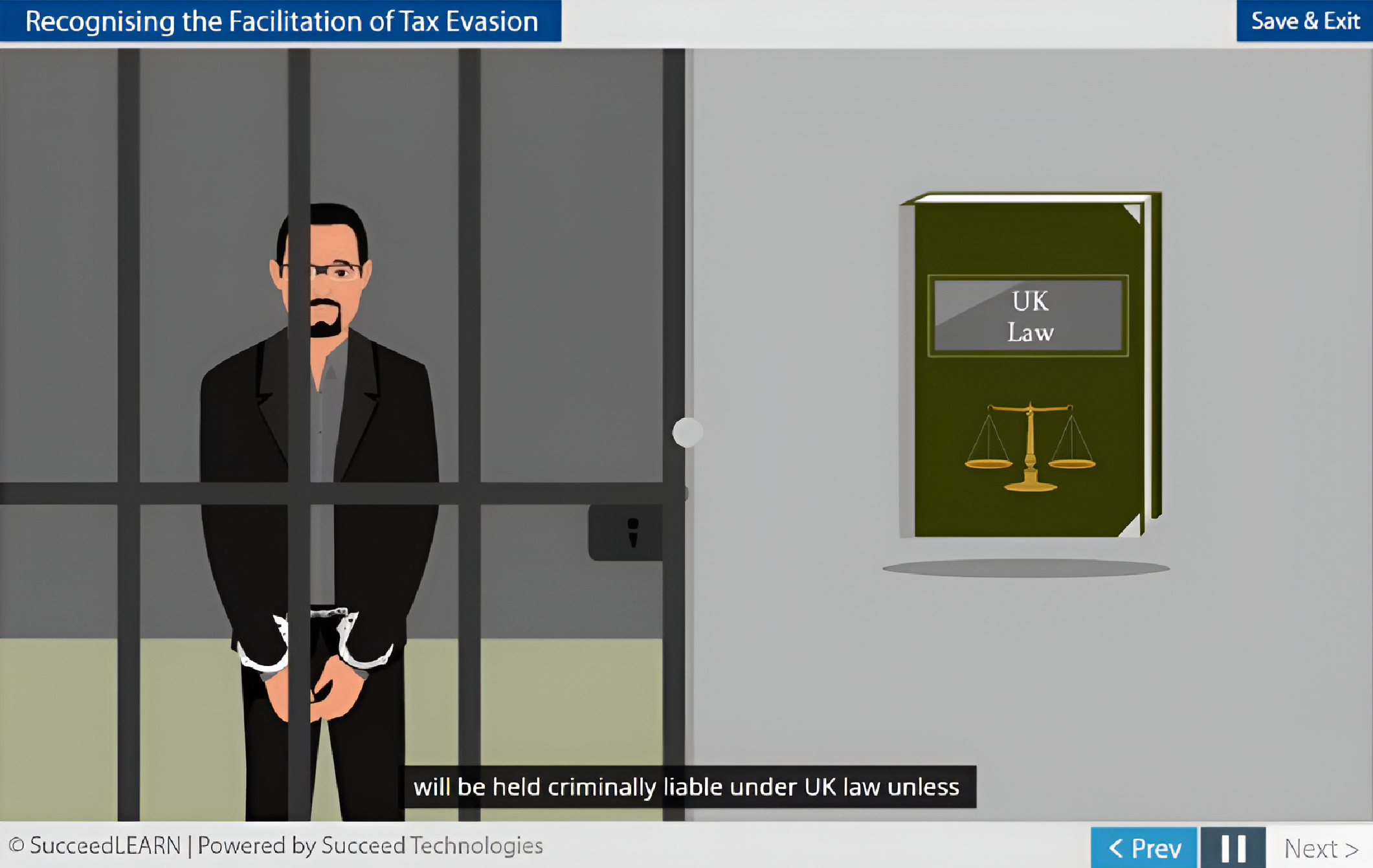
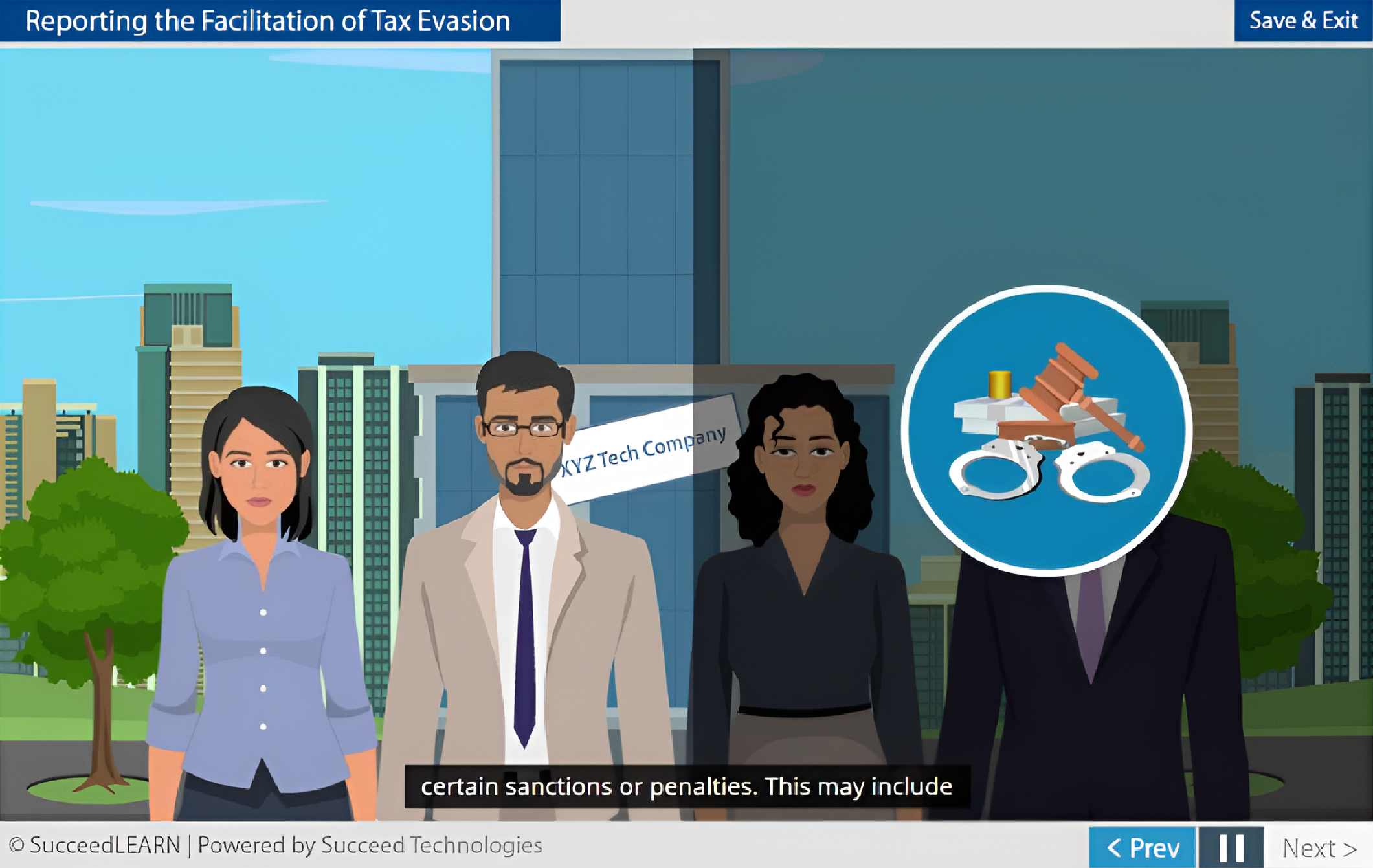

Course Structure
Learning elements
Format & accessibility
Accessible on any device, supported by an intuitive learner dashboard, real-time progress tracking, smart reminders, and easy integration with your current platforms.
Certificate
Upon successful completion, you receive a CPD certificate valid as proof of training.
Target Audience
This course is ideal for individuals across finance, advisory, compliance and supervisory roles who may, directly or indirectly, influence or transact in situations involving tax, funds, or third-party payments. It is tailored for:
- Staff in compliance, risk, audit, finance, accounting functions
- Investment advisors, fund managers, portfolio administrators
- Supervisors, team leads, operations managers
- Accounts / funds / treasury staff
- Legal advisors who need clarity on tax-risk exposure
- Any professional in your org who may be involved in vendor onboarding, payments, intermediaries or contracts
In short, anyone who touches money flows, taxation matters, or third-party relationships should benefit from this training.
Case Studies: Real Consequences of Non-Compliance
Although the course itself is not explicitly mandated by law, having effective training is a practical and regulatory necessity to meet statutory obligations and defend the org in the event of enforcement action.
Below are real, regulator-recognised cases that clearly demonstrate how orgs faced severe penalties, criminal exposure, or reputational damage due to failures in preventing tax evasion, bribery, or related financial crime controls.
- HSBC – HMRC / UK & US Authorities
- Issue: Systemic failures in financial crime controls, including weaknesses linked to tax evasion and money laundering facilitation risks.
- Outcome: Paid USD 1.9 billion in penalties globally.
- Relevance: Regulators highlighted inadequate risk assessment, due diligence, and monitoring—exactly the areas addressed under the Criminal Finances Act (CFA) “reasonable prevention procedures.”
- Employer lesson: Absence of robust controls and leadership oversight exposes organisations to enterprise-wide liability.
- Standard Chartered – UK & US Regulators
- Issue: Failures in transaction monitoring, due diligence, and risk governance across high-risk jurisdictions.
- Outcome: Over USD 1.1 billion in fines across multiple enforcement actions.
- Relevance: Demonstrates the regulatory expectation for ongoing monitoring, risk-based controls, and management accountability.
- Employer lesson: Compliance failures are treated as governance failures, not isolated operational errors.
Course Outline
UK Criminal Finances Act
- Overview of UK Criminal Finances Act
- What this act comprises of?
- Scenario 1: The Auditor in Financial Corporation
- Scenario 2: Tax Evasion Done by Employees
Org’s Policy
- Six Guiding Principles by UK Government
- Knowledge Check
- What is an Associated Person?
Recognizing the Facilitation of Tax
- Overview
- Scenario of a Financial Consultant
- Scenario of an Investment Advisor
- What Tax Evasion Includes?
- Importance of Reasonable Preventive Measures
Tax Mitigation and Tax Evasion
Tax Mitigation
- What is Tax Mitigation?
- Scenario: Owner of a Firm
- Activity
Tax Evasion
- What is Tax Evasion?
- Scenario on Tax Evasion: Owner of Departmental Store
- Activity
Reporting the Facilitation of Tax Evasion
- Overview of Reporting Facilitation of Tax Evasion
- What Should you do to Report Facilitation of Tax Evasion?
- Sanctions and Penalties
Total Duration: 30 Mins
FAQs
This course helps learners understand how tax evasion can be unknowingly supported within the firm and how to stop it. It breaks down legal duties into simple steps like risk assessments, due diligence, policy-building, and reporting.
The course focuses on the UK Criminal Finances Act 2017 and HMRC’s Corporate Criminal Offence (CCO) guidance, which together set out how firms must prevent the facilitation of tax evasion.
Yes. The course has been designed around the Act’s key requirements to help a firm avoid criminal liability for failing to prevent tax evasion.
Absolutely. It walks learners through HMRC’s six guiding principles for CCO compliance, showing how they apply in real-world settings.
It’s meant for anyone who plays a role in financial decisions, client interactions, or operational processes where facilitation risks can arise. Facilitation risks include processing false invoices, overlooking suspicious payments, misreporting financial data, helping structure deals to hide income, or failing to carry out proper due diligence on high-risk clients or third parties.
Yes. Even roles outside finance can unknowingly enable tax evasion, so the course is designed to build awareness across all functions. Non-financial roles like operations, procurement, sales, and client-facing teams often interact with third parties, vendors, and customers, areas where facilitation risks can easily slip through.
Yes. It includes scalable frameworks that can be tailored to the size and risk profile of any business, including SMEs.
Definitely. It encourages a zero-tolerance approach to tax evasion and promotes ethical decision-making across the company.
Yes. It uses relatable case studies and interactive challenges to make complex legal concepts easier to understand and apply.
Yes. It uses scenarios to show that tax mitigation is legal tax planning, while tax evasion involves illegally hiding income or profits to avoid paying taxes.
Yes. The penalties are severe and can include unlimited fines, criminal prosecution, sanctions, and lasting reputational damage to both the firm and individuals.
The course expertly breaks down all six guiding principles i.e., risk assessment, proportionality, top-level commitment, due diligence, communication and training, and monitoring and review, using real-world examples and practical steps to make them easy to understand and apply.
Yes. It highlights how even unintentional actions, like failing to vet vendors, can count as facilitation.
The CCO makes a company criminally liable if someone acting on its behalf helps someone else commit tax evasion, even without senior leaders knowing.
Tax evasion is illegal and involves hiding or misreporting income, while tax avoidance uses legal loopholes to reduce tax but may still be unethical.
Absolutely. It explains how to protect employees who report concerns from retaliation or discrimination.
Yes. It explains how to map internal and external risk areas and prioritise them using a risk matrix.
It stresses the importance of detailed records to prove compliance and support future investigations or audits.
It trains them to follow proper protocols, maintain evidence, and cooperate with authorities during audits or inquiries.
The course explains due diligence in a clear, step-by-step way, showing how it helps prevent tax evasion risks before they escalate. Learners explore when to use Simplified Due Diligence (SDD) for low-risk situations and when Enhanced Due Diligence (EDD) is needed for high-risk or complex transactions. It walks through how to verify customer identities, assess business relationships, and check for risk factors like offshore structures or opaque ownership.
The delivery is fully flexible. If you have an in-house LMS, we can provide the course as a SCORM-compliant package. If not, we offer a seamless SaaS-based hosting option for easy access and deployment.
