- Engaging animated explainers
- Concise, voice-narrated slide content
- Hands-on, scenario-based interactions
- Practical, real-world workplace examples
- Regular quizzes to reinforce learning
- A final evaluation with certificate issuance
Learning Objectives
By the end of this course, learners will be able to:
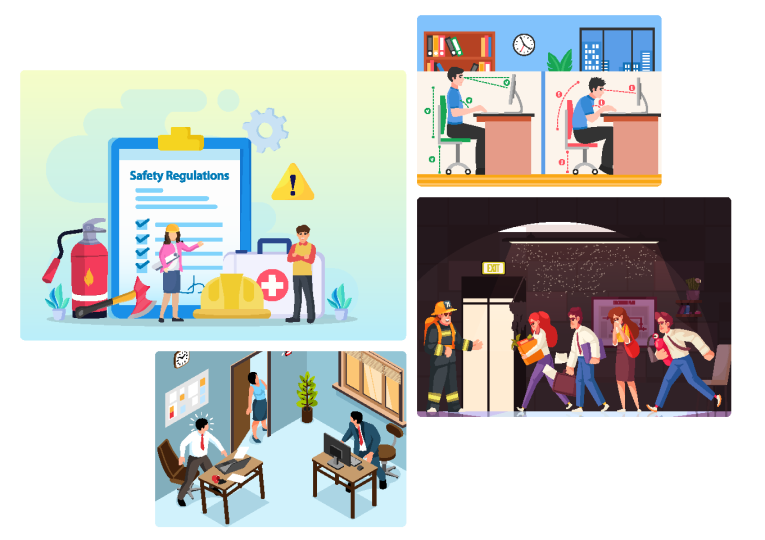
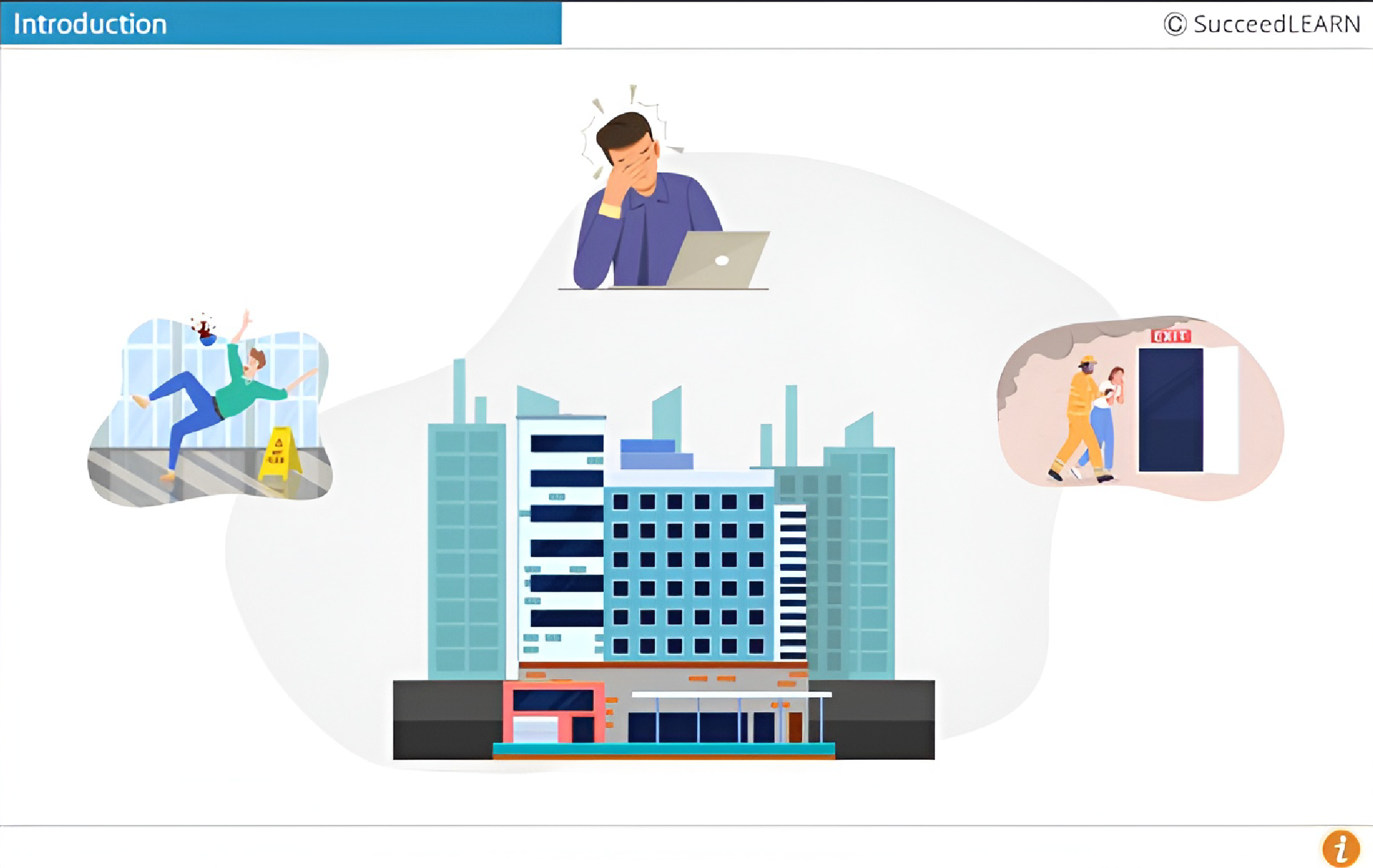
- Recognize the significance of health and safety in the workplace.
- Implement ergonomic best practices for optimal workstation setups.
- Adopt exercises to counteract prolonged sitting or standing and learn correct weight-lifting procedures.
- Understand and mitigate common electrical hazards in the workplace.
- Differentiate between types of emergencies and know the organization's evacuation plan.
- Recognize the role of Personal Protective Equipment (PPE) in IT settings.
What Makes This OHS Training Relevant for Office Workplaces?
Protects employees from avoidable injuries, absenteeism, and long-term health risks
The Occupational Health and Safety training helps employees recognise everyday hazards, from poor posture and repetitive strain to electrical risks and unsafe lifting. By proactively educating staff on safe practices, employers reduce workplace injuries, reduce the risk of chronic health conditions, and minimise lost workdays due to preventable incidents.
Strengthens organisational compliance with workplace safety obligations
The training covers essential areas such as ergonomics, emergency procedures, electrical safety, and PPE usage. These reflect core regulatory expectations for a safe and healthy workplace. When employees understand and follow these guidelines, orgs demonstrate compliance with health & safety standards and reduce exposure to legal claims.
Ensures employees respond correctly during emergencies, reducing panic and liability
By outlining clear evacuation steps, assembly point behaviour, what NOT to do, and the importance of drills, the Occupational Health and Safety training builds organisational preparedness. A well-trained workforce reacts calmly, avoids bottlenecks, supports vulnerable colleagues, and follows authorised instructions - significantly reducing injury risk during fire alarms, natural disasters, or chemical incidents.
Tailored to non-industrial / IT workplaces where risks are subtle but impactful
Although not a manufacturing or high-risk setting, the document shows how office roles still face hidden dangers: eye strain, wrist injuries, falls from unsafe behaviour, tripping hazards, and electrical risks. Providing this training is essential to protect knowledge-based employees whose well-being directly impacts operational performance.
Scenario-Based Learning That Reinforces Real-World Safe Behaviour
Employees don’t just read rules, they apply them through realistic scenarios (e.g., unsafe climbing, tripping hazards, electric risks, emergency evacuations). This boosts retention and drives actual behaviour change.
Course's Screenshots
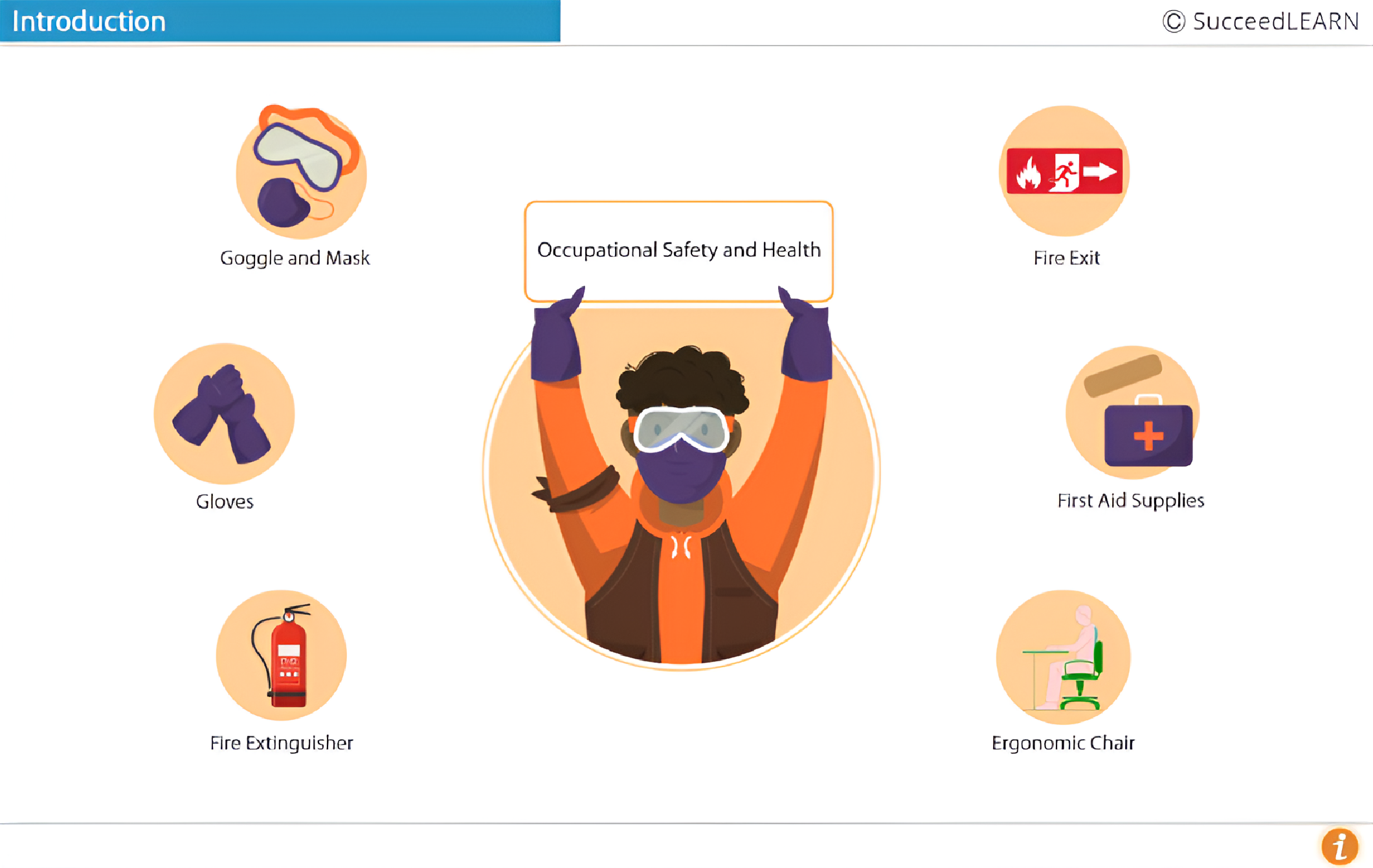
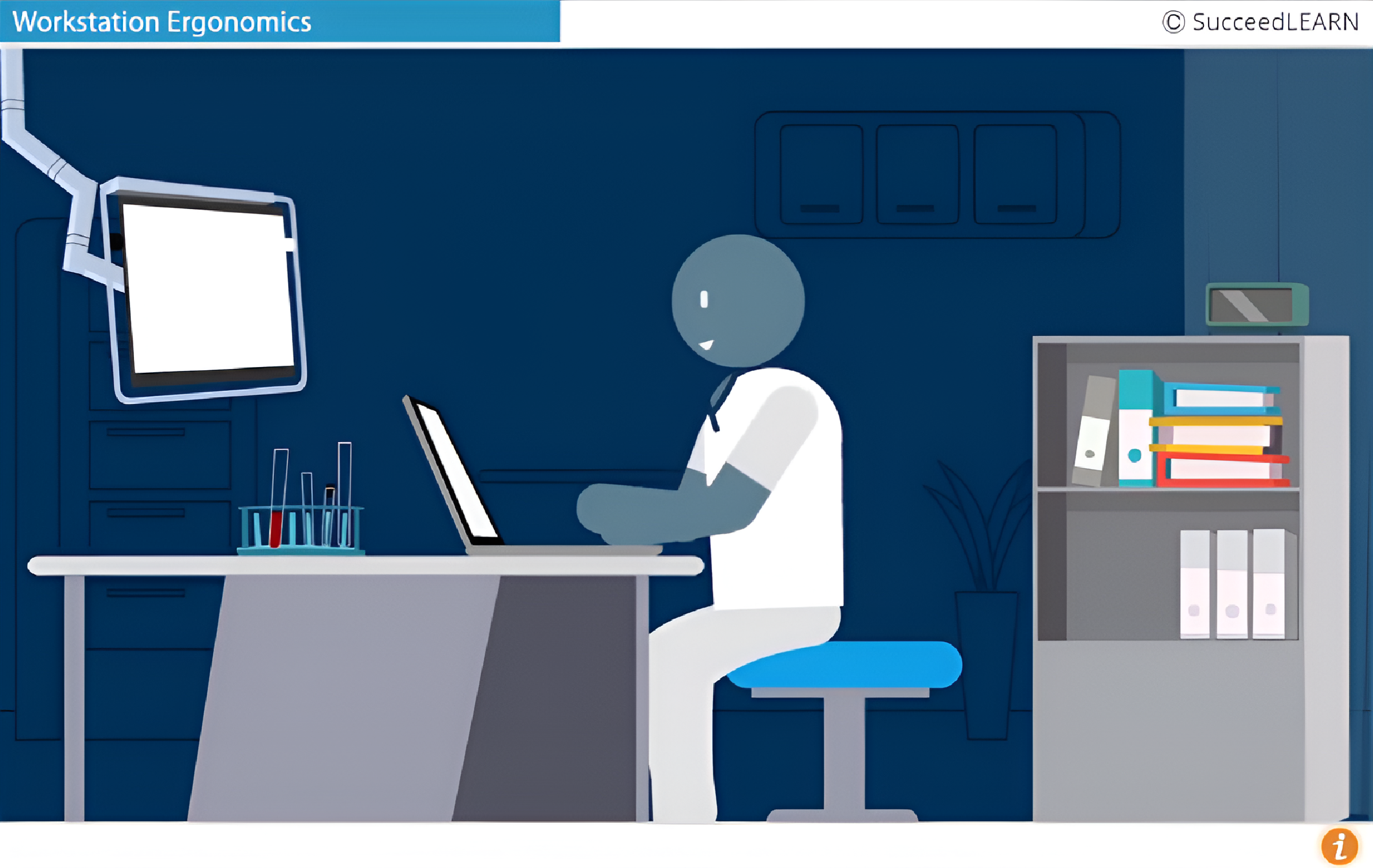
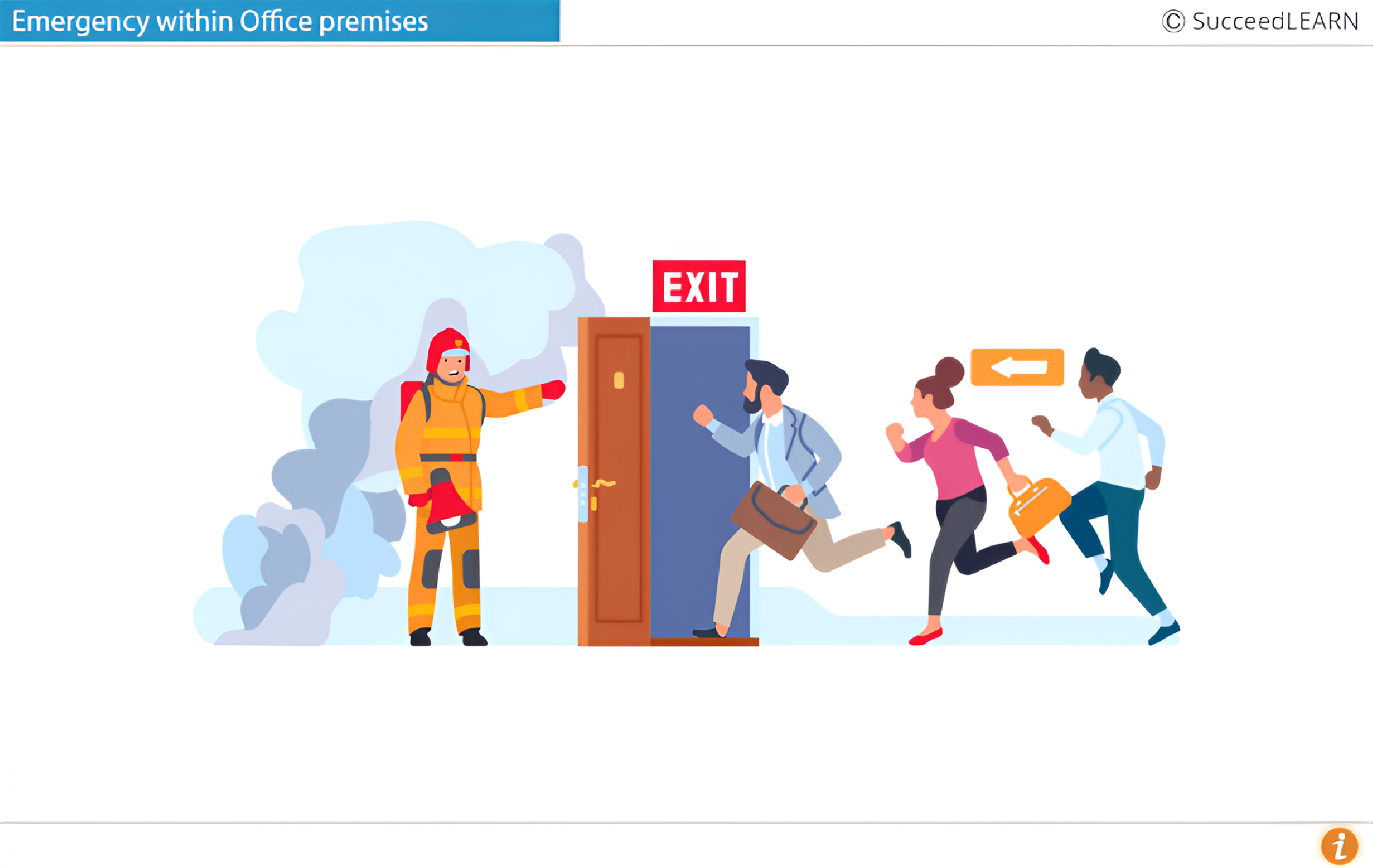
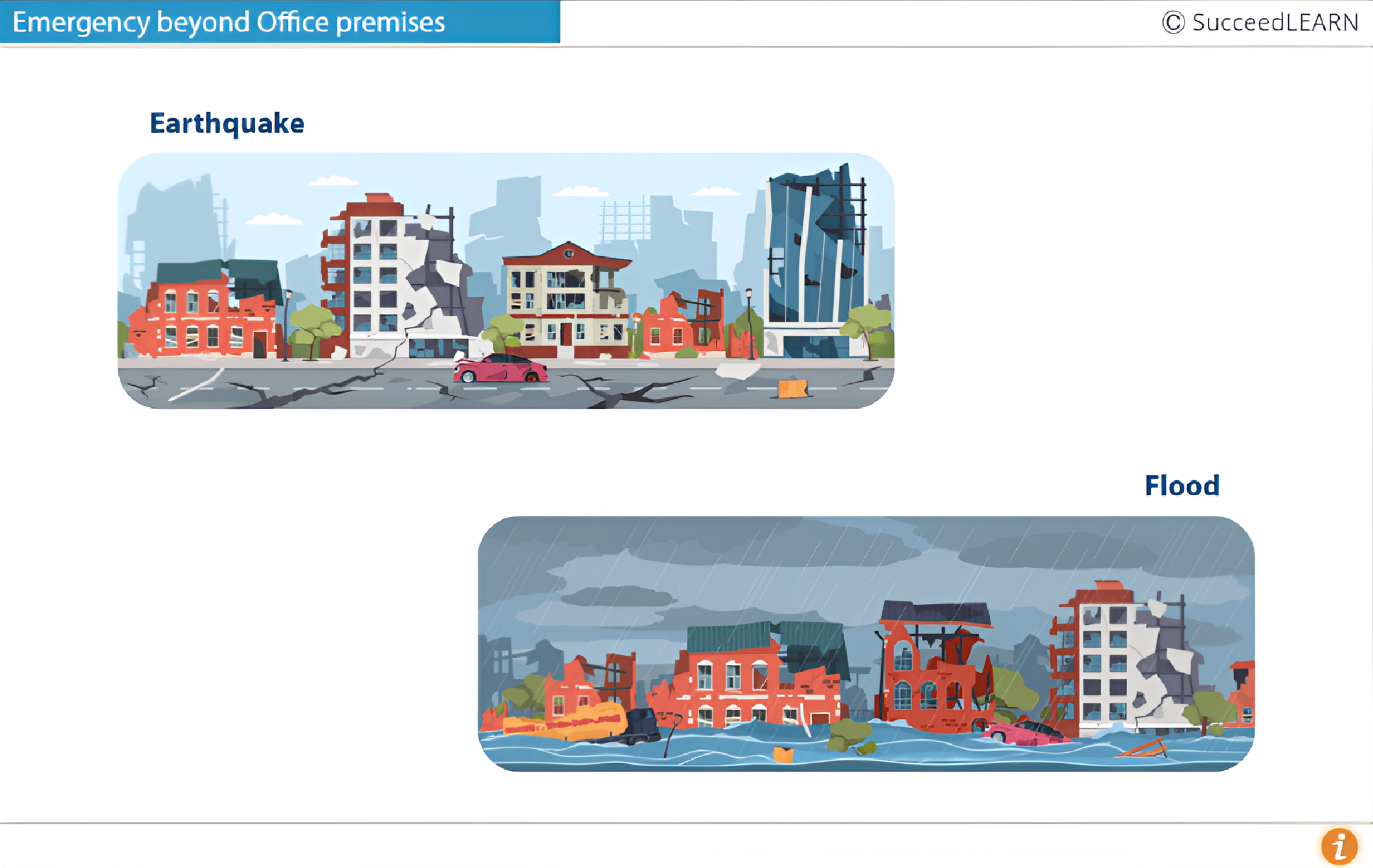
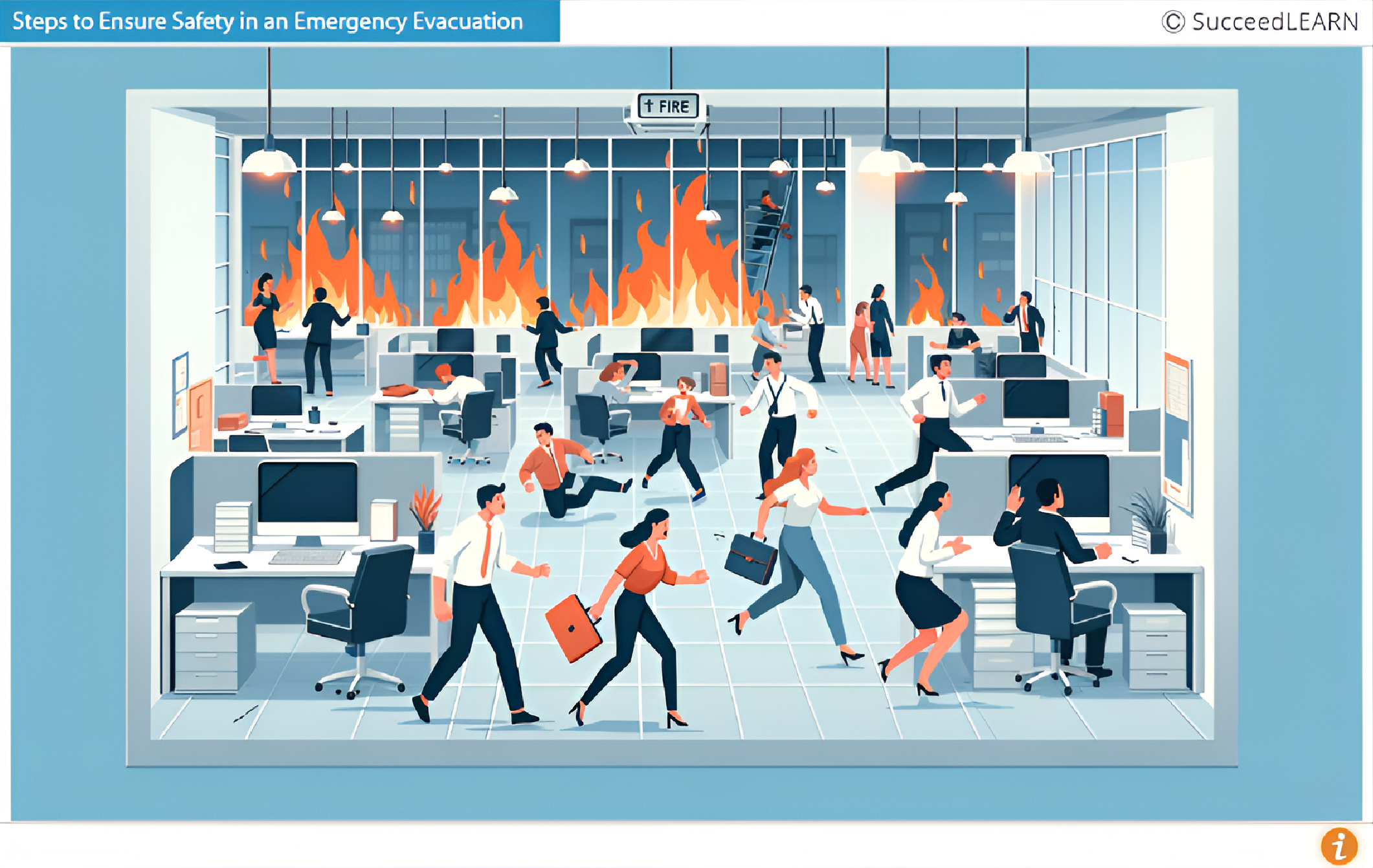
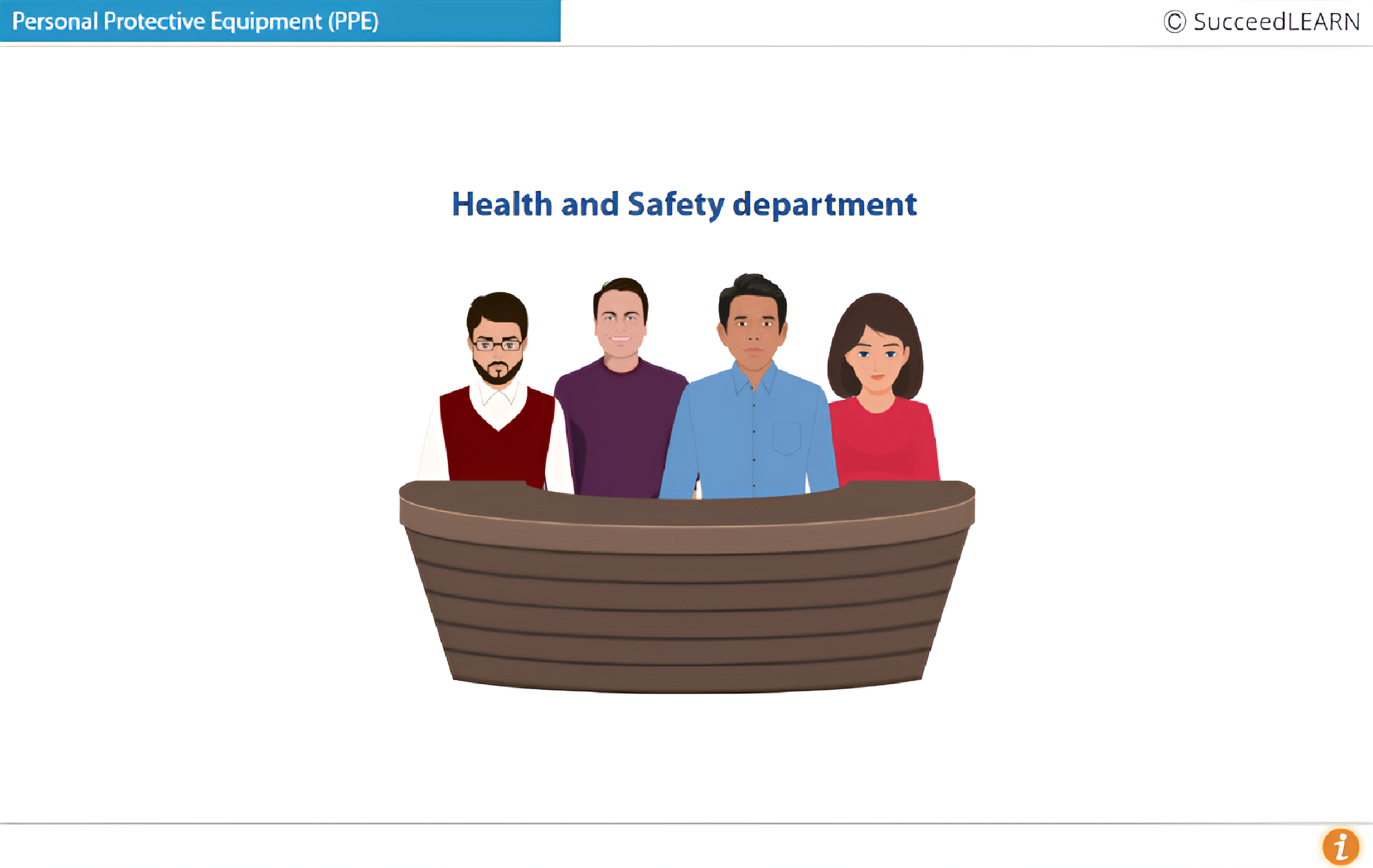

Course Structure
Learning elements
Format & accessibility
The platform offers fully responsive design across desktop, tablet, and mobile, along with a learner dashboard, progress tracking, employee reminders, and seamless integration with your existing systems.
Certificate
On successful completion and passing the assessment, learners can generate a completion certificate as proof of training (configurable per org).
Target Audience
The OHS Training is tailored for:
- All office-based employees who use computers, desks, monitors, and other IT equipment daily.
- Remote and hybrid workers who need guidance on safe workstation setup and ergonomic practices.
- IT professionals and support teams handling electrical devices, cabling, and sensitive hardware.
- Facilities and administration staff involved in workplace safety, equipment handling, and emergency coordination.
- Supervisors and team leads responsible for promoting safe behaviours and ensuring compliance.
- New employees and interns who must understand workplace hazards, emergency procedures, and PPE expectations.
- Employees involved in physical tasks such as lifting, moving objects, or accessing elevated areas.
Case Studies: Real Consequences of Non-Compliance
Occupational Health and Safety Training is a legal requirement and a fundamental part of employer duty of care. Providing it protects employees, reduces risk, and safeguards your org from legal and operational consequences.
Following are few cases where companies faced penalties and severe backlash for failing to comply to Occupational Health and Safety Training:
- Amazon OSHA Settlement & Penalty (U.S., 2024): Amazon agreed to a settlement with the U.S. Occupational Safety and Health Administration (OSHA) after OSHA alleged the company failed to sufficiently prevent ergonomic injuries like back problems at its warehouses. As part of the settlement, Amazon will implement improved ergonomic safety measures across its facilities and pay a penalty of $145,000, representing over 90% of the fines OSHA assessed. The agreement includes requirements for annual ergonomic risk assessments, increased training, and reporting systems to address worker safety concerns.
- In March 2005, a catastrophic explosion at the BP Texas City refinery killed 15 workers and injured around 180 others when a hydrocarbon vapor cloud ignited during equipment startup.
OSHA initially fined BP $21 million for safety violations, and later enforcement uncovered additional failures to address hazards, resulting in record-setting penalties of up to $50.6 million and further OSHA settlements totaling millions more.
Course Outline
Workstation Ergonomics
- Ergonomic Desk Setup
- Monitor
- Keyboard and Mouse
- Phone
- Exercises at Your Desk
- Lifting Weights
Scenario of a female employee working late in the office.
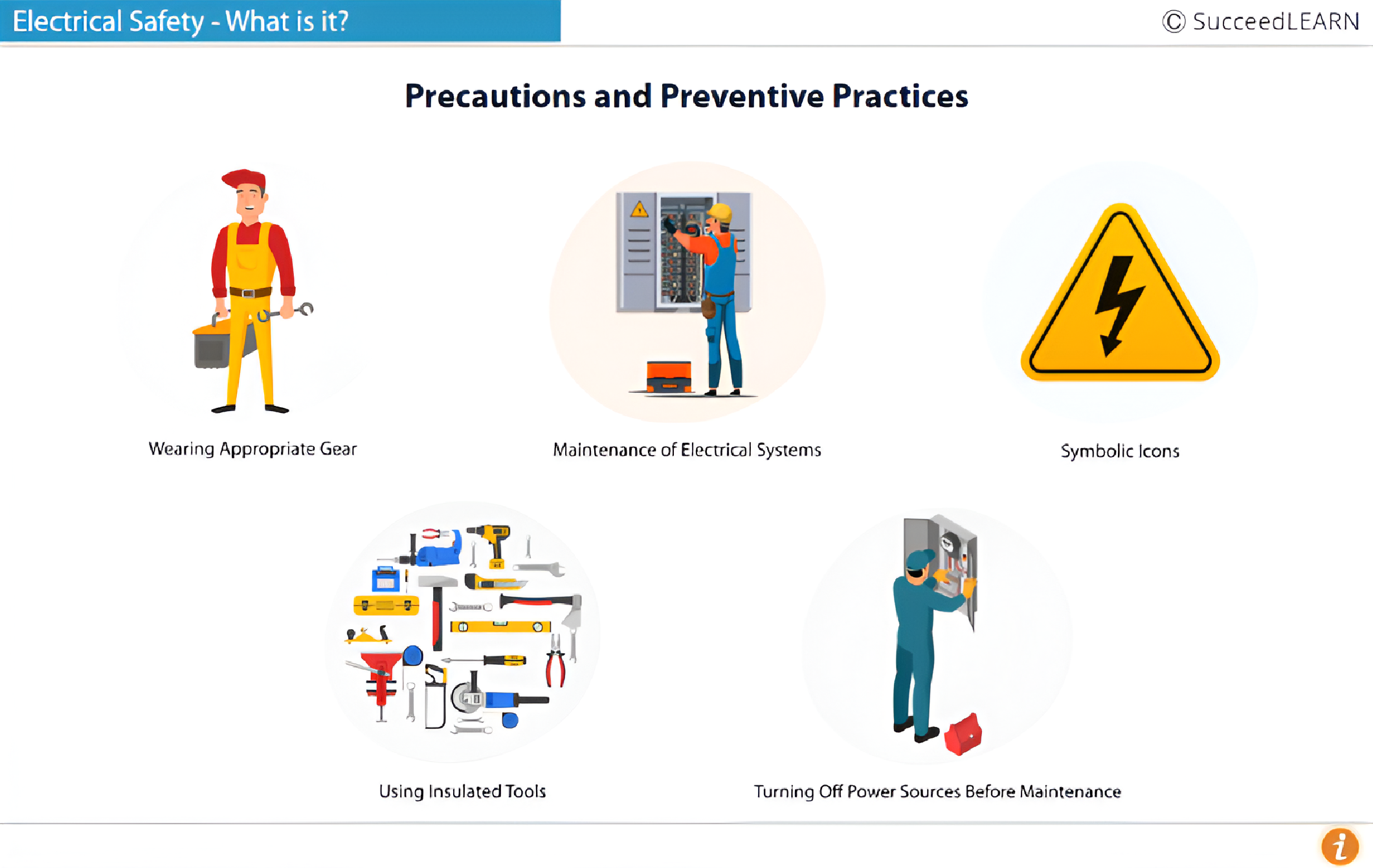
Electrical Safety
- What is it?
- What Can Happen?
- How to Prevent or Mitigate It as an Employee
Emergency Response Procedures
- Emergency Response
- Emergency within office premises
- Emergency beyond office premises
- What steps can you take to ensure your safety in an emergency evacuation?
- What should you not do during an emergency evacuation?
Personal Protective Equipment (PPE)
See how Succeed will work for your Organization

Request a Demo
FAQs
Occupational Health and Safety (OHS) refers to the policies, procedures, and practices designed to protect the health, safety, and wellbeing of people at work.
The training covers essential workplace safety topics including workstation ergonomics, safe lifting practices, electrical safety, emergency response procedures, and the role of PPE in IT-centric environments. It teaches employees how to recognise hazards, prevent injuries, and respond correctly to emergencies.
Because employees spend long hours at their desks, poor posture and improper workstation setup can lead to musculoskeletal injuries. The training teaches correct sitting and standing posture, optimal monitor placement, correct keyboard and mouse usage, and simple desk exercises that reduce the risk of strain and boost productivity.
Yes. The module includes ergonomic setup guidance and targeted exercises for the neck, back, palms, and wrists to reduce the risk of strain from prolonged computer use. It also recommends regular breaks and posture adjustments.
The training explains common electrical hazards such as shocks, overloaded power strips, short circuits, and tripping hazards from loose cables. It also instructs employees on inspection routines, safe device usage, proper cable management, and early reporting of faulty equipment.
Yes. Employees learn the difference between emergencies inside and outside the office, how to evacuate safely, the importance of knowing exits and assembly points, and what to do (and not do) during an evacuation. It reinforces calm, orderly behaviour and compliance with authorised personnel.
Through scenario-based learning, the training highlights unsafe actions such as climbing unstable objects, blocking exit routes, panicking during emergencies, misusing electrical outlets, and lifting heavy objects incorrectly. These examples help employees recognise and avoid risky behaviour.
Yes. The training teaches employees how to assess load capacity, lift objects using proper posture, minimise twisting, seek assistance when required, and avoid lifting from floor level or above shoulder height.
Yes. While PPE is often associated with industrial roles, the training explains how PPE applies in IT settings — such as blue-light glasses, gloves for handling server components, and reporting any health or safety concerns to the Health & Safety department.
By teaching employees to recognise hazards early, adjust ergonomics properly, practice safe lifting, manage cables, inspect electrical equipment, and follow emergency protocols, the training directly reduces the likelihood of accidents and injuries.
Absolutely. Even office-based roles present risk, such as eye strain, neck pain, tripping hazards, electrical issues, and emergency situations. The training helps every employee understand and manage risks unique to office and IT work environments.
The module helps employers fulfil their duty to provide a safe working environment by ensuring employees know how to reduce the risk of injuries, respond in emergencies, and use equipment safely. This strengthens workplace safety culture and reduces legal exposure.
They should not panic, block exit routes, use elevators, wander away from the assembly point, or return to the workplace until authorised by the floor warden or assembly point in-charge.
The delivery is fully flexible. If you have an in-house LMS, we can provide the course as a SCORM-compliant package. If not, we offer a seamless SaaS-based hosting option for easy access and deployment.