Respect Parental Rights
Understand the rights parents exercise under FERPA, including access to and requests to amend education records.


Every school maintains sensitive information about its students, from academic performance and attendance to disciplinary records and personal details. School staff must understand how to access, use and disclose this information responsibly while respecting the rights of parents under the Family Educational Rights and Privacy Act (FERPA).
SucceedLEARN's FERPA Awareness Training for Non-Eligible Students is designed to help K–12 school employees understand FERPA requirements, protect student education records and make informed decisions when handling confidential student information.
Through practical school-based scenarios, interactive knowledge checks and an end-of-course assessment, the training covers parental rights, education records, directory information, permitted disclosures and employee responsibilities.
Understand the rights parents exercise under FERPA, including access to and requests to amend education records.
Recognize when student information may be shared and when consent or another permitted basis for disclosure is necessary.
Understand the importance of safeguarding school portals, digital records, login credentials and physical documents.
Help teachers, administrators and support staff make informed decisions when handling student information.
FERPA awareness training helps schools reinforce privacy responsibilities across everyday administrative and educational activities.
The course introduces FERPA requirements through situations involving student records, parental requests and responsible information handling in K-12 settings.
Learn the purpose and scope of FERPA, identify education records and recognize personally identifiable student information.
Explore the rights parents have to inspect, review and request amendments to their children's education records before those rights transfer to the student.
Understand the distinction between protected education records and information designated as directory information, including relevant disclosure considerations.
Learn practical precautions for accessing, storing, sharing and protecting student records in both physical and electronic formats.
Recognize circumstances where education records may be disclosed under applicable FERPA exceptions and when requests should be referred to authorized school personnel.
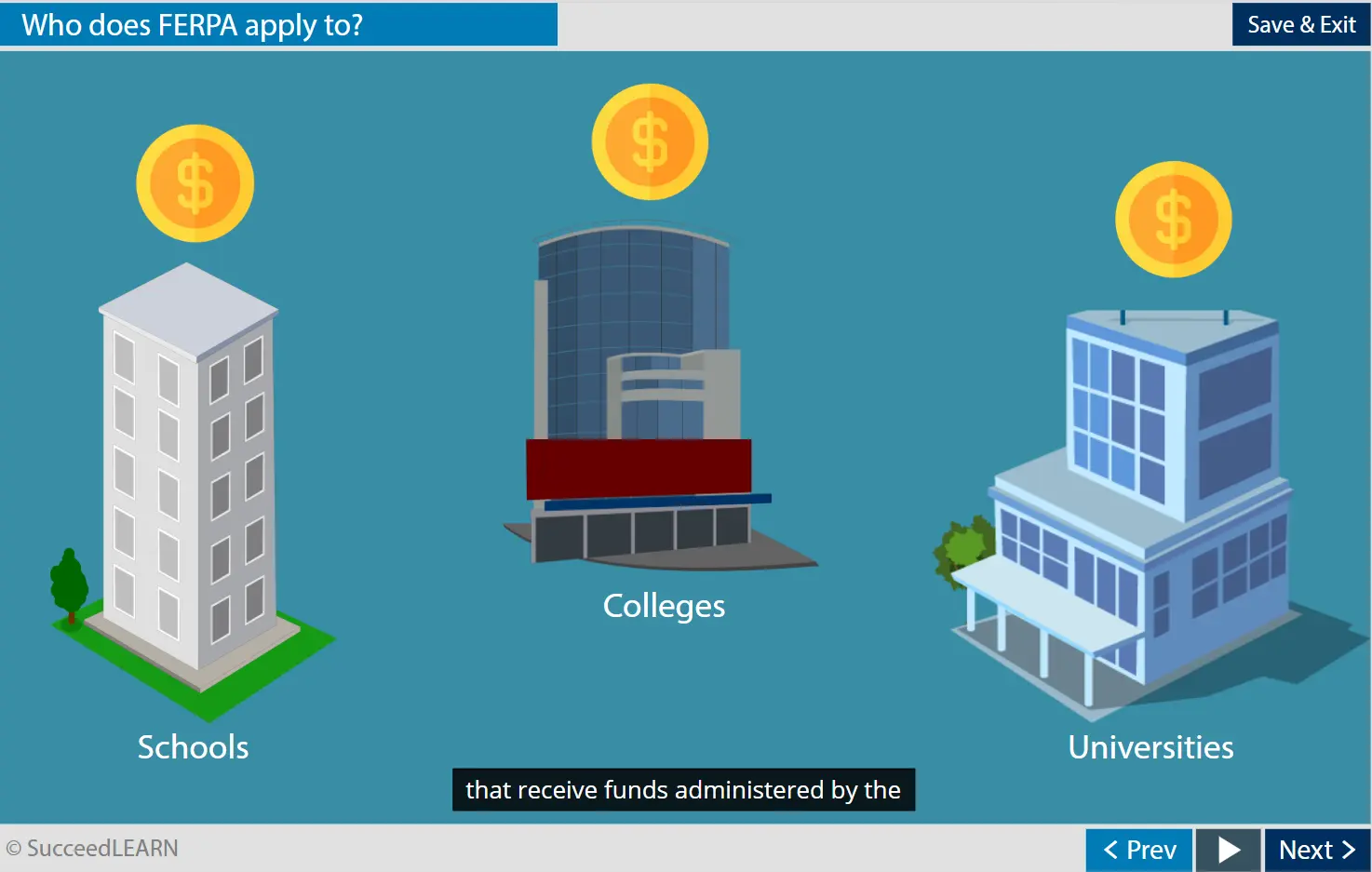
The Family Educational Rights and Privacy Act (FERPA) is a United States federal law protecting the privacy of student education records at educational agencies and institutions receiving applicable funding from the U.S. Department of Education.
This course focuses on students whose FERPA rights are exercised by their parents.
| Regulatory Area | Topics Covered |
|---|---|
| Family Educational Rights and Privacy Act (FERPA) | Purpose, scope and application to educational institutions |
| Education Records and Personally Identifiable Information | Identifying student records and information requiring appropriate protection |
| Parental Rights Under FERPA | Access, inspection, review and amendment of education records |
| Directory Information | Directory information designations and disclosure considerations |
| Consent and Permitted Disclosures | Authorization requirements and applicable exceptions |
| FERPA Non-Compliance | Potential consequences of non-compliance and employee responsibilities |
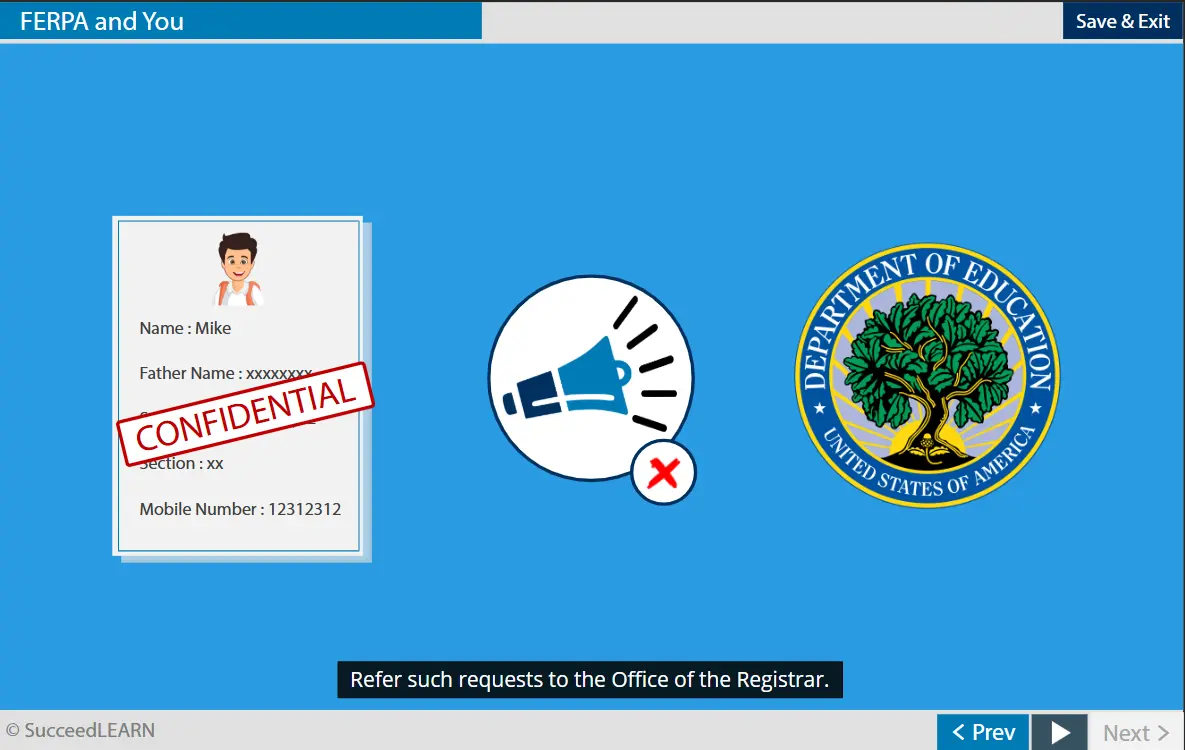
The training introduces the importance of following institutional procedures when responding to parental requests or requests from third parties.
Clear explanations introduce FERPA requirements, parental rights and responsibilities associated with student education records.
Examples involving grades, school records, parental requests and external organizations help learners relate FERPA concepts to their work.
Learners assess situations involving education records, directory information and disclosure decisions.
An assessment reinforces understanding of FERPA principles, parental rights and appropriate student information handling.
Fully responsive interface across desktop, tablet, and mobile, complete with a learner dashboard, progress tracking, automated reminder prompts, and seamless integration with your existing LMS or HR systems.
Upon successful completion, you receive a CPD certificate valid as proof of training.
The course includes interactive exercises that encourage school staff to consider how student records should be handled and whether particular disclosures are appropriate.
Request a Demo
The course is designed for personnel handling education records of students whose FERPA rights are exercised by their parents.
FERPA training for K–12 schools helps teachers and school staff understand the privacy requirements associated with student education records, parental rights and appropriate information disclosures.
It is training focused on students whose FERPA rights have not transferred to them and are generally exercised by their parents.
Teachers, administrators, records personnel, school counselors and other authorized employees who handle student education records can benefit from FERPA awareness training.
Parents generally have rights to inspect and review their children's education records, request amendments and exercise applicable consent rights before those rights transfer to the student.
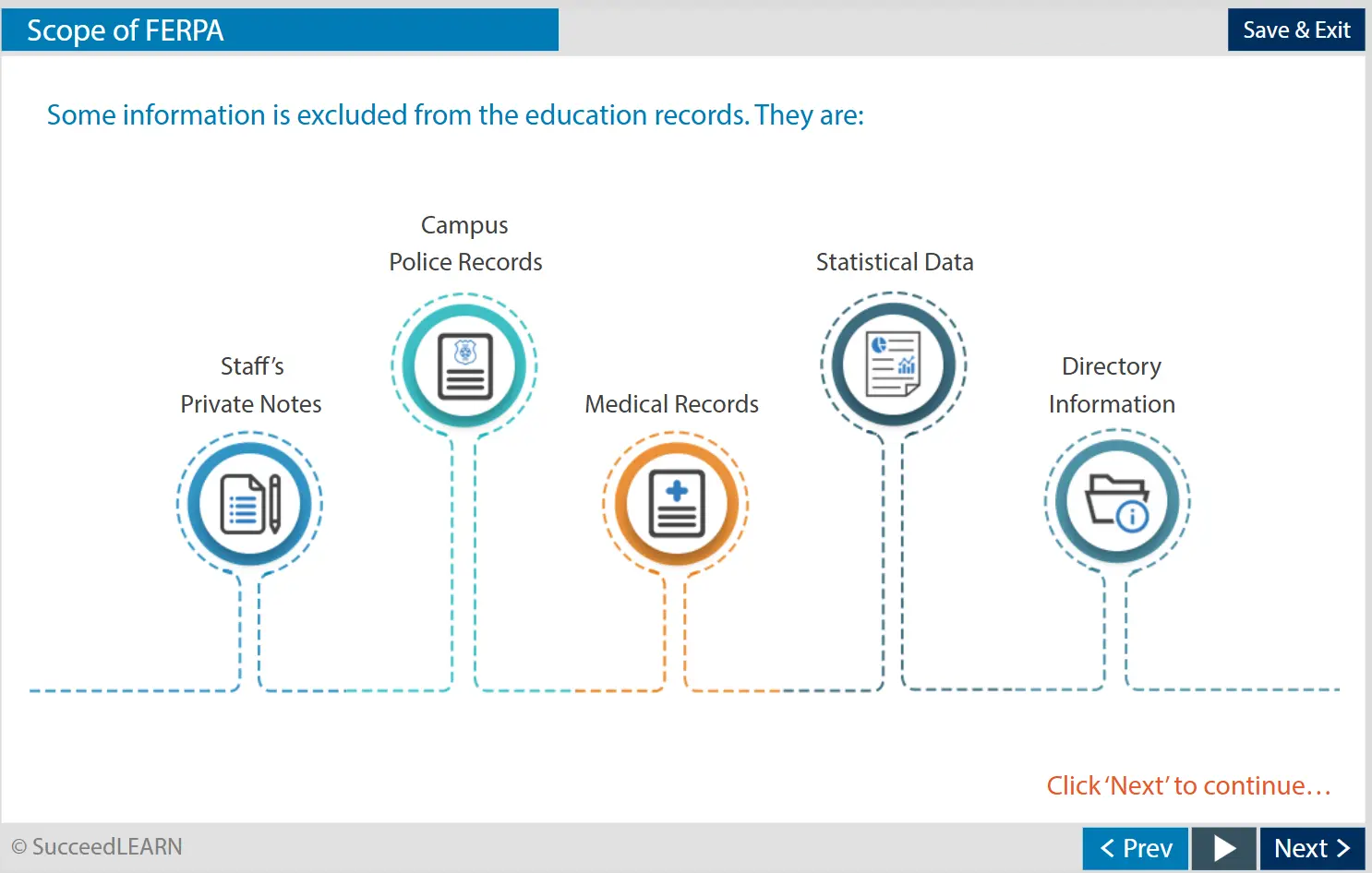
FERPA generally protects education records directly related to a student and maintained by an educational agency or institution, or by a party acting on its behalf.
Directory information consists of information categories designated by an institution under FERPA, subject to applicable notice and opt-out requirements.
Disclosure must comply with FERPA's applicable consent requirements or a recognized exception. An external organization's request does not automatically permit access.
Yes. FERPA can protect education records maintained electronically as well as in paper form.
Yes. The course addresses login credential protection, secure devices and responsible access to student records.
Yes. It introduces circumstances where information may be disclosed under applicable FERPA exceptions.
Yes. The course includes knowledge checks and a final assessment.
No. Training supports employee awareness but does not replace institutional policies, procedures and other compliance responsibilities.