
- Animated Videos
- Short slides with narrated text
- Interactive scenario exercises
- Real-life case examples
- Frequent knowledge checks / quizzes
- Final assessment / certificate generation
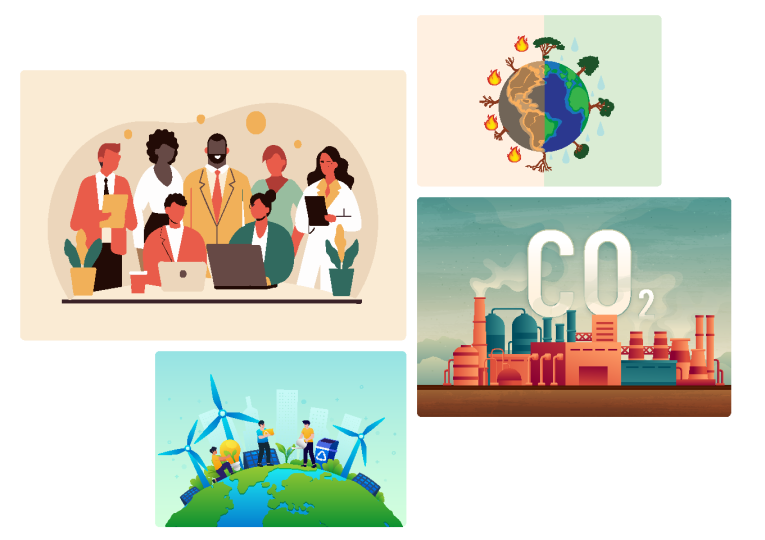
Learning Objectives
By the end of this course, learners will be able to:
- Identify and understand the core components of the ESG framework
- Explain how ESG principles support long-term sustainability, risk management, and responsible business practices
- Assess how ESG expectations can be extended across supplier networks and customer relationships
- Demonstrate how individual and organisational actions can contribute to improved environmental, social, and governance outcomes
- Understand internal reporting mechanisms and escalation procedures for identifying and reporting ESG-related violations
Why Environmental, Social and Governance Awareness Training?
Moves ESG from a “nice-to-have” to a business-critical risk framework
The training clearly positions ESG not as philanthropy or CSR, but as a strategic framework for identifying risks and opportunities across environmental, social, and governance dimensions. This helps employers move beyond symbolic ESG commitments and embed sustainability into core business decision-making, protecting long-term enterprise value.
Demonstrates duty of care towards employees, communities, and society
The Social pillar modules address workplace health and safety, diversity & inclusion, data privacy, fair labour practices, and community engagement. Training employees on these areas helps employers demonstrate that they have taken proactive steps to prevent harm, reduce workplace incidents, and uphold human rights across operations and supply chains.
Mitigates supply-chain and third-party ESG risk
The training explicitly extends ESG responsibility beyond the org to suppliers, vendors, and partners, covering risks such as child labour, forced labour, environmental abuse, and corruption. This equips employees involved in procurement, vendor management, and operations to identify red flags early, helping employers avoid downstream legal exposure and reputational fallout.
Covers the full ESG lifecycle in one program
Unlike narrow ESG courses, this product integrates Environmental, Social, Governance, Supply Chain, and Downstream Due Diligence in a single learning journey, helping orgs address ESG risks across operations, vendors, and product usage, all in one rollout.
Practical, role-relevant content embedded into the learning flow
The course translates ESG concepts into real workplace actions, using relatable examples (energy use, waste reduction, data privacy, fair labour practices, ethical conduct), enabling employees to immediately apply learning without additional workshops.
Laws & Regulations Addressed in ESG Compliance Training
Adopted by all UN Member States in 2015, the 2030 Agenda for Sustainable Development sets a global roadmap for peace, prosperity, and planet protection. At its core are the 17 Sustainable Development Goals (SDGs) - a universal call to end poverty, reduce inequality, promote health and education, drive sustainable growth, and combat climate change while preserving natural resources.
| Legislation / Concept | Relevance in the Course |
|---|---|
| EU CSRD SFDR EU Taxonomy | The course covers the ESG regulation that is shaped by the CSRD (Corporate Sustainability Reporting Directive), SFDR (Sustainable Finance Disclosure Regulation), and the EU Taxonomy, which together require companies and financial institutions to disclose sustainability impacts and classify environmentally sustainable activities to ensure transparency and accountability. |
| UK Companies Act 2006, Companies (Strategic Report) Regulations 2013 and TCFD | The course covers key pieces of legislation in the UK including - Companies Act 2006, Companies (Strategic Report) Regulations 2013 and TCFD (Task Force on Climate related Financial Disclosures) requiring companies to report on ESG factors that affect their business strategy, risks, and long-term value. |
| U.S. ESG Regulation | The course covers the ESG regulation that is driven primarily by the Securities and Exchange Commission (SEC), which requires public companies to disclose material climate-related and ESG-related risks. |
Course's Screenshots

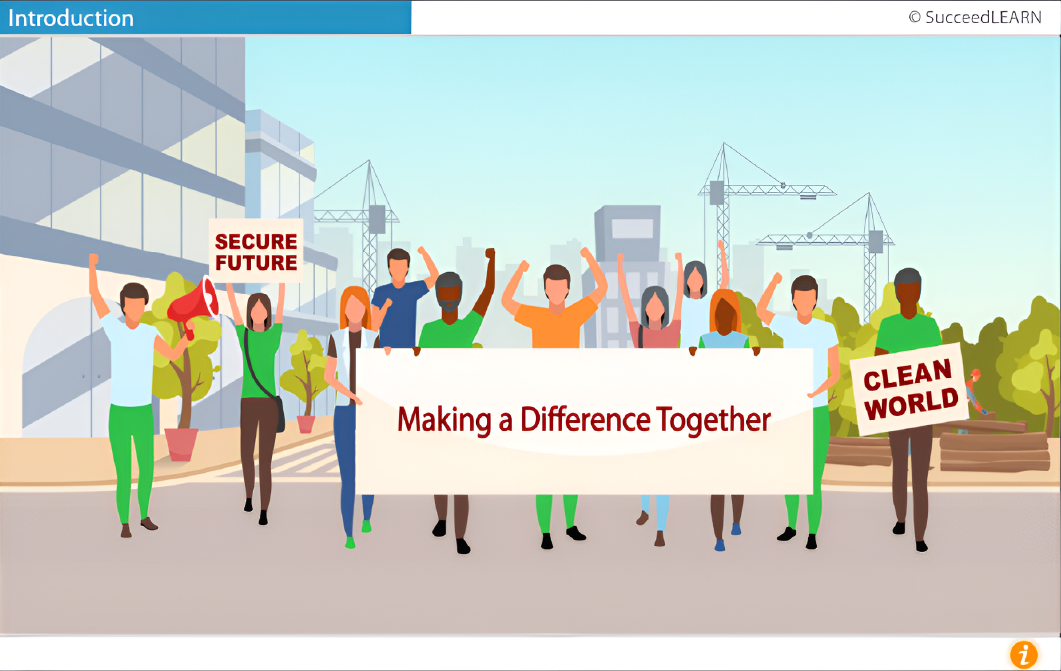
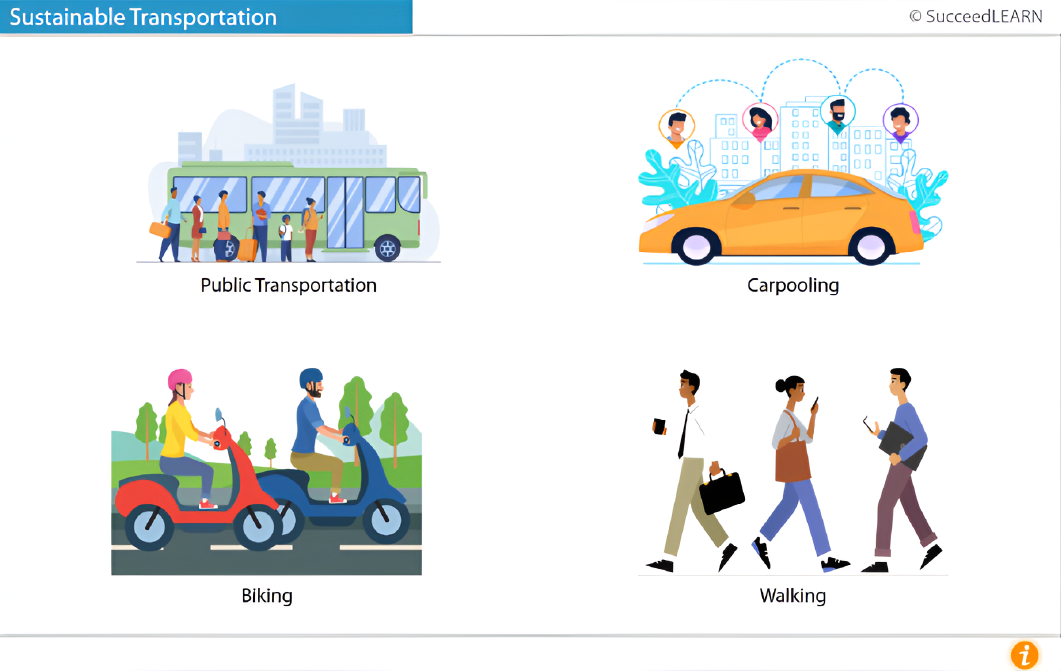
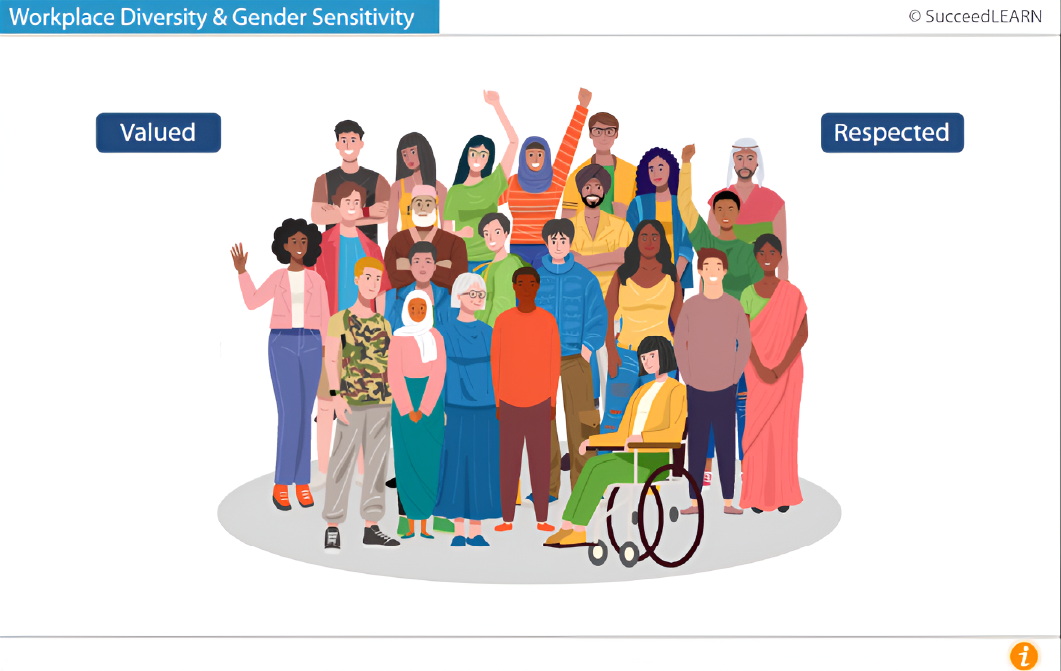

Course Structure
Learning elements
Format & accessibility
Accessible on any device, supported by an intuitive learner dashboard, real-time progress tracking, smart reminders, and easy integration with your current platforms.
Certificate
On successful completion and passing the assessment, learners can generate a completion certificate as proof of training (configurable per org).
Target Audience
The ESG Fundamentals training is tailored for:
- People Managers & Team Leads – To reinforce responsible decision-making, fair labour practices, and ethical conduct within teams
- Procurement & Vendor Management Teams – To identify ESG risks in suppliers, sourcing, and third-party relationships
- Compliance, Risk & Internal Audit Teams – To support ESG governance, reporting, and assurance readiness
- Operations & Facilities Teams – To drive environmental efficiency, waste reduction, and energy management initiatives
- IT, Data & Cybersecurity Teams – To strengthen data privacy, information security, and governance controls
- HR & L&D Teams – To embed ESG culture, diversity, safety, and upskilling across the workforce
- Senior Leadership, Compliance & ESG Committees –To ensure organisation-wide alignment with ESG strategy and accountability
In short, for all employees to build baseline ESG awareness and translate sustainability policies into daily workplace actions.
Case Studies: Real Consequences of Non-Compliance
While the course itself may not be mandated, the ESG requirements are legally binding, and training is a recognised way to demonstrate compliance.
Effective ESG training (like our eLearning course) helps orgs recognise misleading disclosures and reputational risks, improve internal controls, reporting, and risk management, demonstrate due diligence and governance maturity to regulators and reduce the likelihood of costly enforcement actions due to ignorance or poor practice.
Following examples demonstrate that ESG non-compliance isn’t abstract, it leads to significant financial penalties, legal actions, and strategic costs:
- Volkswagen’s Dieselgate scandal resulted in over $30 billion in fines, settlements, and buybacks worldwide for emissions cheating, linked to weak governance and environmental reporting controls. This remains one of the most dramatic examples of environmental non-compliance with direct financial, legal, and reputational impact.
- ABANCA (Spain) was fined €187,650 by the European Central Bank for failing to properly assess and disclose climate risks.
Course Outline
Regulations Driving ESG Adoption
Org’s ESG Policy
Components of ESG:
Environmental
- Energy Management
- Greenhouse Gas Emissions
- Climate Change and Bio-diversity Loss
- Improper Waste Management
Integrating Environment Best Practices
Examples of how some of your peers in the industry are incorporating environmental friendliness into their daily routines.
Sustainable Transportation
Waste Reduction
Green Procurement
Social
Focus on six critical areas
- Workplace Diversity & Gender Sensitivity
- Health and Safety at Workplace
- Community Engagement and Social Equity
- Developing the Skills of Our Human resources
- Data Privacy
- Fair Labour Practices
Integrating Social Best Practices
Governance
- Board and Management Structures
- Tax and Accounting Practice
- Corporate Governance
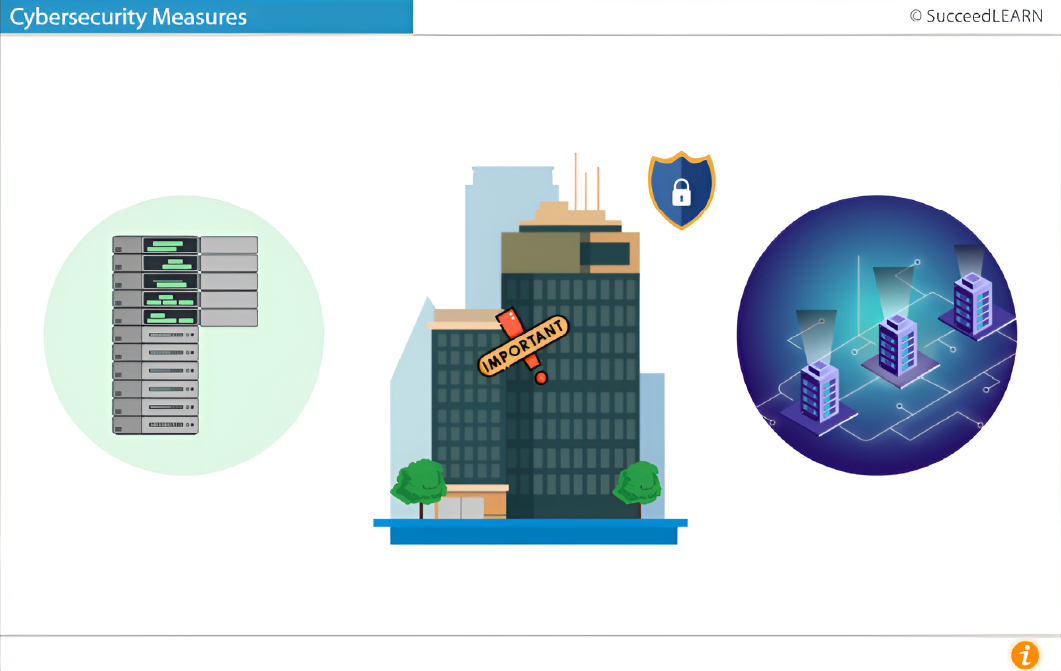
- Cybersecurity Measures
- Integrating Governance Best Practices
Supply Chain Management
Examples on how some orgs pass the buck by using questionable supply chain practices.
Downstream Due Diligence
Examples of good downstream due diligence.
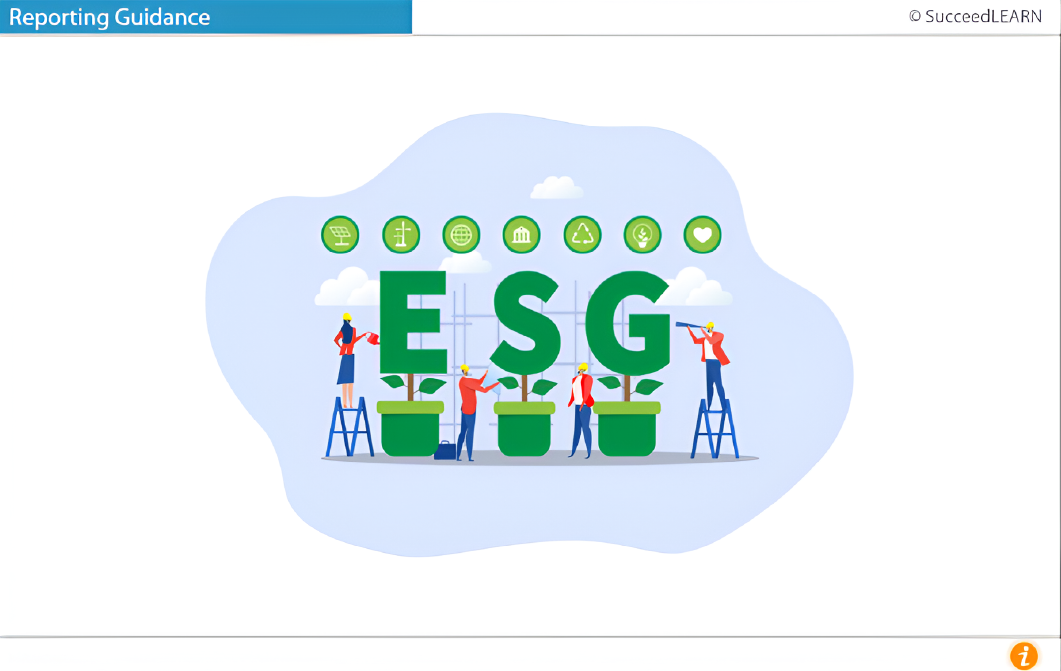
Reporting Guidance
Total Duration: 40 Mins
FAQs
The course provides a clear understanding of Environmental, Social, and Governance (ESG) principles and how they shape responsible, ethical, and sustainable business practices.
The ESG framework helps orgs align with global sustainability standards, identify risks and opportunities related to environmental impact, workforce practices, ethics, and governance. Regulators, investors, and stakeholders increasingly expect companies to demonstrate that ESG principles are embedded into operations, not treated as optional or philanthropic initiatives.
The course is tailored for employees involved in sustainability, ethics, or corporate responsibility initiatives.
It enables them to integrate ESG principles into recruitment, policies, culture, and reporting, thus strengthening the company’s compliance posture and brand reputation.
Non-compliance can result in reputational harm, loss of investor confidence, regulatory penalties, and challenges in attracting talent and partnerships.
In just about 30-40 minutes, learners gain a comprehensive understanding of ESG principles through concise, practical, and interactive content.
Yes. It features inclusive, culturally adaptable examples suited for multinational companies operating across different regions and compliance requirements.
It helps HR embed sustainability into policies, covering fair employment, diversity and inclusion, ethical leadership, and responsible supply-chain management.
The training extends ESG responsibility beyond internal operations to suppliers, contractors, and vendors. It highlights risks such as child labour, forced labour, environmental abuse, and corruption, helping employees involved in procurement or vendor oversight identify and escalate concerns early.
Absolutely. The course can be tailored to reflect your organization’s language, ESG goals, culture, and reporting standards.
Yes. The module includes a final quiz to test understanding and reinforce key learning points. A minimum passing score may be required to complete the training.
Yes. The course focuses on small but effective actions employees can take daily—such as reducing energy and paper usage, following data privacy practices, adhering to safety protocols, and reporting concerns—demonstrating how individual behaviour cumulatively supports organisational ESG goals.
By fostering awareness, accountability, and responsible decision-making, it strengthens compliance, enhances stakeholder trust, and supports long-term business and sustainable growth.
The delivery is fully flexible. If you have an in-house LMS, we can provide the course as a SCORM-compliant package. If not, we offer a seamless SaaS-based hosting option for easy access and deployment.
