
- Visually engaging animated explainers
- Concise, narrated micro-slides
- Real-world case examples
- Frequent knowledge checks and quizzes
- Final assessment
Learning Objectives
By the end of California Consumer Privacy Act (CCPA) Awareness Training, learners should be able to:
- Develop working knowledge about CCPA
- Explain the rights of individuals in protecting their data
- List the organizational obligations related to CCPA
- Identify your responsibilities in protecting the privacy of your stake holders
Why California Consumer Privacy Act (CCPA) Awareness Training?
Establishes defensible CCPA compliance across the organization
The training ensures employees understand when the California Consumer Privacy Act applies, including revenue thresholds, data-volume criteria, and data-monetisation triggers, helping employers demonstrate reasonable and proactive compliance controls rather than reactive remediation.
Reduces exposure to regulatory penalties and enforcement actions
By educating employees on prohibited practices and lawful data handling, the training directly mitigates the risk of civil penalties of up to $2,500 per violation and $7,500 per intentional violation, which can quickly escalate in large-scale or systemic breaches.
Prevents operational failures in responding to consumer rights requests
The course equips employees to correctly manage access, disclosure, deletion, and portability requests within statutory timelines (including the 45-day response requirement), reducing the risk of non-compliance due to missed deadlines or inconsistent responses.
Reduces unlawful data sharing and third-party risk
The training reinforces opt-out rights, restrictions on selling or sharing Californian residents’ personal information, and mandatory written agreements with service providers, helping prevent unauthorised downstream data use and reduce the risk of common privacy enforcement failures.
Builds customer trust and protects brand reputation
Proper training ensures lawful, transparent, and non-discriminatory treatment of consumers exercising their CCPA rights, helping employers avoid reputational damage associated with privacy complaints, regulatory scrutiny, and public enforcement actions.
Builds customer trust and protects brand reputation
Proper training ensures lawful, transparent, and non-discriminatory treatment of consumers exercising their CCPA rights, helping employers avoid reputational damage associated with privacy complaints, regulatory scrutiny, and public enforcement actions.
Knowledge checks and assessment
The training helps validate understanding of timelines, opt-out obligations, and prohibited data-sale activities with an assessment at the end providing orgs with documented proof of employee awareness and CCPA compliance training.
Laws & Regulations Addressed in California Consumer Privacy Act (CCPA) Awareness Training
| Legislation / Concept | Relevance in the Course |
|---|---|
| California Consumer Privacy Act (CCPA), 2018 (Effective 1 January 2020) | The course translates CCPA requirements into practical employee actions by covering consumer rights, organisational obligations, restrictions on data sharing, third-party controls, and penalties, helping employers demonstrate compliance and reduce regulatory risk. |
California Consumer Privacy Act (CCPA) Awareness Training's Screenshots

Course Structure
Learning elements
Format & accessibility
Fully responsive interface across desktop, tablet, and mobile -complete with a learner dashboard, progress tracking, automated reminder prompts, and seamless integration with your existing LMS or HR systems.
Certificate
On successful completion and passing the assessment, learners can generate a completion certificate as proof of training (configurable per org).
Target Audience
The California Consumer Privacy Act (CCPA) Awareness Training is tailored for:
- Employees handling customer or consumer personal information
- Customer support and client-facing teams responding to data requests
- Sales and marketing teams involved in data collection or sharing activities
- IT, data, and information security personnel managing personal data systems
- Procurement and vendor management teams engaging service providers
- Managers and supervisors responsible for privacy compliance oversight
Case Studies: Real Consequences of Non-Compliance
CCPA/CPRA training is mandatory for personnel responsible for compliance and for handling consumer privacy rights requests within covered businesses - those with annual gross revenue exceeding $25 million, processing personal information of 50,000 or more California residents, households, or devices, or deriving at least 50% of their revenue from selling or sharing personal data.
The training should be extended to any employee likely to receive or respond to privacy inquiries, while it is not required as a blanket obligation for all staff unless their roles fall within these covered categories.
Following are a few cases where companies faced monetary penalties for non-compliance:
- Healthline – $1.55 million settlement (2025)
The California Attorney General secured a $1.55 million penalty against Healthline for continuing to share sensitive health-related data with third parties after consumers opted out, misconfigured opt-out mechanisms, and lacking required contractual safeguards with advertising partners. - American Honda Motor Co. – $632,500 fine (2025)
The CPPA assessed a $632,500 fine against Honda for hindering consumer opt-out rights, requiring excessive identity verification to exercise rights, confusing cookie-banner designs, and failing to keep compliant third-party contracts, showing that even large, well-known organizations can face penalties for technical and procedural compliance failures.
Course Outline
CCPA and its applicability
Personal information
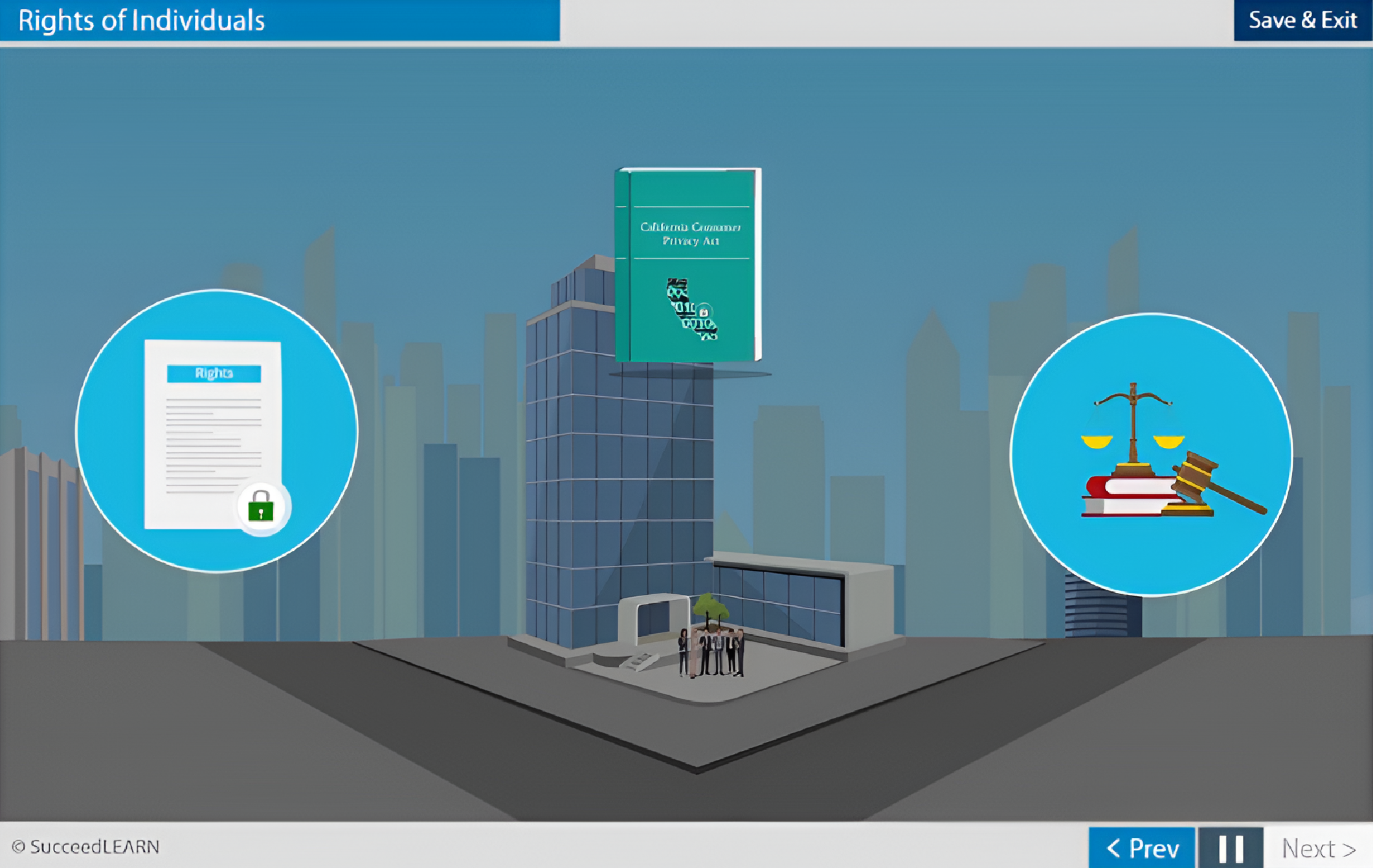
Rights of Individual
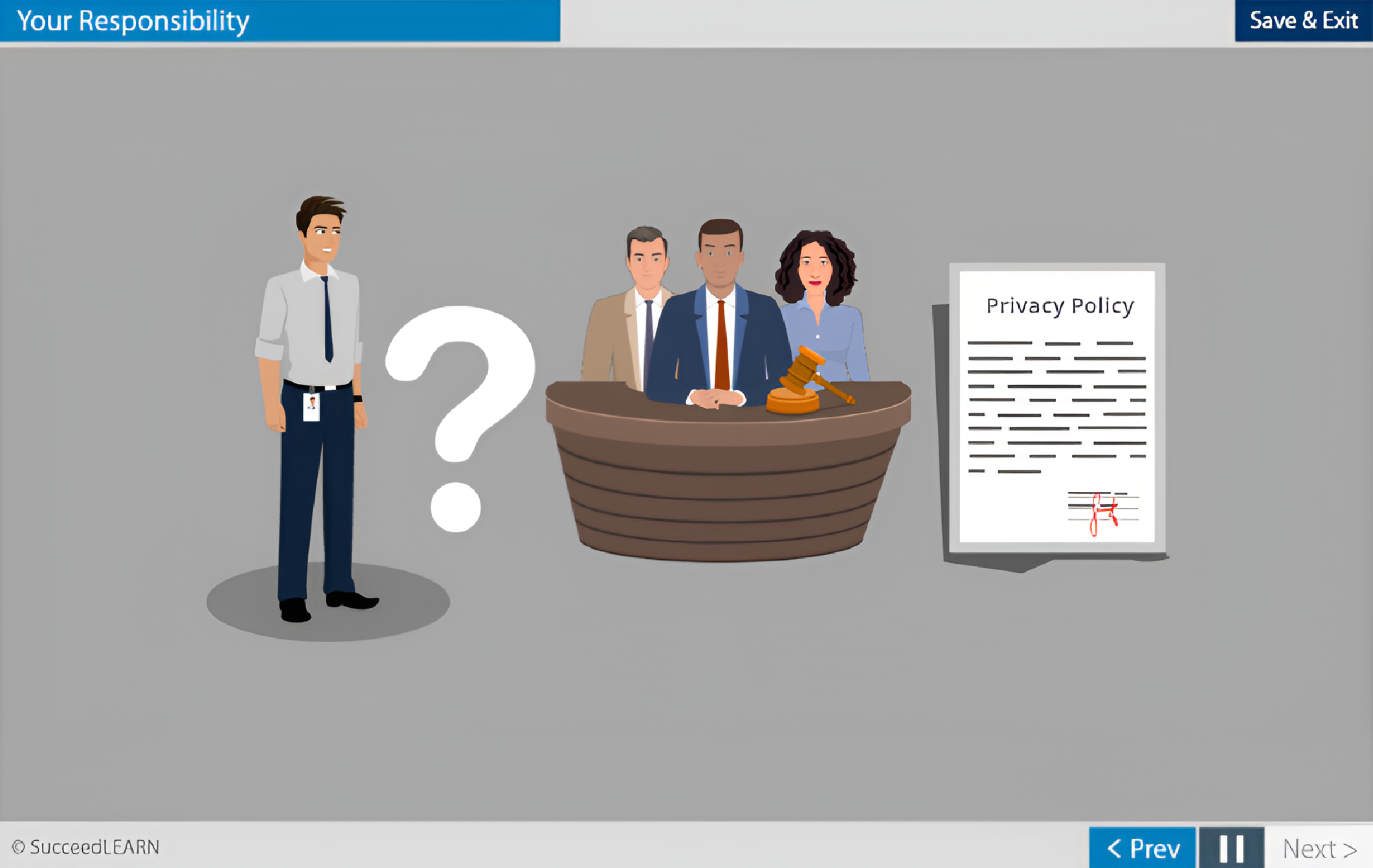
Learner’s responsibility
CCPA Compliance Contact Points
CCPA and Penalties
Total Duration: 15 Mins
FAQs
CCPA training is mandatory for employees responsible for compliance and for handling consumer privacy rights requests in covered businesses, and is a recognized best practice for reducing regulatory risk.
The California Consumer Privacy Act (CCPA) came into being in response to growing public concern over the misuse of personal data by businesses and high-profile data breaches affecting California residents. Public pressure intensified after repeated incidents involving large technology and data-driven companies, prompting a citizen-led ballot initiative aimed at granting consumers stronger control over their personal information.
To pre-empt the ballot measure and establish a comprehensive privacy framework more quickly, the California Legislature enacted the CCPA in 2018, making California the first U.S. state to introduce broad, GDPR-style consumer privacy rights. The Act took effect on 1 January 2020, marking a significant shift toward transparency, accountability, and consumer control in data protection.
CCPA applies to businesses that exceed $25 million in annual revenue, handle personal information of 50,000 or more California residents, households, or devices, or derive at least 50% of their revenue from selling or sharing personal data.
Most CCPA violations arise from employee actions such as mishandling data requests, missing statutory timelines, or improper data sharing - training reduces these operational compliance failures.
The course helps reduce exposure to civil penalties of up to $2,500 per violation and $7,500 per intentional violation, litigation risk, and reputational damage from privacy breaches.
It reinforces the requirement for written agreements with service providers and restrictions on downstream data use, helping employers control vendor-related privacy risks.
Yes. The structured learning, knowledge checks, and final assessment provide documented evidence of employee awareness and reasonable preventive measures expected by regulators.
The delivery is fully flexible. If you have an in-house LMS, we can provide the course as a SCORM-compliant package. If not, we offer a seamless SaaS-based hosting option for easy access and deployment.
