- Animated Videos
- Short slides with narrated text
- Interactive scenario exercises
- Real-life case examples
- Frequent knowledge checks / quizzes
- Final assessment / certificate generation

Learning Objectives
By the end of this course, learners will be able to:
- Identify and recognise sexual harassment across physical, digital, and extended workplaces
- Describe the common types of sexual harassment
- Distinguish between reasonable and harassing behaviour of sexual nature and between intent and impact
- State what to do when you experience or witness sexual harassment
- Know your rights and responsibilities to handle sexual harassment
- Define workplace in the context of sexual harassment at workplace
- List the dos and don’ts when working remotely
- Explain the pitfalls of personal relationships at the workplace
- Summarize the consequences of filing a false complaint
Why POSH India Fundamentals eLearning Training for Employees?
Helps fulfil mandatory legal responsibility under POSH Act, 2013
Every org in India with more than 10 employees must prevent, prohibit and redress sexual harassment. Training employees on rights, duties, Internal Committee processes and workplace behaviour reduces risk of complaints, attrition, inquiry costs and media scrutiny and builds legal compliance readiness and protects the company against non-compliance risks.
Empowers employees to speak up & report concerns without fear
The training guides how to object, respond, seek help, report harassment, when to approach Internal Committee and encourages early resolution. This prevents escalation, reduces silent suffering, and supports zero-tolerance policy outcomes.
Strengthens reporting mechanism through IC awareness
Employees learn composition of Internal Committee, powers, timelines (90-day inquiry, 10-day report submission, 60-day action), conciliation vs inquiry, and how cases are handled fairly and confidentially thereby resulting in informed employees and smoother case handling.
Supports workplace safety beyond office walls
The course highlights that client locations, transport, business travel, virtual platforms and Work From Home environments are part of "workplace" under law thus helping mitigate risk in hybrid work models.
Clarity on what is and is not sexual harassment to avoid grey areas
The training differentiates misconduct vs reasonable workplace actions, helping minimise misinterpretation, false complaints, and interpersonal friction.
Scenario-driven learning
Real-life case scenarios, drag-and-drop interactions, knowledge checks, impact vs intent situations, virtual workplace behaviours and bystander examples ensure practical understanding, not just theory.
Laws & Regulations Addressed in POSH India Fundamentals eLearning Training
| Legislation / Concept | Relevance in the Course |
|---|---|
| POSH (Sexual Harassment of Women at Workplace (Prevention, Prohibition and Redressal) Act and Rules, 2013) | The POSH Act, 2013 is directly relevant to the POSH training for employees in India as it mandates workforce-wide awareness to prevent and address sexual harassment at the workplace. This training equips employees with a clear understanding of prohibited conduct, acceptable workplace behaviour, and their rights and responsibilities under the law, including how and where to raise concerns. |
Course's Screenshots
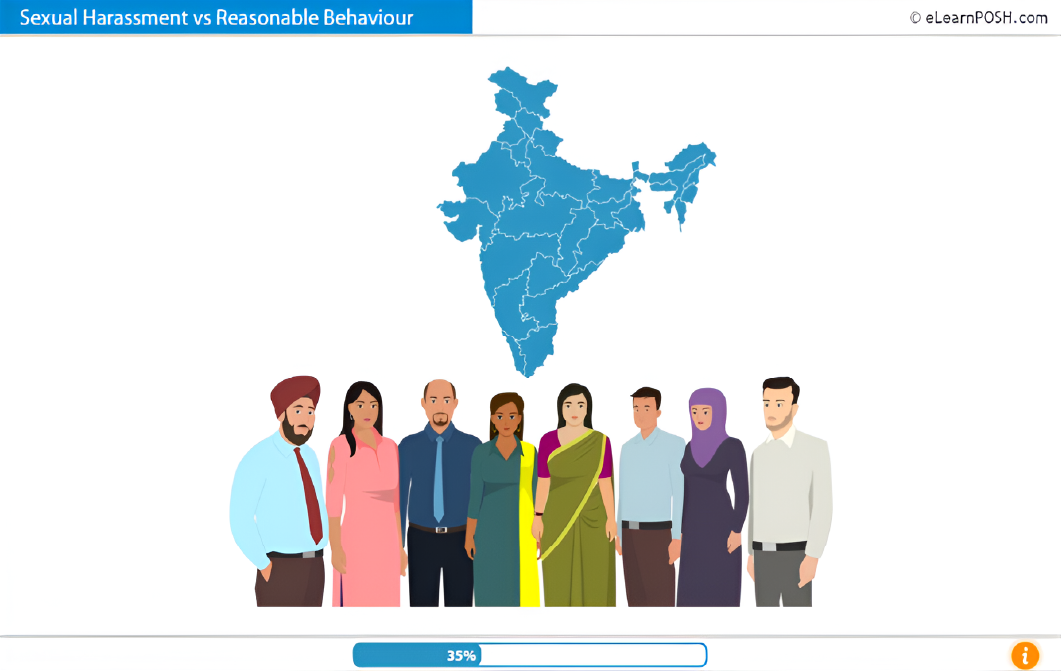
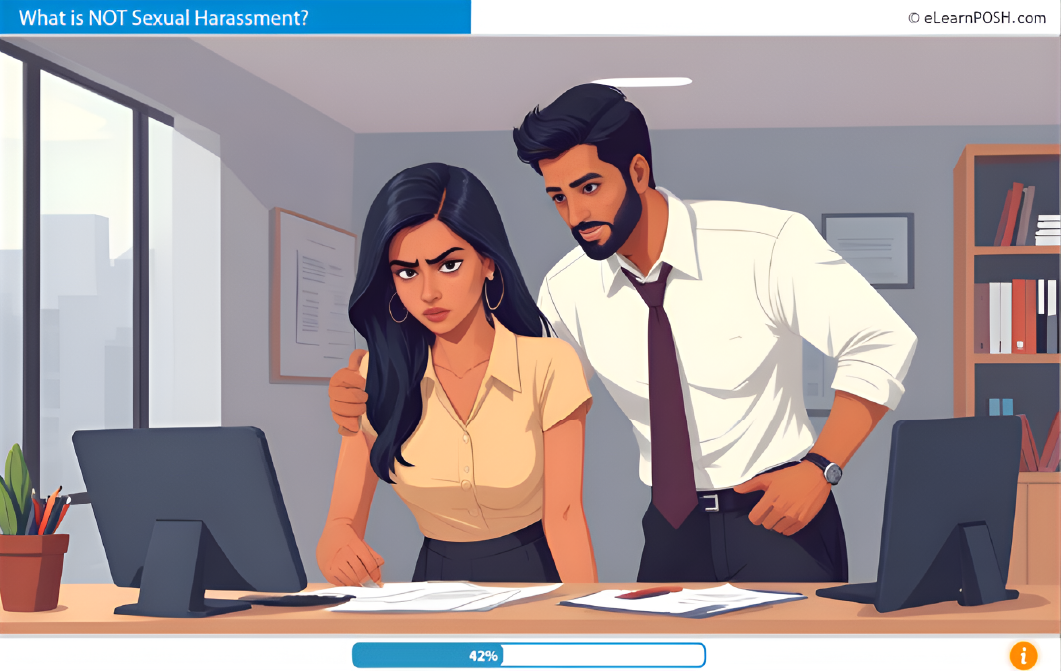
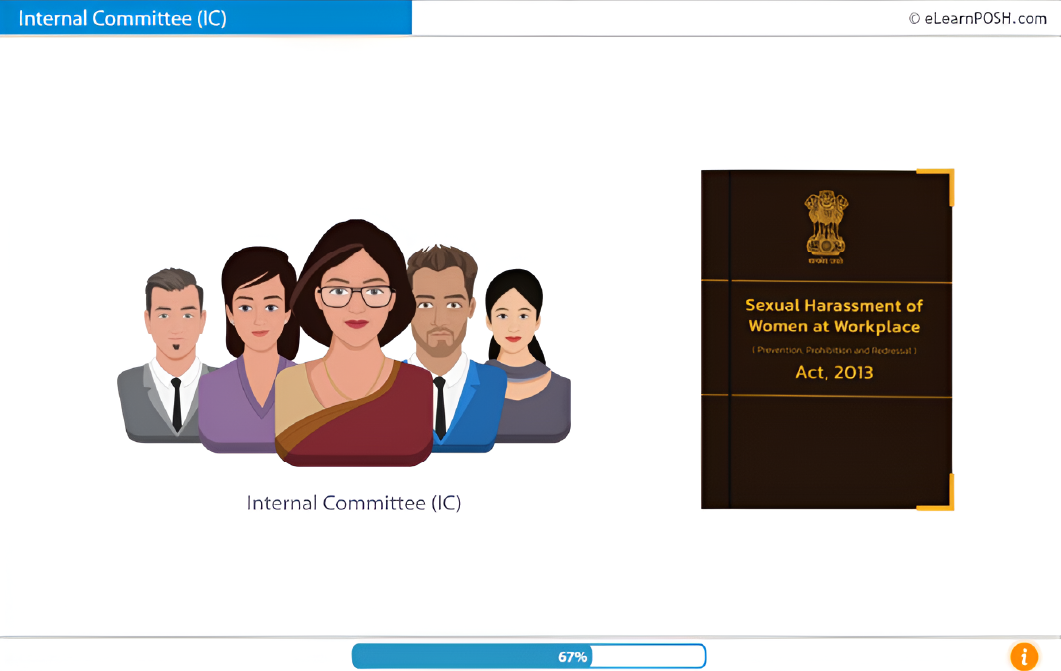
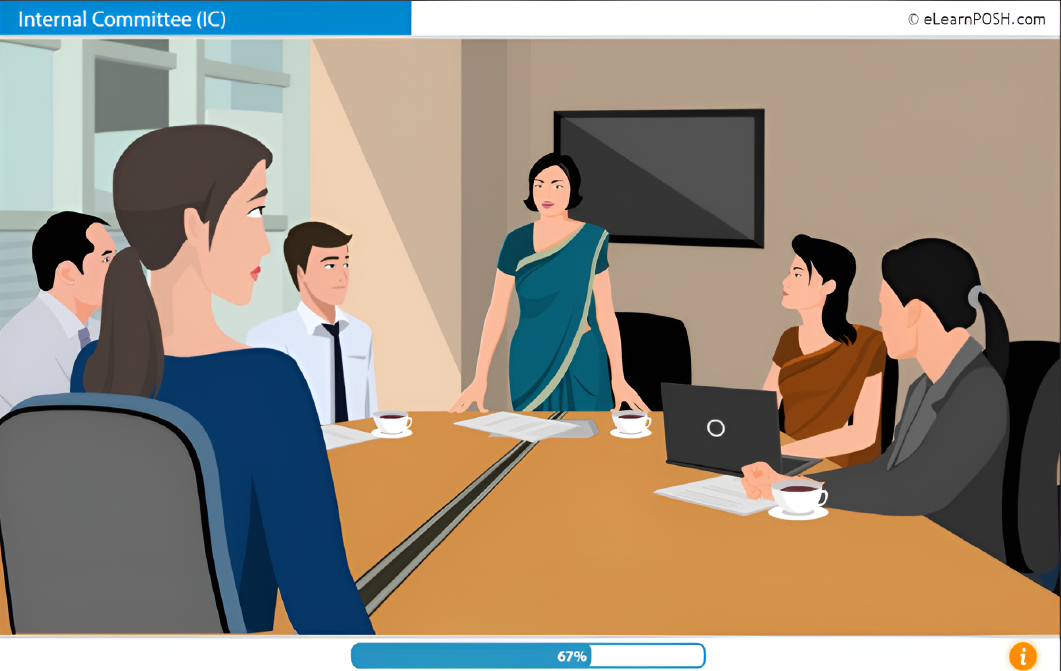
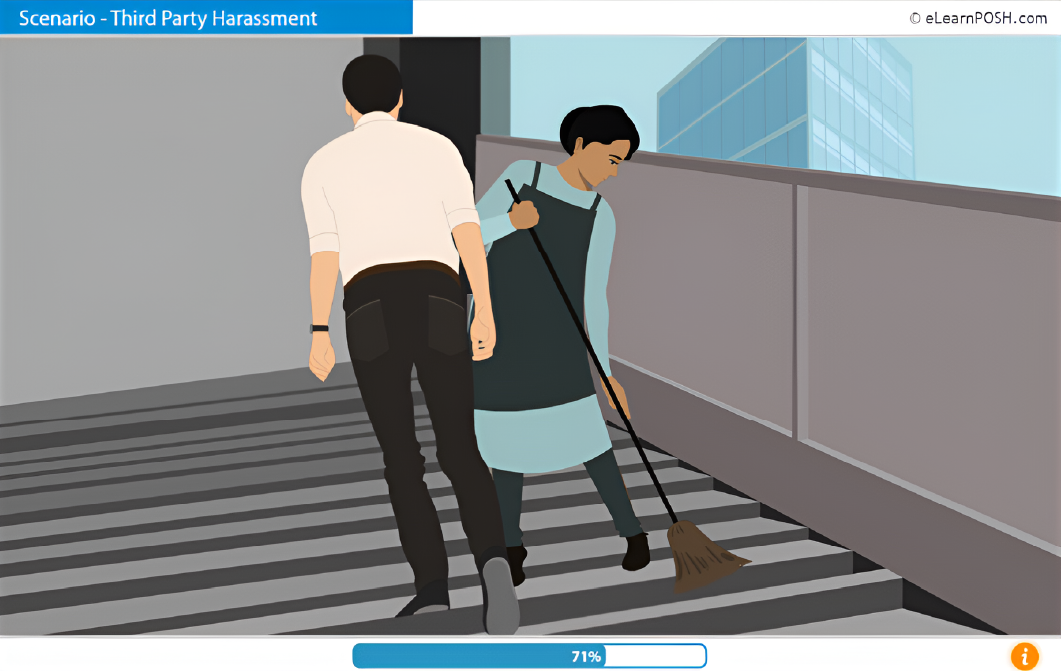
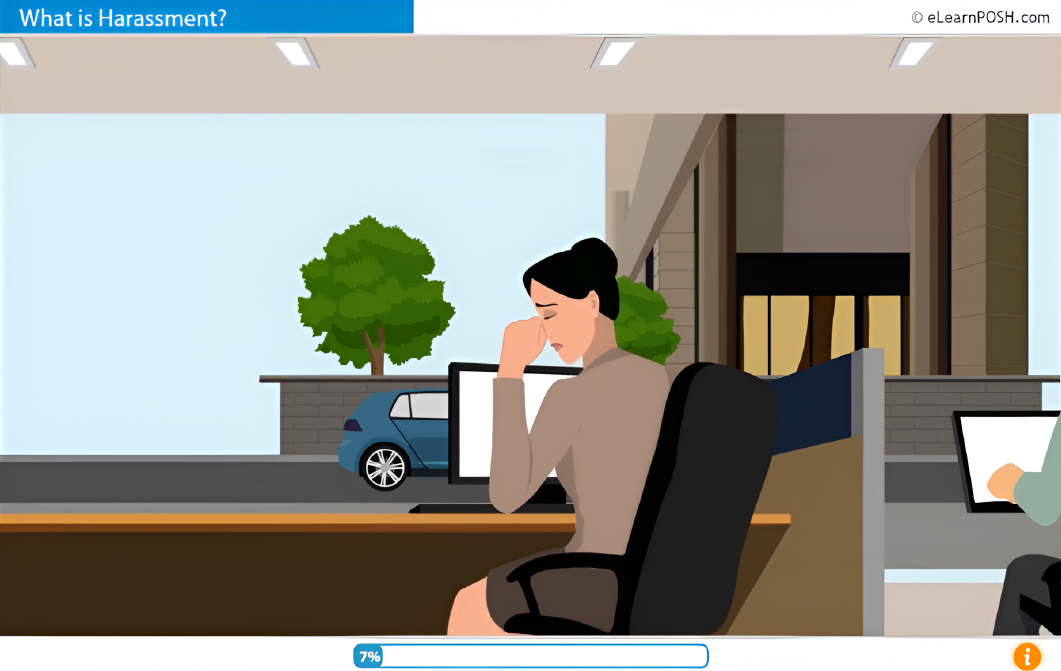
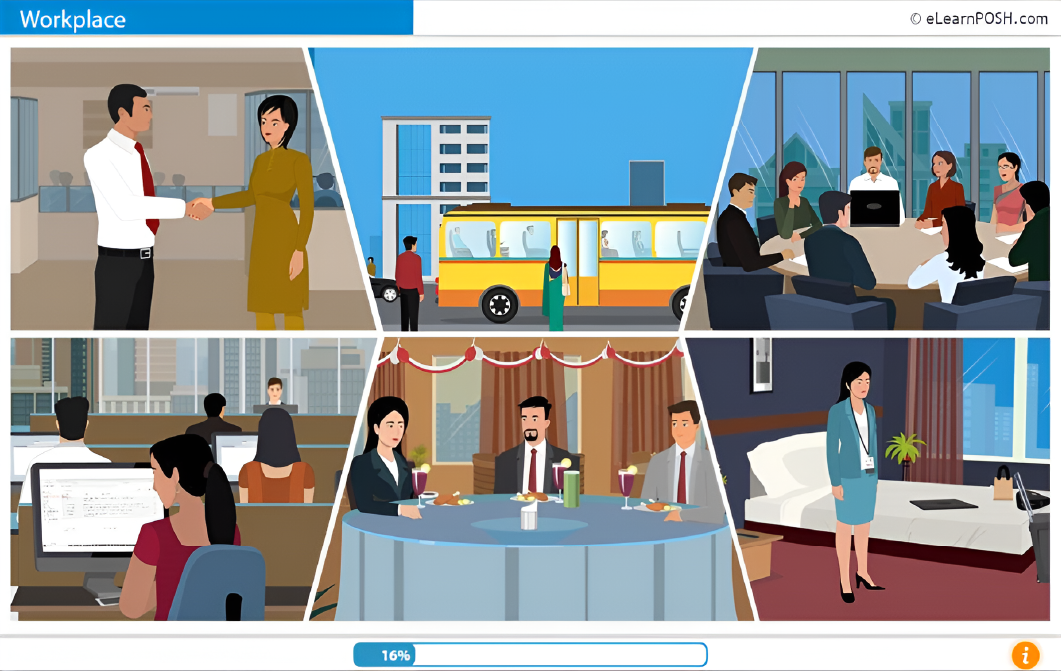

Course Structure
Learning elements
Format & accessibility
Fully responsive interface across desktop, tablet, and mobile -complete with a learner dashboard, progress tracking, automated reminder prompts, and seamless integration with your existing LMS or HR systems.
Certificate
On successful completion and passing the assessment, learners can generate a completion certificate as proof of training (configurable per org).
Target Audience
The POSH Training for Employees in India is tailored for:
- New joiners/Induction batches to sensitise from Day 1
- Hybrid, remote & field employees interacting via digital platforms
- Housekeeping, support staff, interns, volunteers, temporary & contract workers
- Client-facing roles, sales, travel-based staff frequently in extended workplaces
- Team members working in groups, cross-functional & collaborative environments
- Employees engaging in workplace relationships or social interactions
- Bystanders and witnesses who may need to intervene confidently
- Orgs seeking company-wide POSH awareness & compliance implementation
In short, for employees across all levels, functions and departments.
Case Studies: Real Consequences of Non-Compliance
Indian authorities have already fined orgs ₹50,000 for not forming Internal Committees or failing to implement POSH compliance. Courts have penalised companies through compensation orders and forced re-inquiries when procedures were not followed, proving that training and awareness are not optional but mandatory compliance obligations.
Below are few cases where the companies faced severe backlash after having been charged with sexual harassment:
- Tehelka – State of Goa v. Tarun Tejpal (2013): A junior journalist accused editor-in-chief Tarun Tejpal of sexual assault during an event. The org faced massive media backlash for mishandling the complaint. The Internal Complaints Committee was not properly constituted, violating POSH norms resulting in major reputational collapse, leadership exit, legal prosecution, with Tehelka losing credibility and business stability. The case strongly underscores the importance of compliance training.
- V. K. Sasikala vs. Infosys Limited (2019–2020): A female employee filed a POSH complaint involving a senior executive. Although POSH committee existed, the company faced public criticism for delayed redressal process. Subsequent public reports led to leadership resignations and internal restructuring. The case serves as a compelling illustration of the critical role compliance training plays in reducing legal and reputational risk.
Course Outline
What is harassment?
Sexual Harassment
Workplace
Types of Sexual Harassment
The common types of sexual harassment are:
- Verbal
- Written
- Visual and
- Physical
Forms of Sexual Harassment
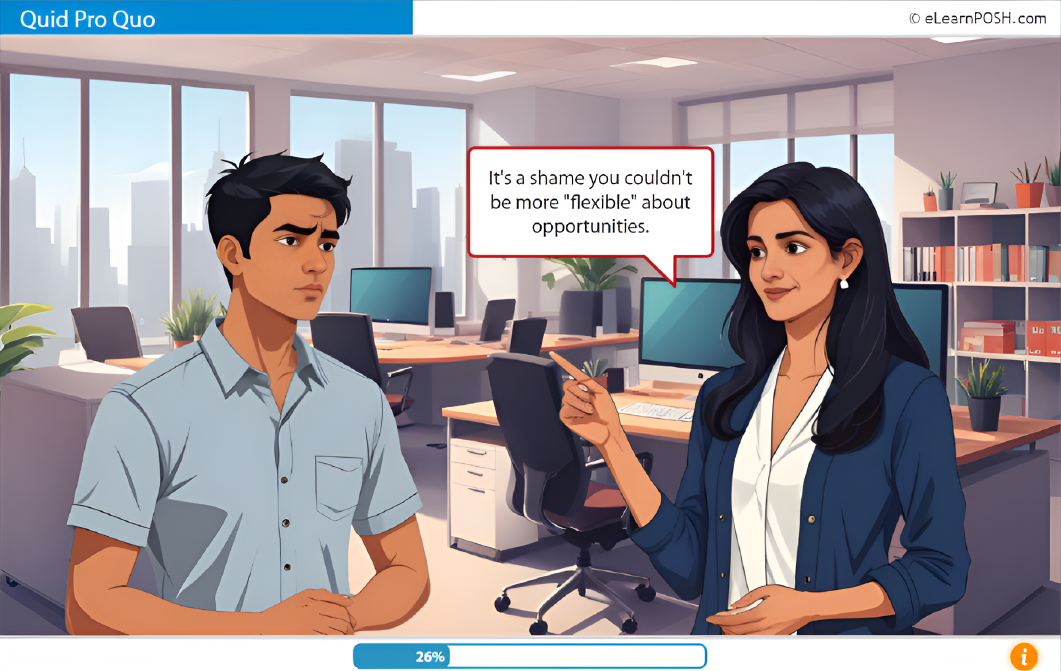
- Quid-pro-quo
- Hostile Work Environment
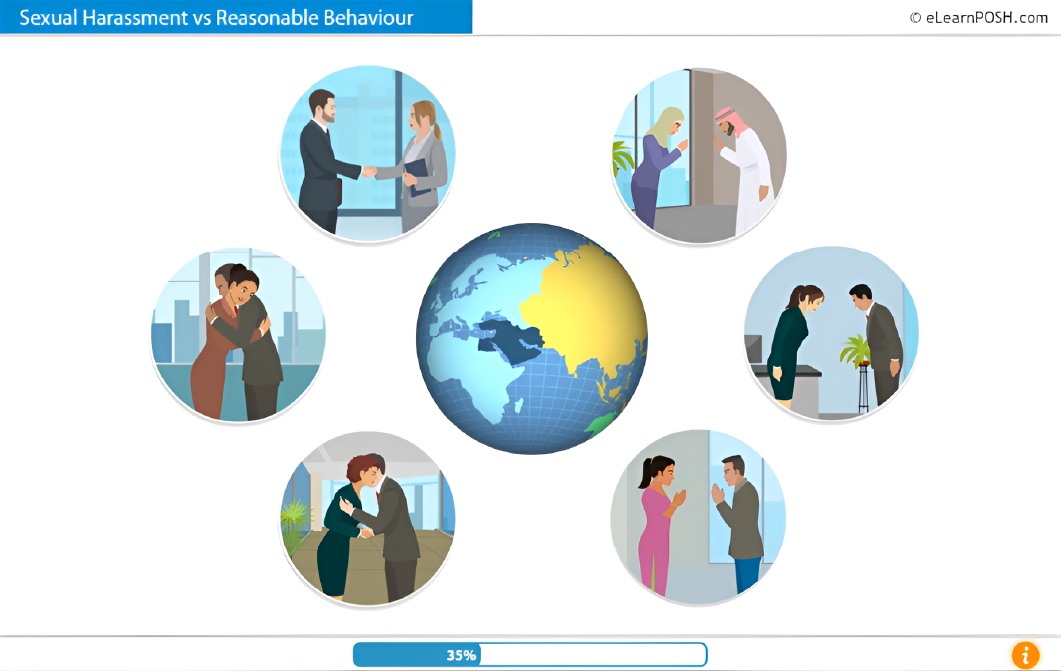
Sexual Harassment versus Reasonable Behaviour
Intent vs Impact
What is NOT Sexual Harassment
Preventing Virtual Harassment
- Do’s and Dont’s
Personal Relationships at Workplace
Internal Committee
- Conciliation
- Inquiry
- Inquiry Process
- Inquiry Timelines
Bystander Intervention
Retaliation
Filing False Complaint
Tips for Dealing with and Reporting Sexual Harassment
Empower Yourself
See how Succeed will work for your Organization

FAQs
POSH refers to the Prevention of Sexual Harassment law in India, formally known as the Sexual Harassment of Women at Workplace (Prevention, Prohibition and Redressal) Act, 2013. It mandates employers to prevent workplace sexual harassment, establish an Internal Committee, conduct inquiries, and ensure a safe and respectful work environment.
For many years, India had no dedicated law to address sexual harassment at work, and complaints were handled informally, often resulting in silence, retaliation, or victim-blaming.
In 1997, the landmark Vishaka vs. State of Rajasthan case changed this landscape.
A social worker, Bhanwari Devi, was gang-raped while preventing child marriage. The lack of accountability mechanisms led women’s groups to petition the Supreme Court.
The Supreme Court acknowledged sexual harassment as a violation of fundamental rights (Articles 14, 15, and 21), and issued the historic Vishaka Guidelines, mandating safe work environments and internal complaint mechanisms in all workplaces.
These guidelines acted as temporary law for 16 years, laying the foundation for workplace safety norms, Internal Committees, preventive steps, and grievance redressal procedures.
Finally, in 2013, the Government of India enacted the Sexual Harassment of Women at Workplace (Prevention, Prohibition and Redressal) Act, commonly referred to as POSH Act, formalising the Vishaka framework into statutory law.
The law requires every org to:
- Create a safe, respectful work environment
- Establish an Internal Committee (IC)
- Conduct awareness & sensitisation training
- Provide timely redressal of complaints
- Implement policies, prevention systems & reporting structures
The POSH Act mandates employers to create awareness, conduct sensitisation programmes, and ensure employees understand rights, duties, acceptable behaviour, and reporting mechanisms. Training helps prevent incidents, builds a respectful culture, and serves as proof of due diligence.
The course teaches employees to identify sexual harassment, understand types (verbal, written, visual, physical), recognise quid-pro-quo vs hostile work environment, differentiate reasonable behaviour from harassment, know reporting steps, understand IC process, remote-work dos & don’ts, and consequences of false complaints.
Yes. It explains that workplace includes client sites, transport, business travel, office events, communication channels, company accommodation, and virtual/remote environments, making it relevant for modern workplaces.
Mandatory disclosures under Chapter VIII of the POSH Act and SEBI’s 2018 requirement have significantly increased visibility of workplace sexual-harassment complaints. Reported cases rose from 161 in FY 2013–14 (the Act’s first year) to 465 within a year, reaching 961 in FY 2019–20, 586 in FY 2020–21, 767 in FY 2021–22, and then surging 51.2% to 1,160 in FY 2022–23 across 300 listed companies.
However, case resolution has lagged behind reporting, with pending complaints increasing from 29 in FY 2013–14 to 202 by FY 2022–23. The data also shows concentrated reporting: in FY 2022–23, 1,160 cases came from just 81 companies, with 50% reported by only eight companies, while 219 companies reported zero cases, despite disclosure being mandatory. Notably, 98–100% of cases were reported by large companies, 1–2% by mid-sized firms, and none by small companies, highlighting both the POSH Act’s impact in surfacing complaints and ongoing gaps in compliance, reporting consistency, and case closure.
The POSH training explains reporting steps, role of Internal Committee (IC), timelines, conciliation/inquiry process, confidentiality rules, and actions available to victims, witnesses and bystanders.
The POSH Act does not explicitly include Bystander Intervention but our course includes it.
Bystander intervention is a globally recognized prevention strategy used to:
- Encourage employees to take safe, responsible action
- Create a culture of shared accountability
- Prevent harassment before escalation
Our course teaches Direct, Distract, Delegate, Delay techniques to empower employees to intervene safely if they witness harassment:
- Direct – Address the behavior directly (if safe to do so).
- Distract – Interrupt or divert attention to stop the situation.
- Delegate – Seek help from HR, a manager, or another authority figure.
- Delay – Check in with the affected person afterward and offer support.
Yes. POSH training for employees and Internal Committee (IC) members helps reduce misuse and false allegations by increasing legal awareness, improving complaint quality, and reinforcing consequences for malicious filing.
False complaints are statistically rare:
- A 2018 study by India’s Ministry of Women and Child Development found that only about 2–3% of all complaints filed under the POSH Act were determined to be false after inquiry. This suggests that deliberate misuse is not widespread relative to overall complaints.
- Independent research also asserts that less than 1% of POSH complaints may be false when examined, confirming that most complaints reflect genuine concerns rather than misuse.
Legal safeguards reduce misuse:
- Section 14 of the POSH Act allows the Internal Committee to recommend action against a complainant if the complaint is found to be false or made with malicious intent.
- Penalties can include disciplinary action under service rules, suspension, demotion, or termination of employment for malicious filing, which serves as a deterrent.
- Case law (e.g., Anita Suresh v. Union of India) shows courts upholding sanctions where the POSH process finds misuse.
POSH training strengthens prevention and compliance:
- Training clarifies what constitutes sexual harassment versus non-actionable conduct, reducing misinterpretation and the likelihood of erroneously filed complaints.
- Employees educated on legal standards and evidence expectations are significantly less likely to file complaints that later prove unsubstantiated.
- Training for Internal Committees improves impartial investigations, which lowers the risk of erroneous conclusions and ensures due process for both complainants and respondents
Absolutely. Anyone present in workplace - interns, volunteers, housekeeping staff, contractors, visitors - has the right to file a complaint, so training helps create universal awareness.
POSH training helps organisations meet their legal obligations under the POSH Act, 2013 by demonstrating proactive prevention, improves employee awareness, ensures IC process understanding, reduces risk of legal escalation, and strengthens audit readiness that are critical elements for POSH compliance.
Yes. It covers acceptable and unacceptable behaviour during video calls, chats, emails, messaging, social media interaction, and WFH etiquette.
Employees will be able to identify harassment, respond appropriately, maintain professionalism, respect boundaries, support safe reporting, and uphold a positive workplace culture.
An Internal Committee (IC) is a group set up within an organisation under the Sexual Harassment of Women at Workplace (Prevention, Prohibition and Redressal) Act, 2013. Every organisation with 10 or more employees must form an IC to prevent sexual harassment, receive complaints, and ensure they are handled fairly.
If an employee experiences or witnesses sexual harassment, the matter should be reported to the IC so it can listen, examine the facts, and take appropriate action as per the law. The IC is trained to deal with such sensitive issues in an impartial and confidential manner.
The law gives the IC special powers similar to a civil court, allowing it to call people for questioning and review evidence. It must also complete the complaint process within fixed timelines, ensuring complaints are resolved promptly and justly.
When a complaint is made, the Internal Committee (IC) follows a clear and time-bound process laid down by law. The IC must complete its inquiry within 90 days. During this period, it listens to both sides, reviews evidence, and ensures the process is fair and confidential.
Once the inquiry is finished, the IC prepares a written report with its findings and recommendations within 10 days. This report is shared with the management and also given to both the complainant and the respondent. Based on the facts of the case, the IC may recommend actions such as a warning, suspension, or even termination of employment.
In some cases, the IC may also recommend that the respondent pay monetary compensation to the aggrieved employee. The exact recommendation depends on the nature and seriousness of the complaint. After receiving the report, the management is required to take appropriate action within 60 days.
The delivery is fully flexible. If you have an in-house LMS, we can provide the course as a SCORM-compliant package. If not, we offer a seamless SaaS-based hosting option for easy access and deployment.