- Engaging animated explainers
- Concise, voice-narrated slide content
- Hands-on, scenario-based interactions
- Practical, real-world workplace examples
- Regular quizzes to reinforce learning
- A final evaluation with certificate issuance

Learning Objectives
By the end of this course, learners will be able to:
- Explain what personal account dealing is and identify behaviours that can lead to insider dealing or market abuse.
- Recognise how certain trading decisions can breach regulatory expectations under the FCA and UK MAR.
- Understand the key rules, obligations, and prohibited practices relating to market abuse and insider dealing.
- Identify where mistakes commonly occur and apply practical steps to prevent non-compliant or high-risk trades.
Why Personal Account Dealing, Market Abuse and Insider Dealing eLearning Course?
Prevents costly regulatory breaches
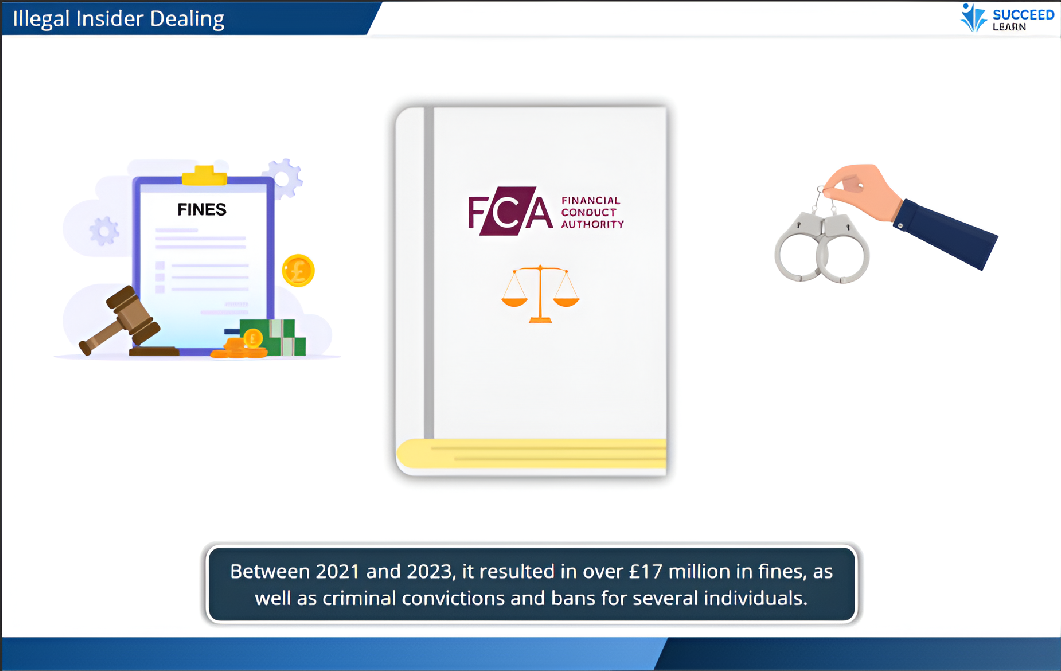
There might be times when an employee trades shares of a listed client just before results are announced, discloses sensitive information, unaware the information is considered inside information - leading to fines and reputational damage for the firm. The course builds awareness on the possible consequences of insider dealing such as up to 7 years of imprisonment under the Criminal Justice Act 1993, unlimited financial penalties and public censure by the FCA, being banned from holding regulated positions, all under UK Regulations.
Clarifies complex PAD rules
Sometimes staff members may believe that they can invest freely as long as they disclose trades afterward. The course explains such pre-clearance requirements and cooling-off periods to avoid conflicts of interest.
Strengthens awareness of market abuse behaviours
There might be instances where a trader casually shares market-moving rumours in a WhatsApp group, not realising this can constitute to market manipulation. The course addresses such everyday high-risk behaviours under regimes such as UK MAR, EU MAR, SEC (US), and other global market-abuse laws.
Reduces the risk of insider dealing- intentional or accidental
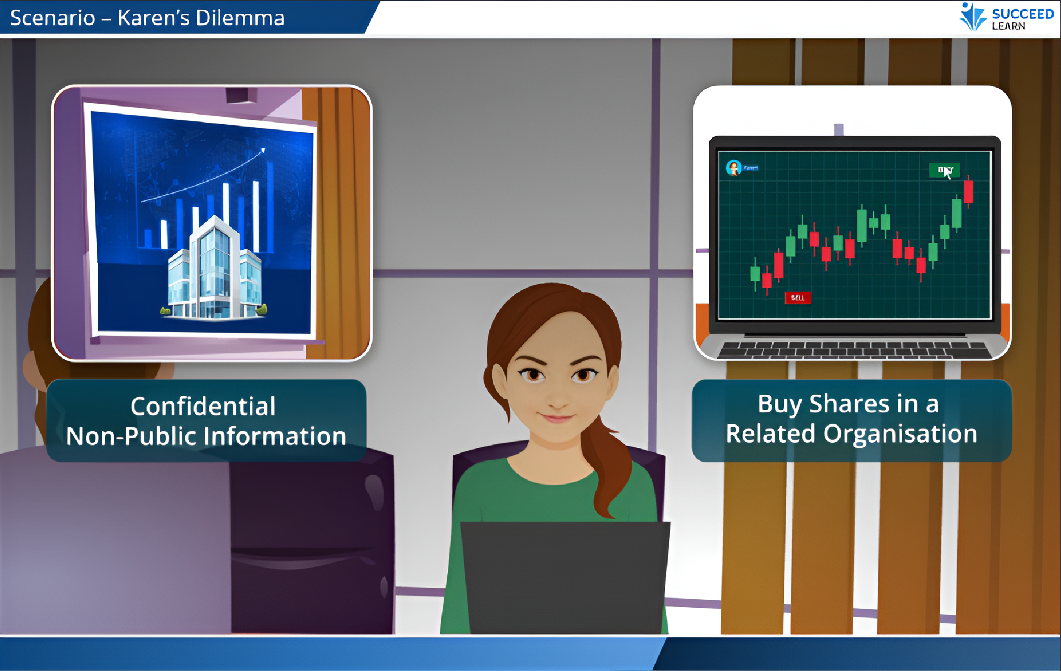
There might be times where an analyst overhears confidential M&A information in an elevator and later trades a related stock, thinking the source was “informal.” The course teaches how any non-public information is protected and must not be used.
Supports global regulatory expectations
Whether under FCA (UK), SEC (US), or ESMA (EU) rules, learners understand the universal principles of fairness, transparency, and responsible trading, helping multinational teams stay aligned.
Protects organisational reputation and client trust
When employees follow proper protocols, such as declining to discuss client performance during social gatherings, the firm demonstrates professionalism and protects its market credibility.
Ensures staff know when and how to escalate red flags
There might be instances where a colleague spots suspicious trading patterns before a major announcement. The course explains how to report it promptly to Compliance, preventing regulatory scrutiny.
Scenario-driven modules
The course uses realistic, industry-specific scenarios - such as front-running, tipping, shadow trading - to help employees recognise how market abuse and insider-dealing risks arise in everyday situations.
Laws & Regulations Addressed in this Course
Major legal references include:
| Legislation / Concept | Relevance in the Course |
|---|---|
| Article 14 of the UK Market Abuse Regulation (UK MAR) | The course covers Article 14 of UK MAR that makes it illegal to engage in insider dealing, to recommend or encourage someone else to trade using inside information, or to unlawfully disclose inside information. |
| Article 14 (EU MAR) | The course covers Article 14 of the EU MAR that prohibits insider dealing, recommending or inducing others to trade using inside information, and unlawfully disclosing inside information. |
| Section 10(b) of the U.S. Securities Exchange Act of 1934 | The course stresses on how it is unlawful for any person, directly or indirectly, to use or employ, in connection with the purchase or sale of any security, any manipulative or deceptive device or contrivance in contravention of such rules and regulations as the U.S. Securities and Exchange Commission may prescribe. |
Course's Screenshots


Course Structure
Learning elements
Format & accessibility
The platform offers fully responsive design across desktop, tablet, and mobile, along with a learner dashboard, progress tracking, employee reminders, and seamless integration with your existing systems.
Certificate
On successful completion and passing the assessment, learners can generate a completion certificate as proof of training (configurable per org).
Target Audience
The eLearning Course is ideal for individuals across Securities & Capital Markets, Banking & Financial Services, Private Equity & Venture Capital, compliance and supervisory roles who may, directly or indirectly, influence or transact in situations involving securities or funds. The course is tailored for:
- Firm-level insiders such as Managing Partners, Founding Partners, General Partners, Investment Partners, Principals, Vice Presidents
- Portfolio firm insiders such as Founders, CEOs, CFOs, Board Members
- Compliance, legal, and risk management teams
- Private equity, venture capital, and corporate finance professionals
- IT/Cybersecurity Vendors
In short for anyone required to comply PAD policies or who is subject to insider-dealing, MNPI, or market-conduct rules should benefit from this training.
Case Studies: Real Consequences of Non-Compliance
While regulators like the FCA, SEC, and ESMA do not explicitly mandate a specific “PAD training course,” they do require firms to ensure employees are adequately trained, aware of the rules, and competent to prevent and detect market-abuse risks. The orgs are required to put clear PAD and market-abuse policies, train employees, promptly report, monitor suspicious activity, and maintain records of personal transactions, approvals, restrictions, insider lists, and any actions taken.
Here are a few real-world cases where companies faced serious consequences for failing to meet these obligations and how training their employees could prevent these risks by ensuring they understand their obligations and recognise when and how to report suspicious activity:
- In the UK, the FCA fined Sigma Broking £531,600 for transaction-reporting failures and market-abuse surveillance breaches under MAR and related rules as emphasized in this article - FCA fines Sigma Broking Limited for transaction reporting failures | FCA. This compliance failure shows how easily gaps in reporting, monitoring, and staff awareness can lead to major penalties.
- In the US, the SEC fined Morgan Stanley Smith Barney US$15 million after serious policy gaps allowed financial advisors to steal client funds without the firm detecting it as emphasized in this article - SEC.gov | SEC Charges Morgan Stanley Smith Barney for Policy Deficiencies that Resulted in Failure to Prevent and Detect its Financial Advisors’ Theft of Investor Funds. This breakdown in controls shows how weak monitoring, poor oversight, and lack of staff awareness can expose orgs to major financial and regulatory consequences.
Course Outline
What is PAD?
Scenario: Identify what would be considered PAD under the FCA guidelines
PAD as a gateway to Market Abuse
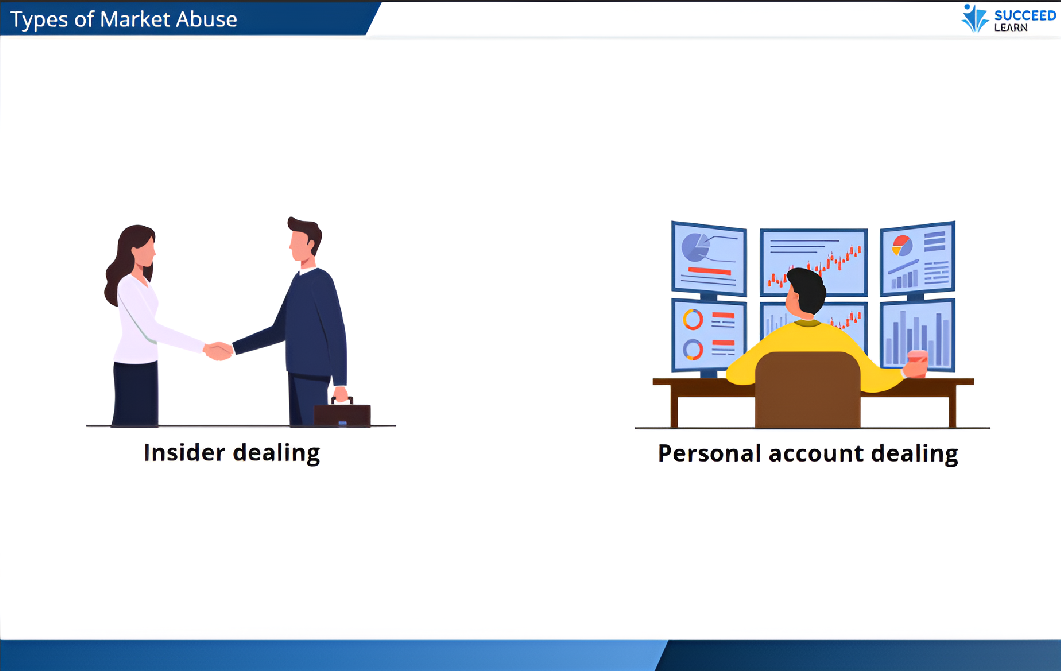
Types of market abuse
- Conflict of Interest
- Trading through related accounts
- Shadow trading
- Front-running
- Tipping / Unlawful Disclosure
- Insider dealing
Key Terms Associated with Insider Dealing
- Insider information
- Insider
Scenario: Identify examples of insider or inside information as True or false statements
Why is Insider Dealing Illegal?
Consequences of Non-Compliance
How to Stay Compliant
- Dos of Personal Trading
- Don’ts of Personal Trading
- Closed period
See how Succeed will work for your Organization

FAQs
Personal Account Dealing refers to employees trading financial instruments (such as shares, bonds, derivatives, or funds) in their own personal accounts while working in a regulated firm. Because employees may have access to confidential or price-sensitive information, firms impose strict rules, such as pre-clearance, trading restrictions, and disclosure requirements - to prevent insider dealing, conflicts of interest, and market abuse.
Market abuse refers to illegal behavior that undermines the integrity and fairness of financial markets. It typically involves misuse of information or manipulation of market prices.
Insider dealing (also called insider trading) is the illegal practice of buying or selling shares or other securities using confidential, non-public information about a company.
Personal Account Dealing (PAD) training educates employees on the rules and restrictions around trading financial instruments in their own accounts. It helps staff understand when personal trades may create conflicts of interest, breach internal policies, or violate regulatory requirements such as the FCA’s Conduct of Business Sourcebook (COBS).
Insider dealing training teaches employees how to identify inside information, understand when trading on such information becomes illegal, and recognise red flags that could expose the firm to regulatory scrutiny. The training ensures staff comply with the UK Market Abuse Regulation (MAR) and the firm’s internal insider-trading controls.
Because firms are legally required to prevent market abuse and insider dealing, this course helps ensure employees understand their obligations, reducing regulatory, financial, and reputational risk.
Firms often struggle with PAD compliance when employees lack a clear understanding of what the rules require, fail to complete certifications and attestations, or are not adequately trained on how to identify and manage insider-information risks.
Challenges also arise when staff rely on “ignorance” as an excuse, do not report suspicious activity, or intentionally bypass pre-clearance and reporting requirements. These gaps create serious exposure for firms, increasing the likelihood of fines, criminal sanctions, regulatory action, and reputational harm. Strengthening awareness through structured training is essential to prevent such breaches.
The FCA expects firms to clearly understand the PAD risks within their business, set out robust policies and processes, and build a culture where following PAD rules is standard behaviour. Firms should ensure every relevant employee knows the restrictions on personal trading, promptly reports their transactions, and that any outsourced service providers maintain accurate records that can be supplied on request. Above all, firms must keep proper records of all personal trades and take appropriate action when breaches occur, including investigation and disciplinary measures where necessary.
The FCA expects regulated firms to provide regular, role-appropriate training that helps employees understand different forms of market abuse, how to detect suspicious behaviour, and how to escalate concerns. Training must cover topics such as insider dealing, unlawful disclosure, market manipulation, and the firm’s reporting obligations under MAR, including STOR (Suspicious Transaction and Order Report) requirements.
Under the Market Abuse Regulation (MAR), insider dealing occurs when a person possesses inside information and uses it to buy or sell financial instruments, attempts to trade, or recommends/induces others to trade based on that information. It also includes cancelling or amending orders that were placed before obtaining the inside information.
Anyone who handles confidential information, executes trades, researches markets, works in investment/portfolio roles, or is covered by your firm’s PAD policy - including contractors, analysts, managers, and senior leadership.
The module aligns with global regulations (UK MAR, EU MAR, US SEC rules) and demonstrates that your firm has taken “reasonable steps” to educate employees, a key factor regulators consider during investigations.
Yes. It reinforces employee understanding of PAD rules, pre-clearance, holding periods, reporting obligations, restricted lists, and the consequences of unauthorised personal trading.
By helping employees identify inside information, avoid unlawful disclosure, understand trading restrictions, and follow proper controls thus lowering the chance of misconduct or accidental breaches.
Firms may face heavy fines, licence restrictions, loss of investor trust, litigation, regulatory investigations, and reputational damage, even if misconduct is unintentional.
The course provides a global overview, including UK MAR, EU MAR, U.S. SEC rules, and examples from multiple jurisdictions, making it suitable for multinational orgs.
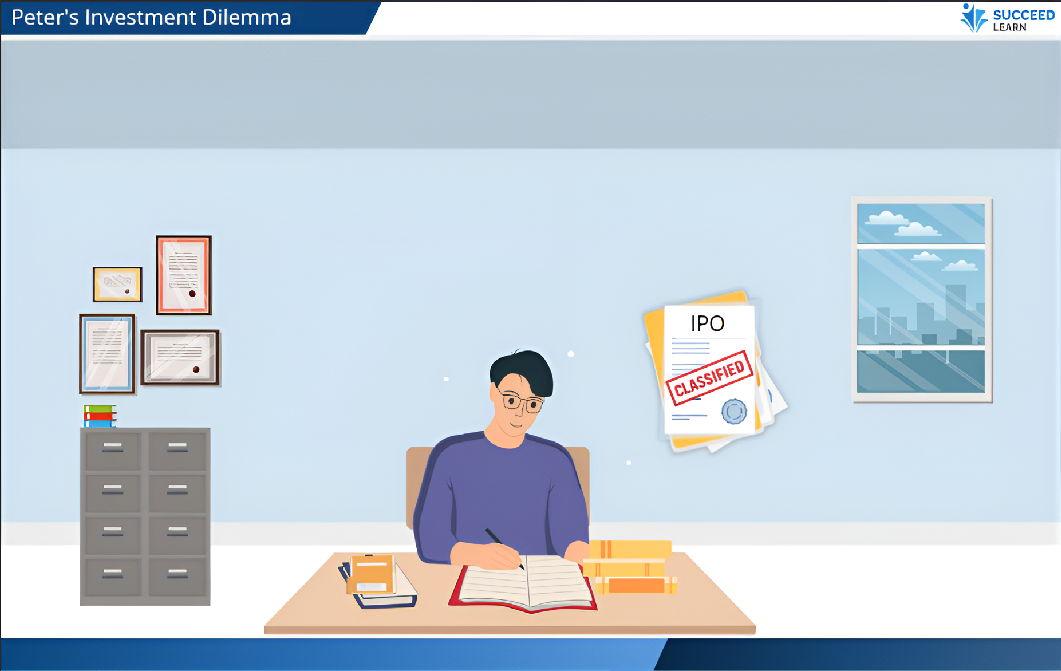
Through scenario-based examples that show how MNPI (Material Non-Public Information) appears in real-world contexts such as IPOs, mergers, financial results, and major business developments.
Yes. Learners see real company penalties and insider-dealing cases, which highlight the serious consequences of non-compliance for both employees and employers.
Absolutely! Your firm’s PAD rules, approval workflows, restricted lists, policies, and escalation steps can be embedded directly into the training.
It provides documented evidence of employee understanding, crucial during regulatory audits or investigations into suspected market abuse.
Annual or bi-annual refreshers are recommended, especially for staff with access to MNPI or those working in trading, research, deal teams, or compliance-sensitive roles.
Even accidental breaches can trigger regulatory action. The course teaches employees how to identify red flags early and follow correct procedures before trading or sharing information.
By fostering awareness, consistent decision-making, responsible conduct, and a proactive understanding of risks, helping build a culture where employees think before they act.
The delivery is fully flexible. If you have an in-house LMS, we can provide the course as a SCORM-compliant package. If not, we offer a seamless SaaS-based hosting option for easy access and deployment.