Understand Their Role in Information Security
Recognize how individual actions and everyday workplace decisions contribute to protecting organizational systems, information, and digital assets.

Equip employees with the practical knowledge they need to recognize cyber threats, protect organizational information, and make safer security decisions every day.
SucceedLEARN's Information Security Awareness Training is an employee-focused eLearning course designed to help organizations strengthen information security awareness and support their security and compliance requirements.
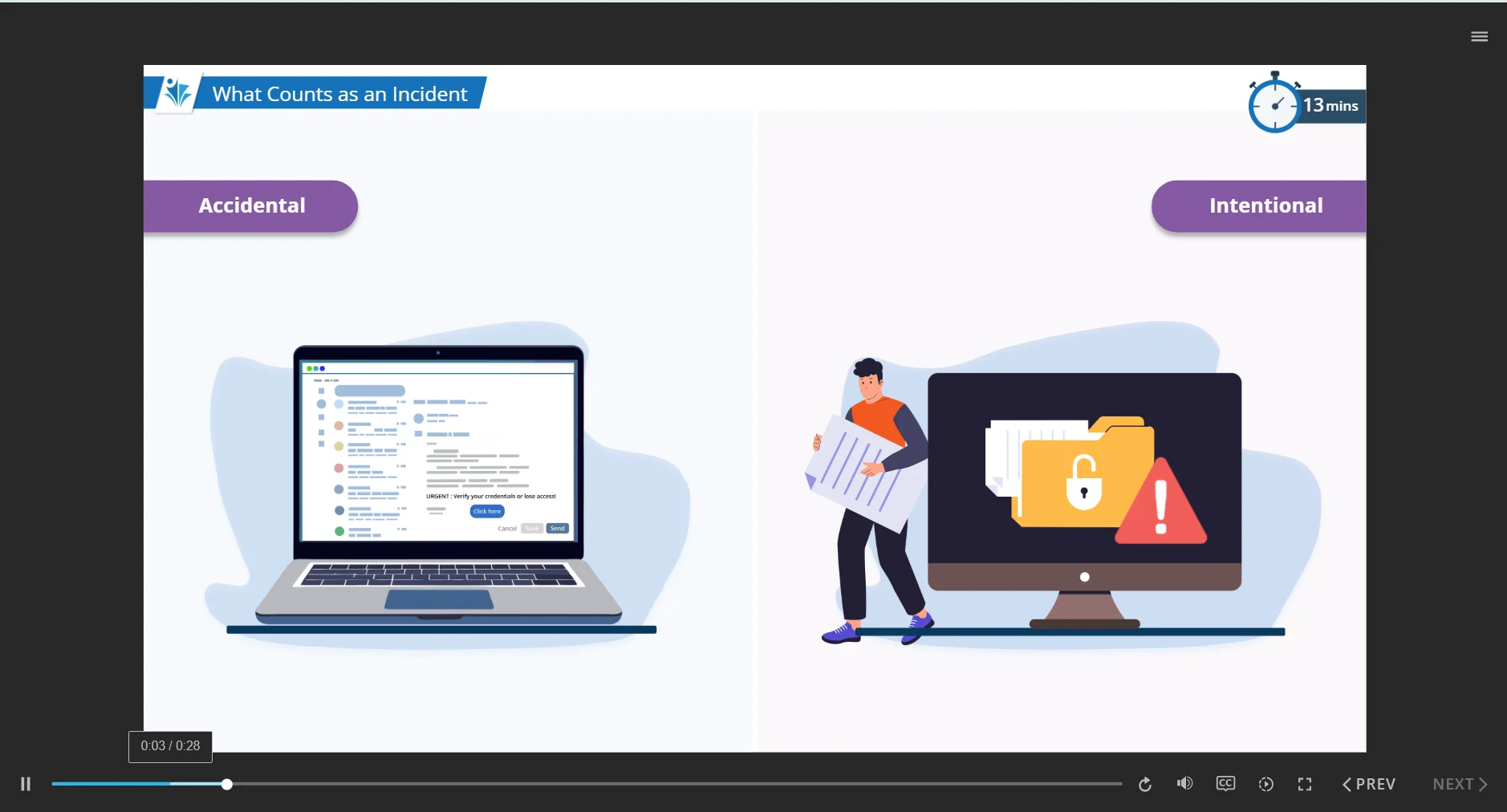
Through 10 focused security sub awareness modules, employees build practical knowledge across account security, social engineering, malware, data classification, physical security, remote working, third-party risk, insider threats, incident reporting and emerging AI-based attacks.
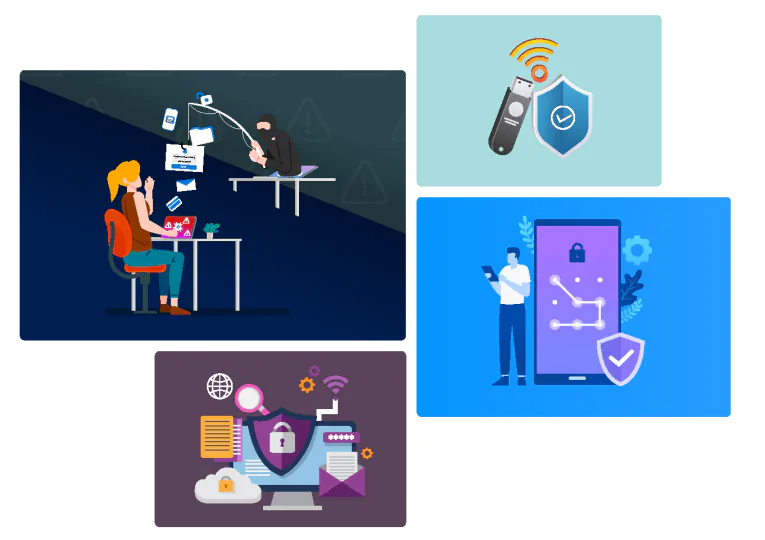
Technology alone cannot protect an organization from every cyber threat.
Employees interact with organizational systems, emails, applications, devices, confidential information, and digital tools every day. A phishing email, weak password, unsafe download, incorrectly shared document, or compromised device can expose valuable information and create wider organizational risk.
Information Security Awareness Training helps employees understand the role they play in protecting organizational information and equips them with practical knowledge to recognize and respond to common security threats.
Rather than overwhelming employees with technical terminology, the course connects information security principles with situations they may encounter during everyday work.
Employees learn not only what the risks are, but how to respond when those risks appear.
By the end of the Information Security Awareness Training, employees will be able to:
Recognize how individual actions and everyday workplace decisions contribute to protecting organizational systems, information, and digital assets.
Identify common security threats including phishing, social engineering, malware, suspicious online activity, and other techniques used to compromise information and systems.
Understand different phishing techniques and learn how to assess suspicious communications before clicking, sharing information, or taking action.
Apply safer password practices and understand how authentication measures such as two-factor authentication and Multi-Factor Authentication (MFA) help protect organisational accounts.
Understand how information can be classified based on sensitivity and why different types of organisational information require appropriate handling and protection.
Recognise the security considerations associated with laptops, mobile phones, removable storage devices, workspaces, and physical access.
Understand responsible use of AI tools and develop greater awareness of security risks associated with AI-enabled threats.
Recognize situations that may indicate a security incident and understand the importance of reporting potential threats promptly.
Protect Accounts and Credentials
Help employees understand secure authentication, password practices, MFA and the importance of protecting organisational accounts from unauthorised access.
Key Topics: Password Security · MFA · Authentication · Credential Protection · Account Access
Explore Account Security TrainingRecognise Emerging AI-Enabled Threats
Build employee awareness of how artificial intelligence can be used to create increasingly convincing phishing, impersonation, deepfake and social-engineering attacks.
Key Topics: AI-Generated Phishing · Deepfakes · Voice Impersonation · AI Social Engineering · Verification
Explore AI-Based Attack Awareness TrainingKnow the Information. Handle It Appropriately.
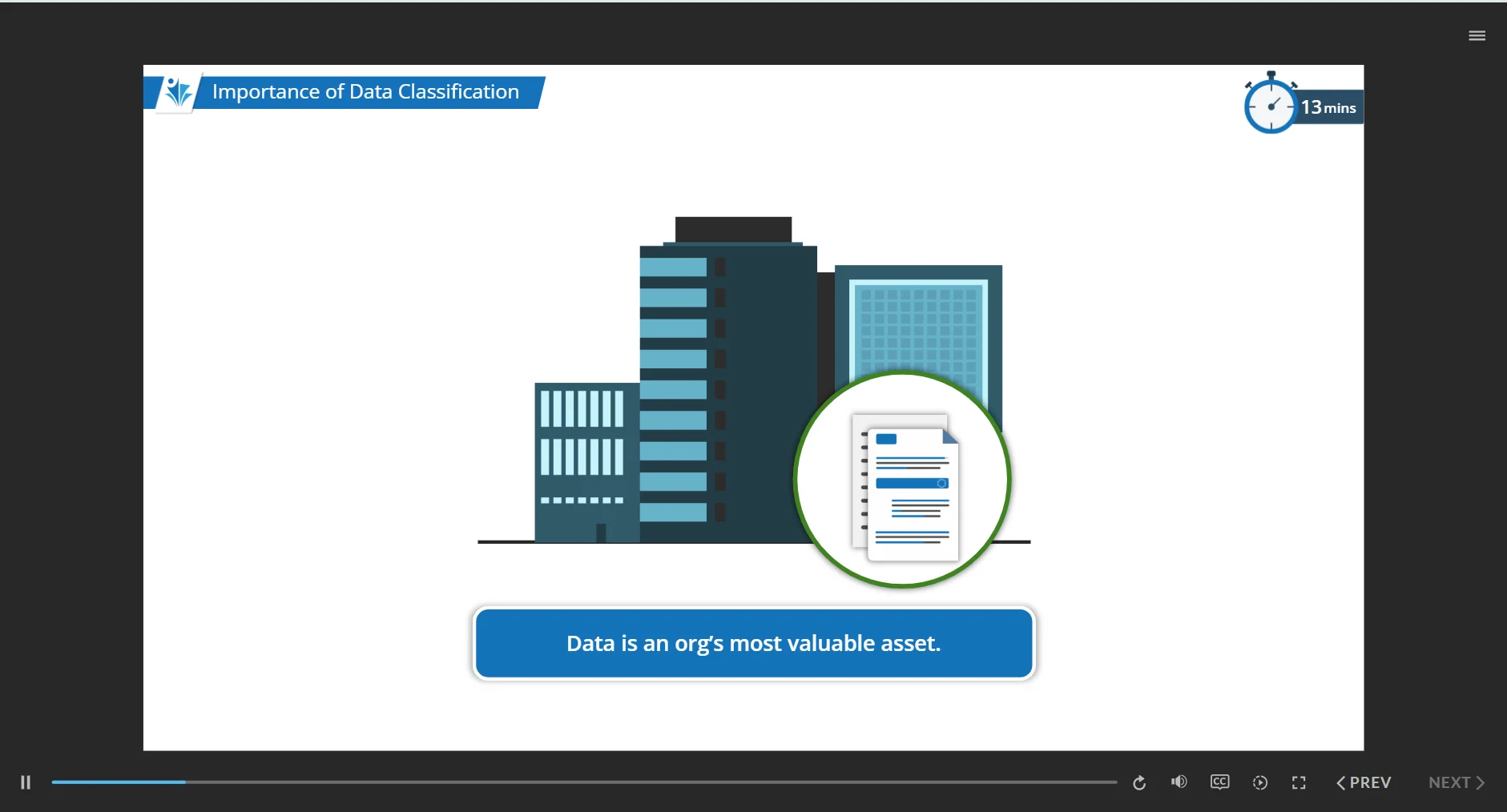
Help employees understand different classifications of organisational information and why appropriate storage, access, sharing and handling matter.
Key Topics: Data Classification · Sensitive Information · Secure Handling · Data Sharing · Information Protection
Explore Data Classification TrainingRecognise Malicious Activity Before It Causes Harm
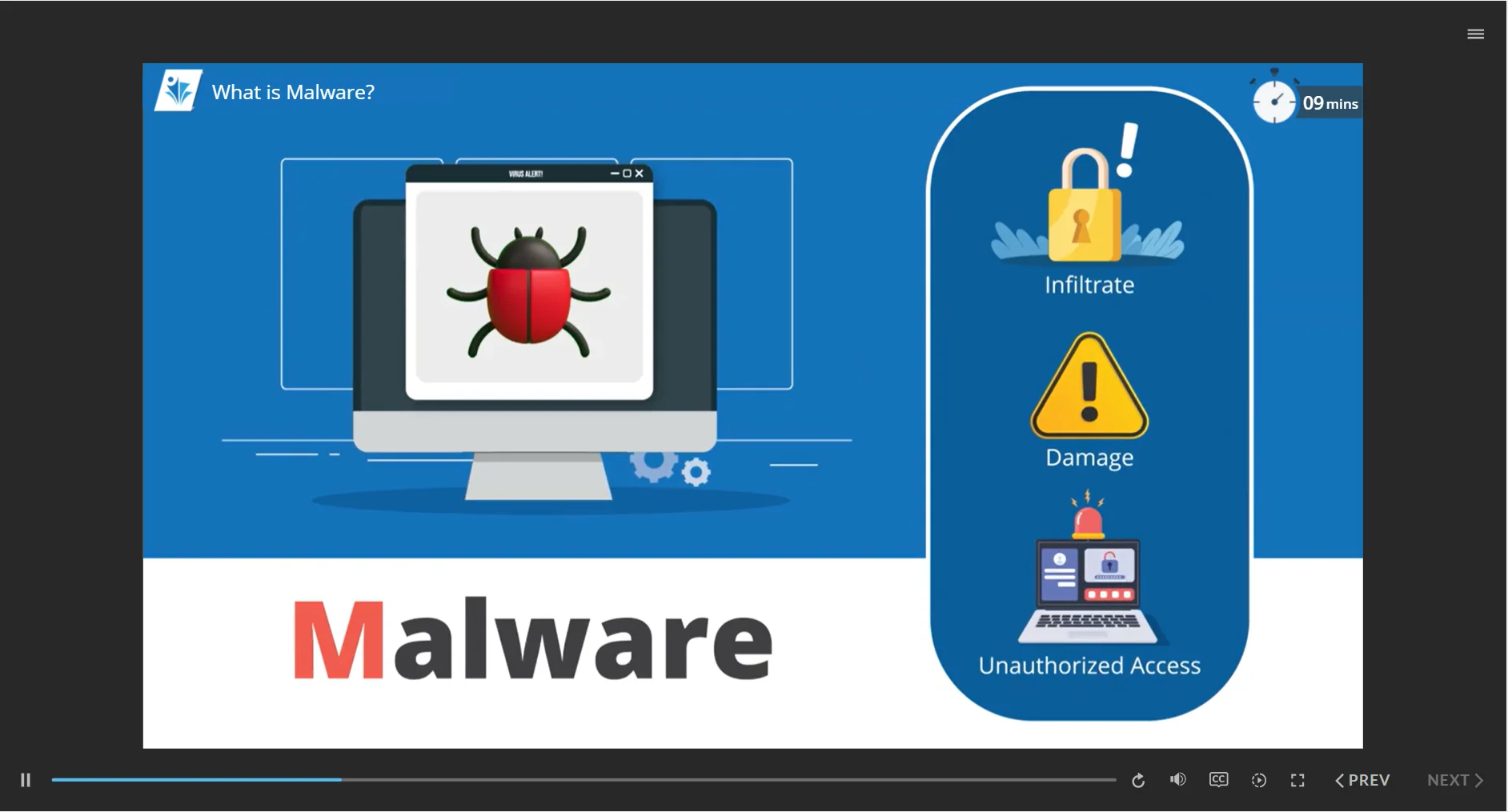
Help employees recognise common malware risks and understand how malicious links, attachments, downloads and software can compromise organisational systems.
Key Topics: Malware · Ransomware · Malicious Attachments · Suspicious Links · Unsafe Downloads
Explore Malware Awareness TrainingProtect Information Beyond the Screen
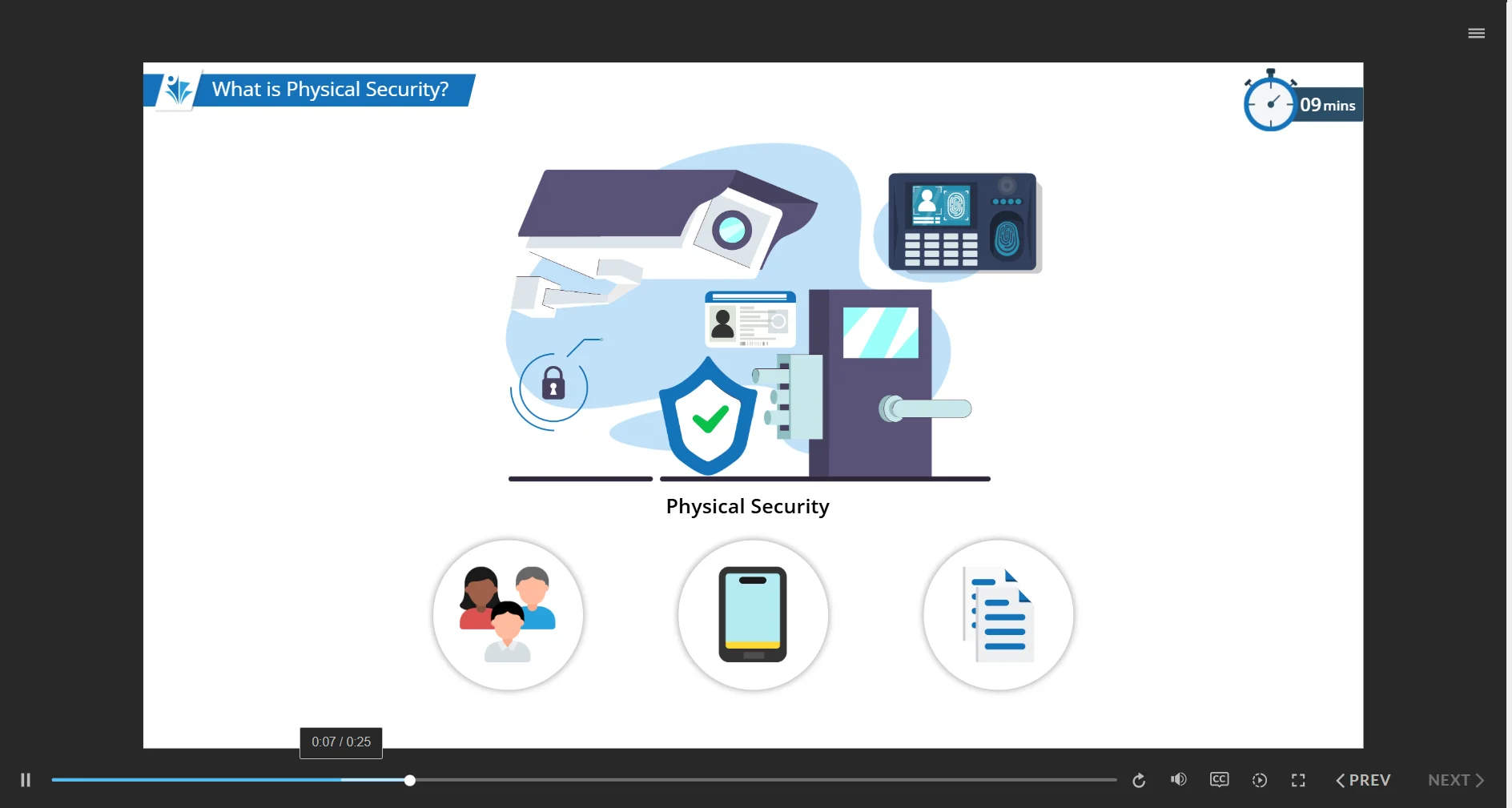
Build awareness around physical access, unattended devices, confidential documents, visitors and other workplace security risks.
Key Topics: Physical Access · Tailgating · Device Security · Clean Desk Practices · Visitor Awareness
Explore Physical Security TrainingWork Anywhere. Stay Security-Aware.
Reinforce secure behaviors when employees access organizational information, systems and devices outside controlled office environments.
Key Topics: Remote Working · Wi-Fi Security · Device Protection · Secure Access · Working Outside the Office
Explore Remote Work Security TrainingRecognize When Attackers Target People
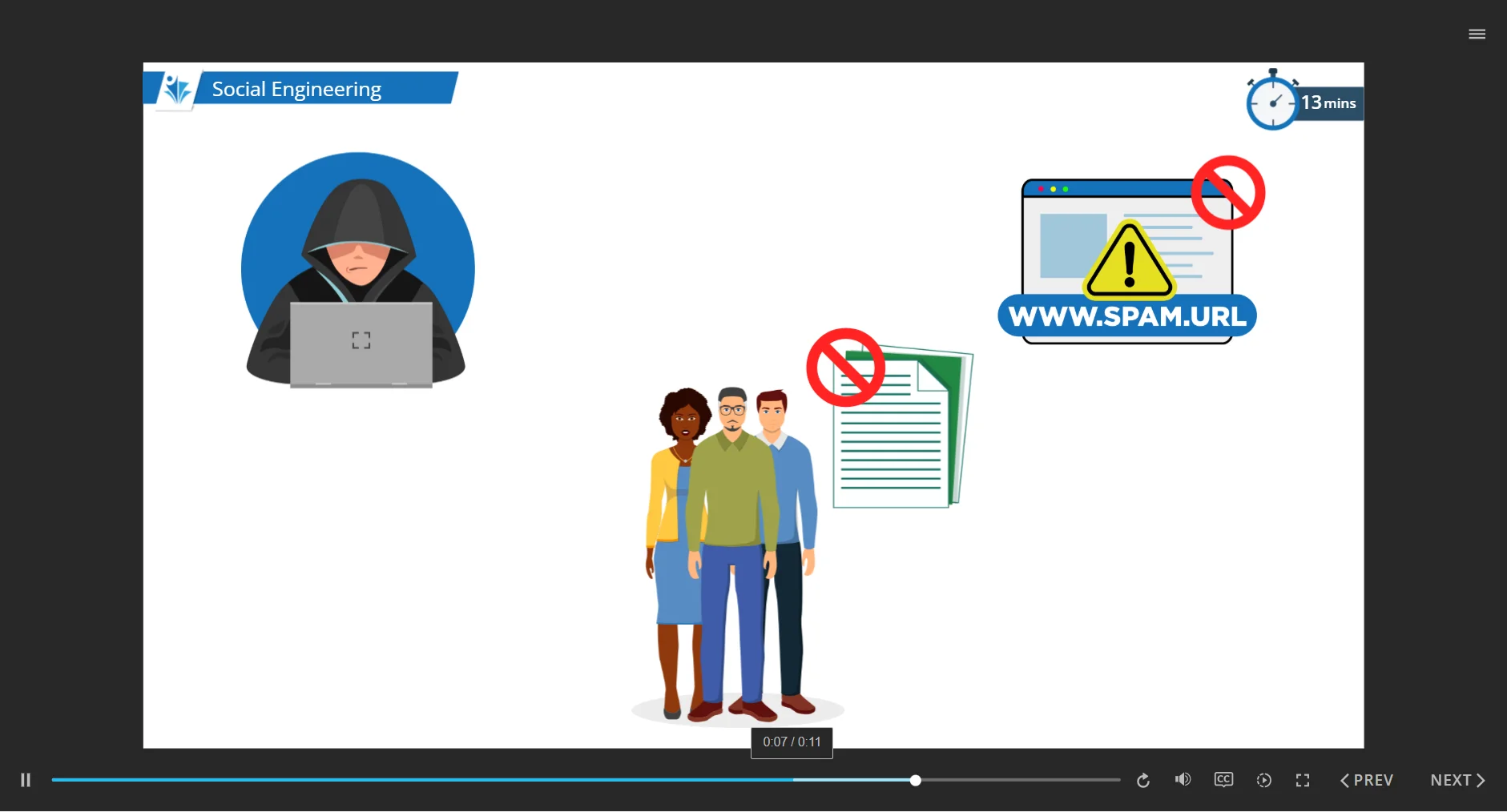
Help employees recognize manipulation, urgency, authority and impersonation techniques used to persuade people to disclose information or take unsafe actions.
Key Topics: Phishing · Smishing · Vishing · Impersonation · Suspicious Requests · Verification
Explore Social Engineering TrainingUnderstand Security Risks Beyond Your Organisation
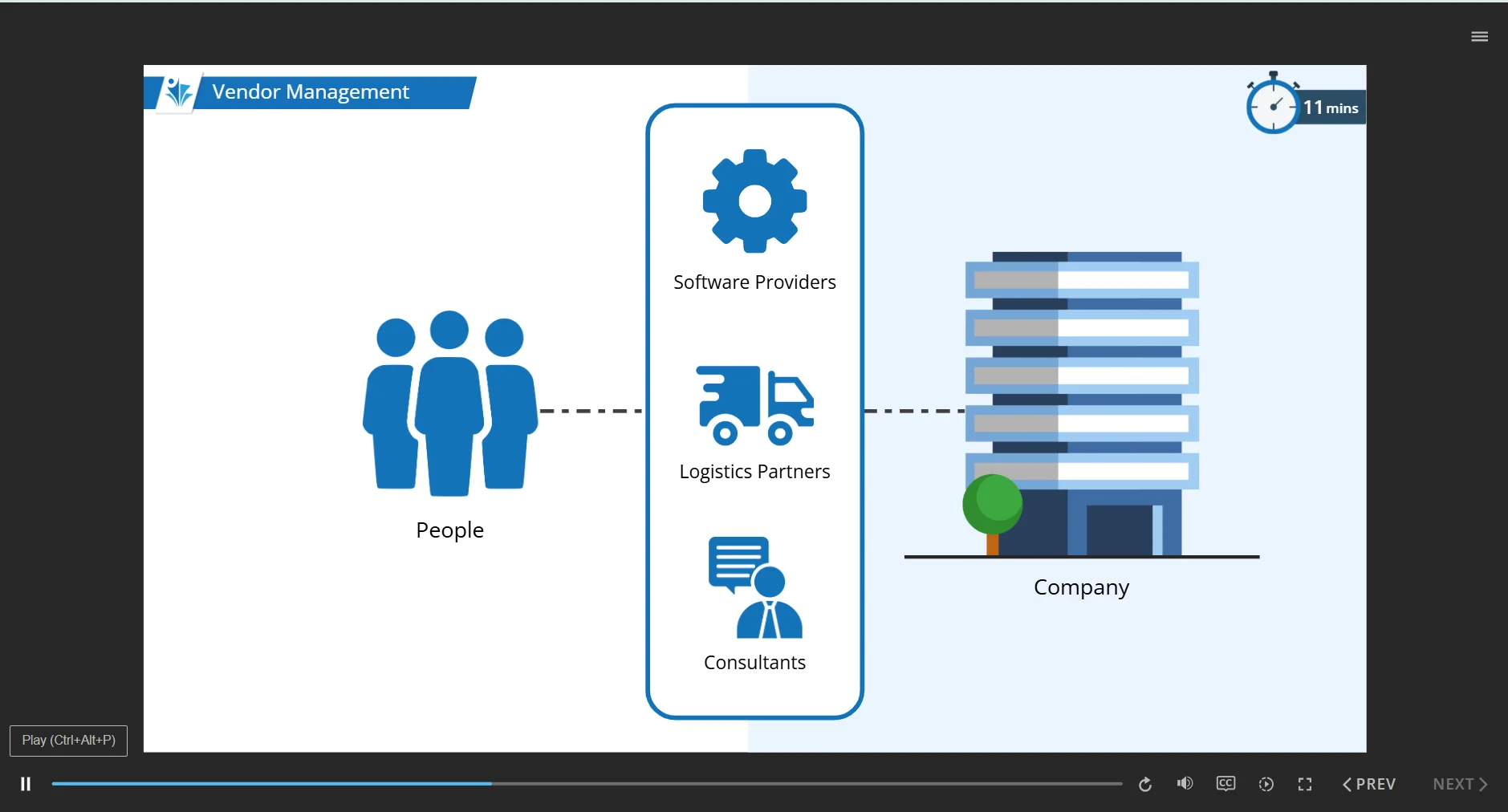
Help employees understand their security responsibilities when interacting with vendors, service providers and other external organisations.
Key Topics: Vendor Risk · Third-Party Security · Secure Data Sharing · Approved Vendors · Escalation
Explore Third-Party Risk TrainingRecognize It. Report It. Respond Faster.
Help employees identify potential security incidents and understand why prompt reporting through the appropriate organisational channels matters.
Key Topics: Security Incidents · Warning Signs · Reporting · Escalation · Employee Responsibilities
Explore Incident Reporting TrainingRecognise Risks From Within
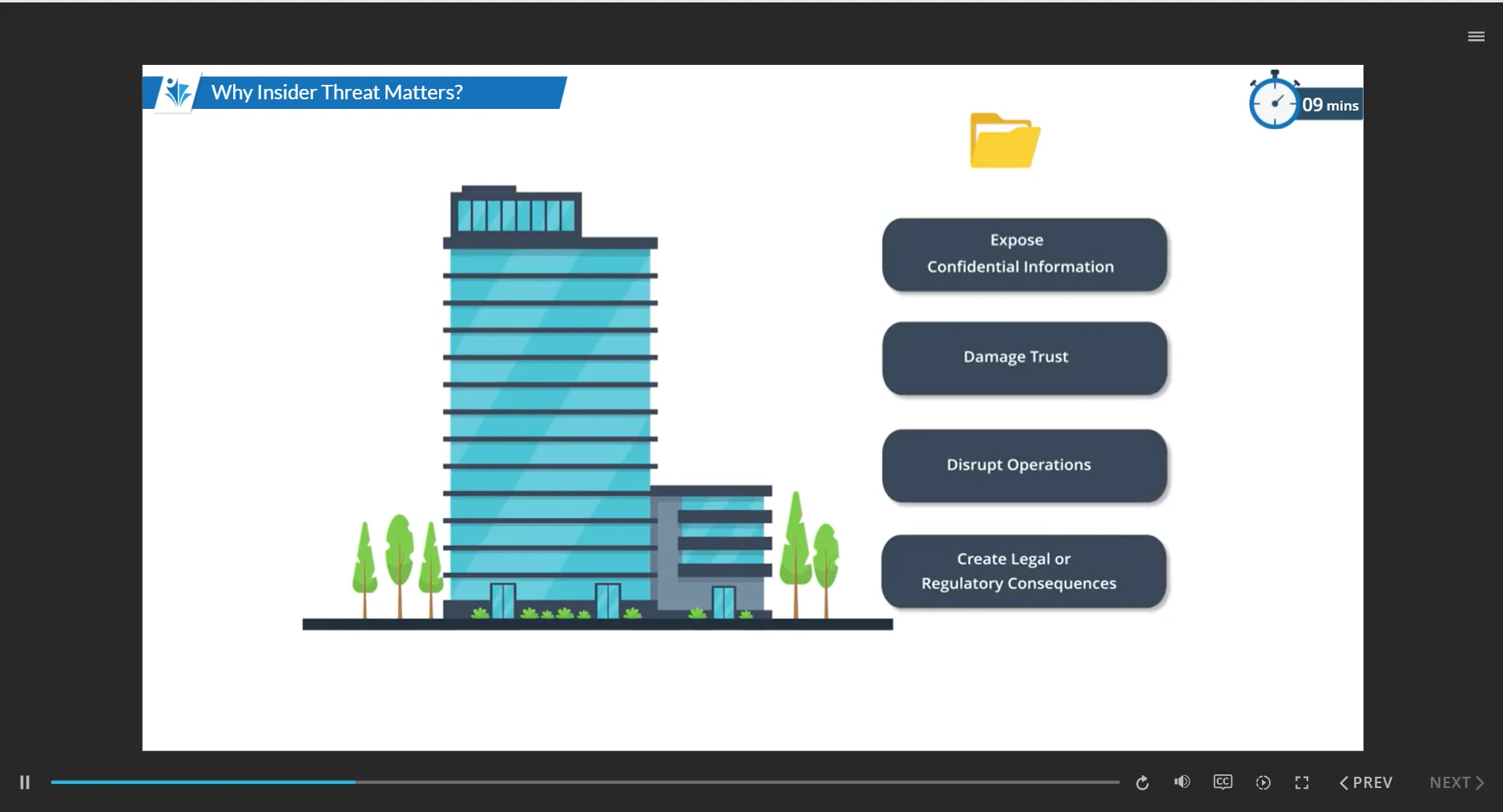
Help employees understand how malicious actions, negligence and compromised accounts can create insider risk and how suspicious activity should be reported.
Key Topics: Malicious Insiders · Negligent Behaviour · Compromised Accounts · Warning Signs · Reporting
Explore Insider Threat TrainingInformation security can be complex. Employee training shouldn't be.
Learning Elements
The course breaks important security concepts into short, focused learning experiences that connect cybersecurity principles with situations employees may recognize from their everyday working lives.
Visually engaging, animated explainers help simplify information security concepts and make learning easier to consume.
Employees encounter practical scenarios that demonstrate how cyber threats and security risks can appear during everyday work.
Knowledge checks are incorporated throughout the course, allowing employees to apply what they have learned as they progress.
Scenario-based activities encourage employees to think about how they would respond when faced with suspicious or potentially risky situations.
A structured final assessment helps evaluate employees' understanding of the key security concepts covered throughout the course.
Fully responsive interface across desktop, tablet, and mobile - complete with a learner dashboard, progress tracking, automated reminder prompts, and seamless integration with your existing LMS or HR systems.
Upon successful completion, you receive a CPD certificate valid as proof of training.
The course covers essential information security risks and behaviors employees should understand when handling organizational systems, information, and digital tools.
Information security becomes easier to understand when employees can see how risks appear in practice.
Throughout the course, learners encounter animated explanations and scenarios designed to connect security principles with situations they may face at work.
Knowledge checks are integrated into the learning journey so employees can apply their understanding immediately rather than waiting until the end of the course.
This helps transform security awareness from passive content consumption into a more practical learning experience.
Request a Demo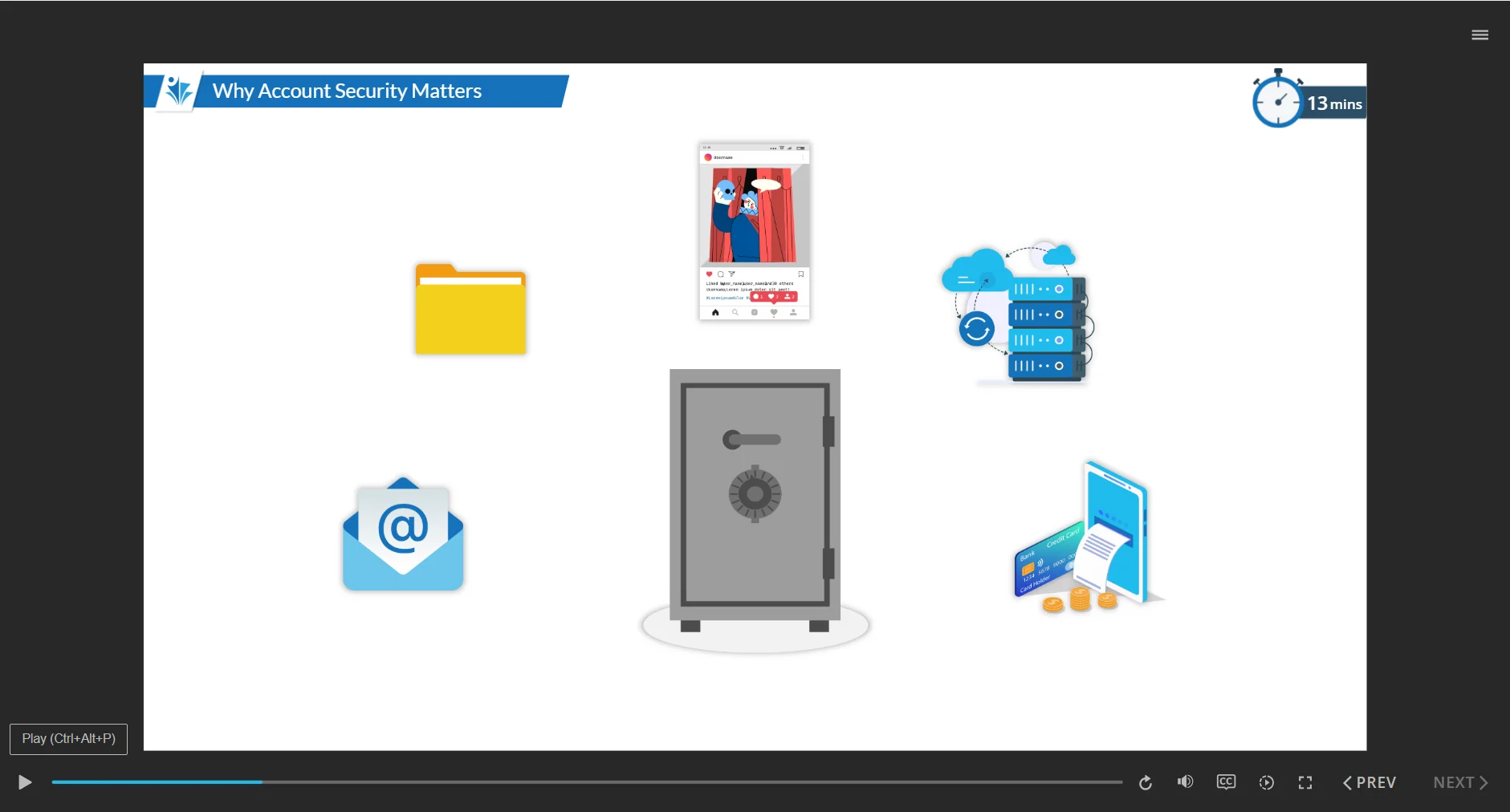

Give employees a practical understanding of the security risks they may encounter during everyday work.
Help employees recognize when attackers are targeting human behavior rather than attempting to defeat technology directly.
Bring account security, data protection, malware, social engineering, remote work, physical security, third-party risk and emerging threats into one structured programme.
Help employees understand that protecting organisational information and systems is a shared responsibility.
Give employees the awareness needed to recognize suspicious activity and understand when it should be escalated.
Information security awareness can form part of an organisation's wider cybersecurity, risk-management and compliance programme.
Information security is not only the responsibility of IT or cybersecurity teams.
The course is designed for employees who interact with organizational systems, information, devices, and digital communication as part of their everyday work.
Build foundational information security awareness among employees across departments and job roles.
Support employees who work with confidential, restricted, personal, or intellectual property information.
Build awareness among employees who may be more frequently targeted through impersonation, social engineering, or targeted phishing attacks.
Reinforce security awareness for employees accessing organisational systems from home, public networks, or distributed working environments.
Introduce essential information security principles as part of employee onboarding and establish secure behaviours from the beginning.
Answers to common questions about SucceedLEARN's Information Security Awareness Training.
Request a DemoInformation security awareness training helps employees understand cybersecurity risks, recognise potential threats and develop safer behaviours when using organisational information, accounts, systems and devices.
Training can be relevant to employees, managers, contractors and other users who access organisational information, systems, applications or devices.
The programme includes Account Security, AI-Based Attack, Data Classification, Malware, Physical Security, Remote Work Security, Social Engineering, Vendor and Third-Party Risk Management, Incident Reporting and Insider Threat.
Yes. Social Engineering is a dedicated module within the programme and helps employees recognise manipulation, phishing, impersonation and suspicious requests.
Yes. The AI-Based Attack module builds awareness around emerging threats involving AI-enabled phishing, impersonation and other forms of AI-assisted social engineering.
Yes. Remote Work Security addresses security behaviours relevant to employees accessing organisational information and systems outside controlled office environments.
Yes. Insider Threat is one of the 10 modules and addresses malicious, negligent and compromised insider risks.
Information security awareness training can support broader cybersecurity, risk-management and compliance objectives. The specific training required should depend on the organisation's policies, risks and applicable framework or regulatory requirements.
Yes. SucceedLEARN supports SCORM-based delivery for organisations using their own learning management system, alongside SaaS delivery through SucceedLEARN.
Give employees the practical knowledge they need to recognize cyber threats, protect organisational information and make safer security decisions.
10 focused modules. Practical security awareness. One connected learning experience.