- Animated Videos
- Short slides with narrated text
- Interactive scenario exercises
- Real-life case examples
- Frequent knowledge checks / quizzes
- Final assessment / certificate generation

Learning Objectives
By the end of this course, learners will be able to:
- Define the role of a supervisor under US harassment law
- Apply legally compliant complaint-handling steps
- List the types of harassment.
- Recognise early warning signs, including informal disclosures
- Escalate issues in line with company policy and EEOC expectations
- Describe the responsibilities of a supervisor
- Effectively handle harassment complaints
Why SHPT for Supervisors (Sexual Harassment Prevention Training) in the US?
Reduces organizational risk and protects the company from liability
Supervisors represent the org in their actions, meaning harassment, discrimination, retaliation, or mishandled complaints can legally be treated as the company’s fault. This course ensures leaders understand vicarious liability and the high standards expected from them, reducing the risk of lawsuits, fines and legal exposure.
Supervisor-specific training, not generic employee learning
Focuses on legal responsibilities, reporting duties, complaint handling, investigations, documentation & escalation, tailored for leaders who manage people.
Teaches supervisors how to handle complaints professionally and lawfully
The module trains supervisors to receive reports with empathy, gather information effectively, avoid bias, handle sensitive conversations, document accurately, and maintain confidentiality - key requirements for compliant complaint handling.
Ensures compliance with organizational policy and legal expectations
Covers procedures around company policies, no-retaliation requirements, tangible employment actions, personal relationships at work, mandatory reporting duties and escalation protocol, ensuring policies are applied consistently.
Protects the company even when complaints appear informal or unclear
Through the course the Supervisors learn that even rumours, jokes, casual comments, or off-hand disclosures may be early signs of harassment, and they must still act. This proactive mindset helps stop issues before they result in harm or liability.
Enhances leadership accountability and reinforces professional conduct expectations
Supervisors understand that failure to report, ignoring misconduct, or engaging in harassment themselves may result in disciplinary action, including removal from role or termination. Training reinforces ethical, complaint-safe leadership behaviour.
Built-in scenarios, knowledge checks & assessments
Interactive learning ensures behaviour change, not just awareness, strengthening the role of the Supervisors in handling complaints, culminating in an 80% pass requirement to certify understanding.
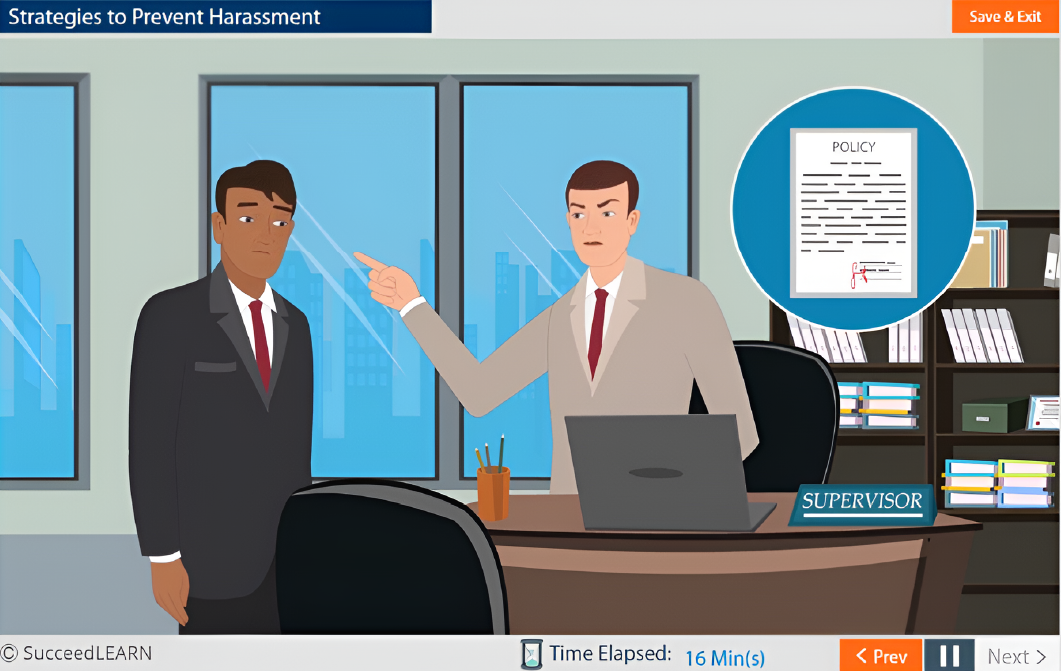
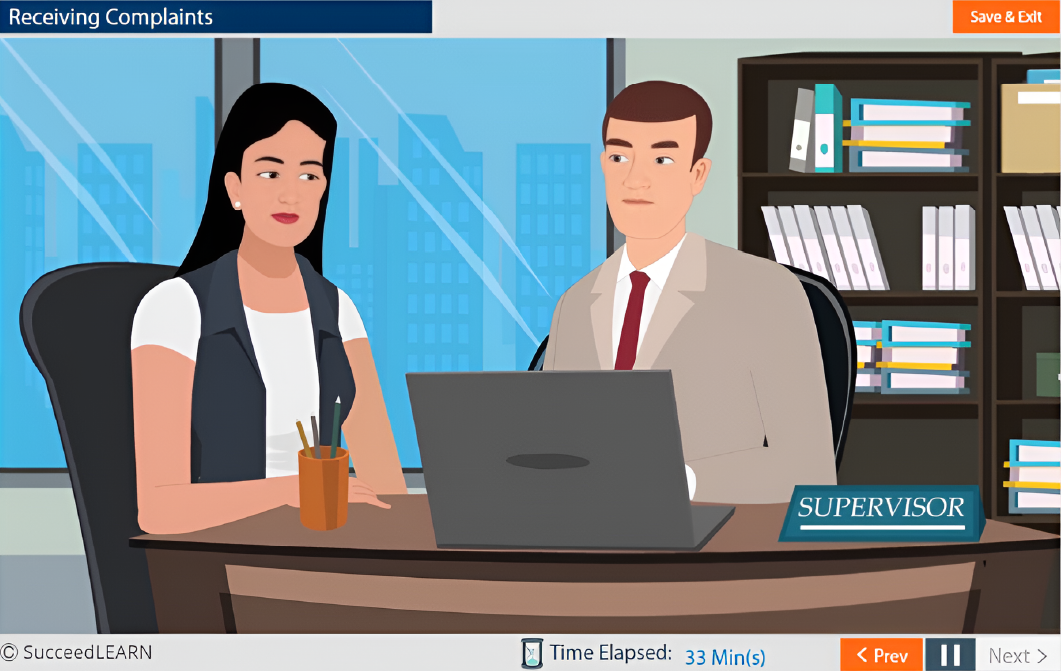
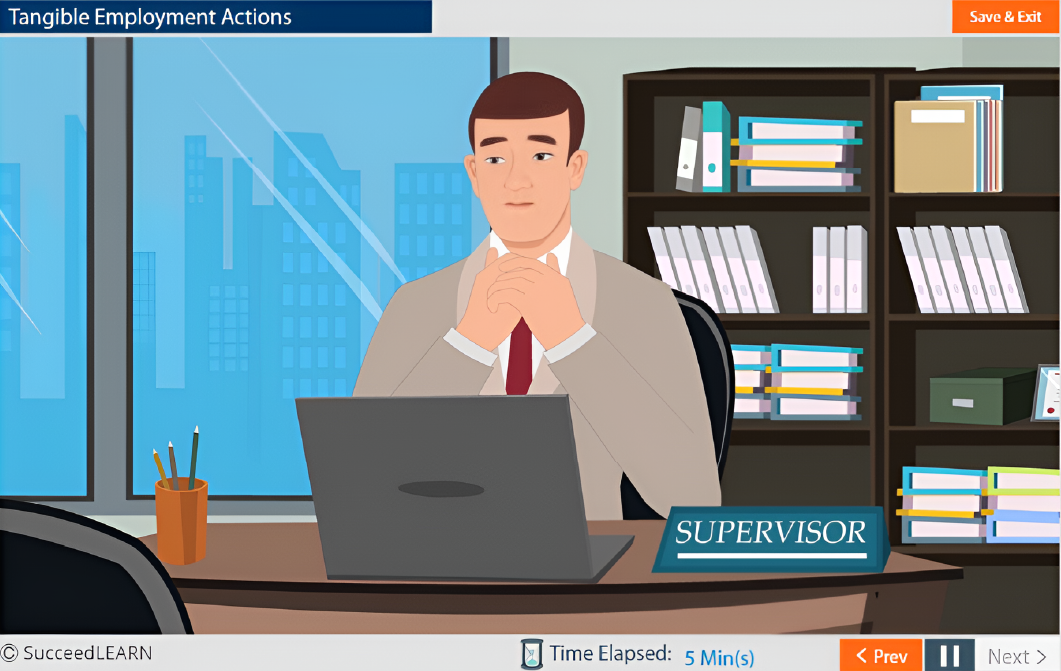
Course's Screenshots





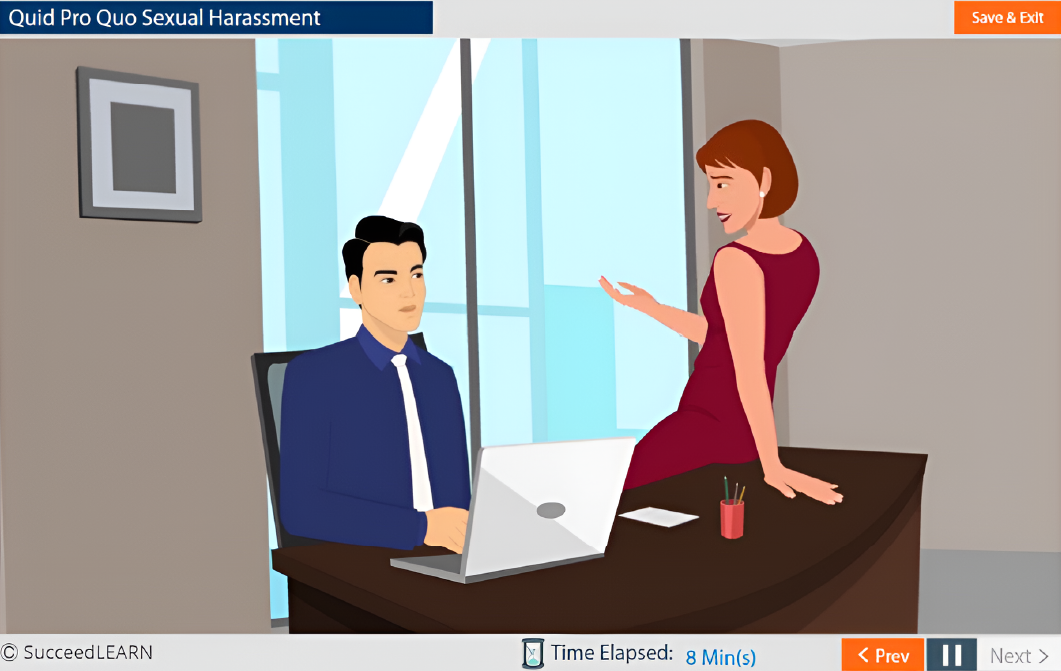

Course Structure
Learning elements
Format & accessibility
Fully responsive interface across desktop, tablet, and mobile -complete with a learner dashboard, progress tracking, automated reminder prompts, and seamless integration with your existing LMS or HR systems.
Certificate
Upon successful completion, you receive a CPD certificate valid as proof of training.
Target Audience
The SHPT for Supervisors course is tailored for:
- Supervisors, Managers & Team Leads
- HR Managers & People Leaders
- Department Heads & Project Managers
- New or transitioning supervisors in leadership roles
In short, for anyone with authority over hiring, evaluation or discipline.
Case Studies: Real Consequences of Non-Compliance
Some states (and certain cities) require private employers to provide mandatory SHPT for Supervisors (and often all employees).
And the other states of the U.S. are required under legal obligation to train their supervisors on the prevention of sexual harassment than be faced with penalties and reputational harm.
Below are few cases where the companies faced severe backlash after having been charged with sexual harassment:
- A McDonald’s franchisee was ordered to pay US$1.6 million in damages after a court found that it failed to protect workers from a manager who sexually harassed them. The case underscores how a lack of effective prevention measures can lead to substantial liability for employers.
- The EEOC sued Formel D USA for supervisor sexual harassment and retaliation. The settlement required $80,000 in relief and a six-year injunction, including mandatory company-wide harassment and retaliation training, specialised investigator training, policy updates, a 24/7 anonymous hotline, and ongoing EEOC monitoring - demonstrating that mandatory training and long-term oversight are imposed when employers fail to stop supervisor misconduct.
Course Outline
Definition of a Supervisor
Legalities Affecting the Roles of a Supervisor
- Tangible Employment Actions
- Liability
- Reasonable Care
Types of Harassment
- Quid-Pro-Quo
- Scenario: An employee who works in sales has his boss complimenting him regularly and making flirtatious comments when they are alone.
- Third Party Harassment
- Scenario: A female cashier at a restaurant is asked by a frequent customer to go on a date with him every time he visits the restaurant.
Strategies to Preventing Harassment
- Educating Personnel
- Personal Relationships at Workplace
- Enforcing Policies
- Mandatory Reporting
Handling Complaints
- Receiving Complaints
- Documenting Complaints
- Confidentiality and Privacy
- False Accusations
- Investigating Complaints
See how Succeed will work for your Organization

Request a Demo
FAQs
The Sexual Harassment Prevention Training is a mandatory workplace compliance training in many states (California, Connecticut, Delaware, Maine, New York) that educates supervisors and managers on how to prevent, identify, and respond to sexual harassment in the workplace.
This course equips supervisors to recognize, prevent and respond to harassment and discrimination at work. It teaches legal responsibilities, how to handle complaints, document incidents, report to HR, and maintain a safe work environment.
Supervisors carry legal and organizational accountability. Their actions can create vicarious liability for the company, meaning the org can be held responsible if they mishandle harassment or fail to act. Training ensures they know how to enforce policies, respond appropriately, and protect the business.
It covers legalities of harassment, supervisor duties, tangible employment actions, types of harassment (including quid-pro-quo and third-party), reporting procedures, documentation, confidentiality, retaliation prevention, complaint handling, and post-investigation responsibilities.
When supervisors fail to report harassment, ignore incidents, or handle complaints incorrectly, the company faces legal, financial and reputational risk. This training builds competency in early intervention, proper handling and accurate documentation—strengthening legal defensibility.
Supervisors are expected to exercise reasonable care, report incidents promptly, and enforce company policies without exception. While federal law doesn't mandate training everywhere, failure to train supervisors significantly increases liability risk and weakens the company’s defense in harassment cases.
Supervisors must report all harassment - even if the employee requests confidentiality or prefers no action. Refusal or delay can result in disciplinary action against the supervisor.
Yes. The program trains supervisors to receive complaints empathetically, gather facts without judging, document details accurately, maintain privacy, and escalate to HR. It also covers false accusations, witness-free complaints, and follow-up after investigations.
Failure to report, ignoring incidents, or retaliating against complainants can lead to corrective action, unpaid suspension, or termination. Supervisors may also be named individually in legal claims.
Yes - interactive case studies, supervisor role-play examples, warning signs of quid-pro-quo, third-party harassment illustrations, reporting scenarios, knowledge checks, and assessment questions help supervisors apply learning to real workplace situations.
The course is approximately 60 minutes, followed by an assessment. Supervisors must achieve 80% or more to pass, ensuring genuine understanding. Completion reports can be used as compliance records.
Yes. By building awareness, reinforcing boundaries, teaching early intervention and formal reporting procedures, supervisors are better equipped to prevent escalation, leading to fewer incidents and stronger workplace culture.
Supervisors are guided on follow-up responsibilities such as monitoring retaliation risks, checking on employee wellbeing and rebuilding team trust post-incident.
The delivery is fully flexible. If you have an in-house LMS, we can provide the course as a SCORM-compliant package. If not, we offer a seamless SaaS-based hosting option for easy access and deployment.