- Animated Videos
- Short slides with narrated text
- Interactive scenario exercises
- Real-life case examples
- Frequent knowledge checks / quizzes
- Final assessment / certificate generation
Learning Objectives
By the end of this course, learners will be able to:
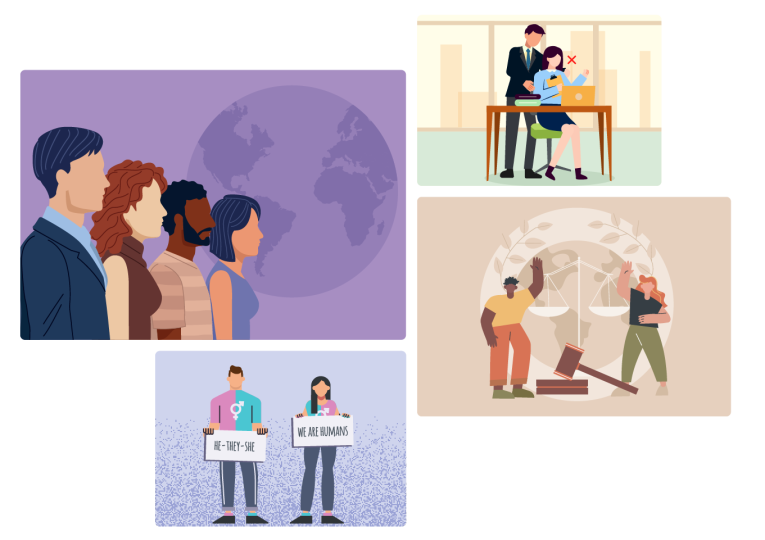
- Define harassment and sexual harassment.
- List the forms of sexual harassment, including hostile work environment and quid pro quo sexual harassment.
- Explain the difference between sexual harassment and reasonable behavior.
- Discuss the concept of intent vs impact in cases of harassment.
- Outline the steps to take if an employee is harassed, including giving feedback and filing a complaint.
- Demonstrate how to act as an active bystander when witnessing harassment.
Why Prevention of Sexual Harassment at Global Workplace Training?
Real-world scenarios that reflect workplace realities
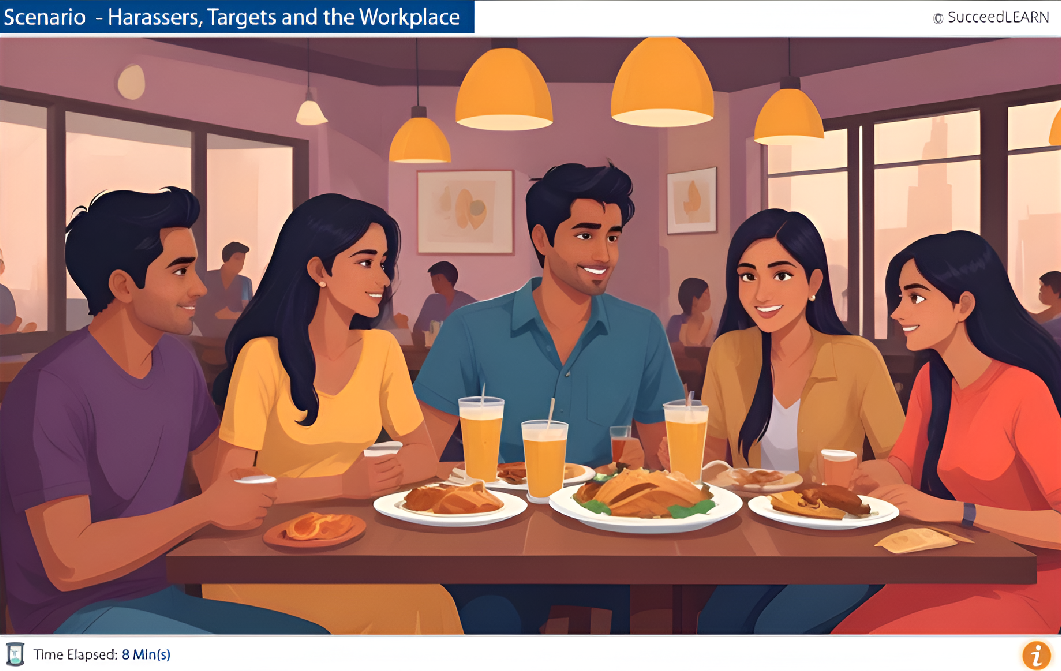
Learners navigate everyday situations - compliments that become uncomfortable, quid-pro-quo promotion pressure, inappropriate jokes, digital harassment, off-site events, and third-party interactions - helping them recognize problems early and act confidently.
Scenario-based decision making, quizzes & drag-and-drop activities
Instead of passive learning, supervisors make choices, evaluate responses, correct misconceptions, and receive immediate feedback, ensure appropriate action is taken and provide proper assistance if required, reinforcing the right behaviour and ensuring strong retention.
Simple language, region-friendly examples & global legal context
The course content avoids legal jargon and explains concepts with relatable examples, adaptable to US, UK, UAE, Singapore, India and other country frameworks.
Prepares orgs for complaints from any gender & third-party interactions
The course highlights that sexual harassment can be committed against anybody, irrespective of the gender, sexual orientation or gender identity of the harasser or the victim and so your organization’s policy against sexual harassment should protect every individual from sexual harassment. The course also stresses that harassment can involve coworkers, supervisors, clients, vendors, contractors, security staff or visitors, making it vital for companies to train supervisors on handling diverse situations and relationships at work.
Addresses modern workplace realities
The Prevention of Sexual Harassment at Workplace Global training covers harassment beyond physical office premises - events, trips, coworking locations, virtual meetings, chats, videos and emails - helping employees stay protected in hybrid and multi-location environments.
Enables proactive intervention through Bystander Strategies
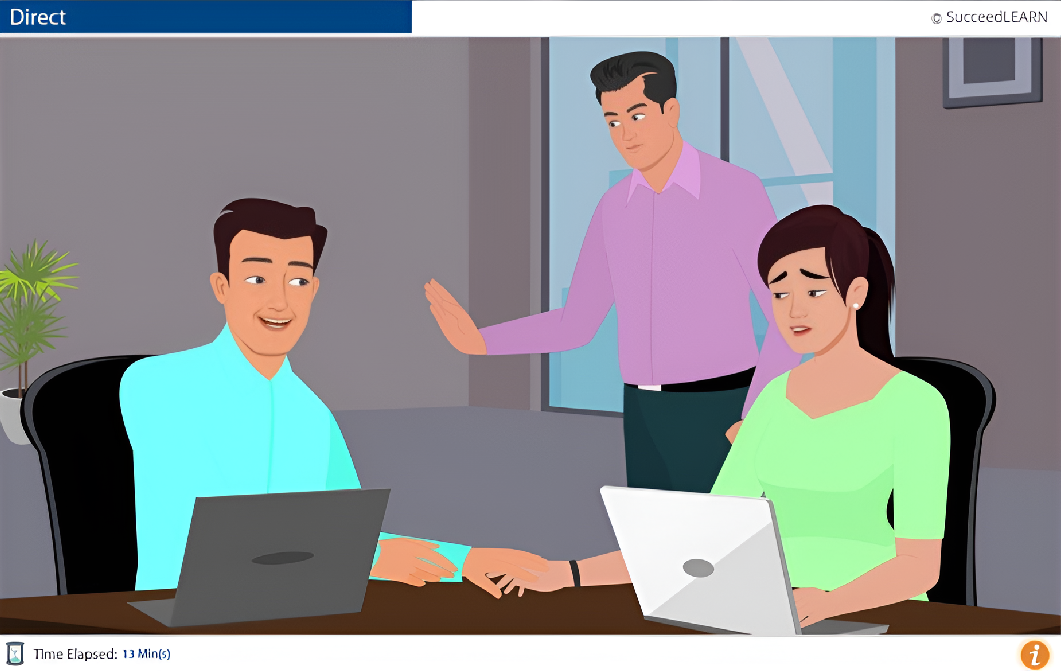
The module teaches "Direct, Distract, Delegate, Delay" intervention approaches, encouraging early action from colleagues and preventing harassment incidents from escalating. This distributes responsibility across teams, not just HR.
Protects the org from legal, financial and reputational risk
By training supervisors to identify, prevent and address harassment early, the org reduces exposure to lawsuits, claims of negligence, and reputational fallout that could arise from unresolved harassment cases. Clear understanding of hostile work environment and quid-pro-quo scenarios strengthens compliance and defence in case of disputes.
Laws & Regulations Addressed in Prevention of Sexual Harassment at Workplace Global Training
The course covers legal frameworks for Canada, Germany, India, Italy, Kingdom of Saudi Arabia, Malaysia, Pakistan, Singapore, UAE, UK, USA.
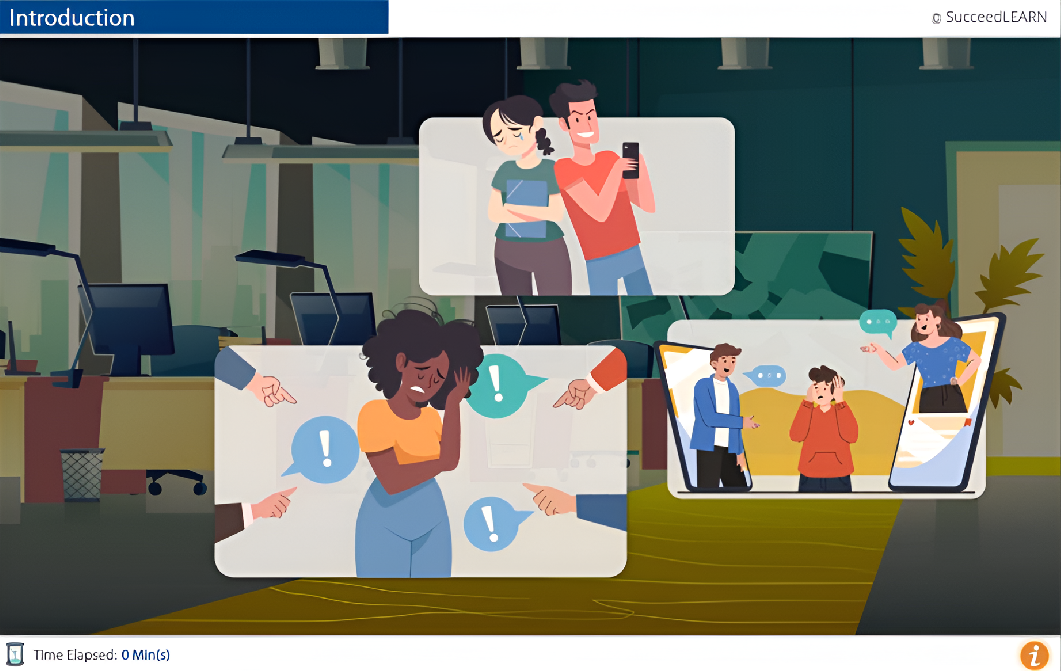
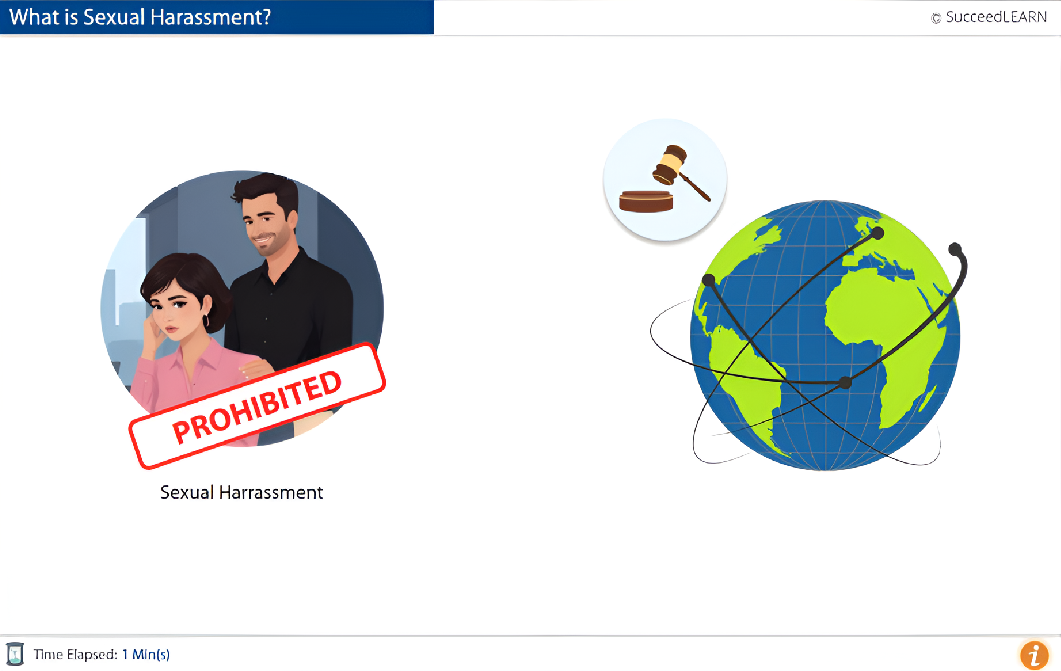
Course's Screenshots


Course Structure
Learning elements
Format & accessibility
Fully responsive interface across desktop, tablet, and mobile -complete with a learner dashboard, progress tracking, automated reminder prompts, and seamless integration with your existing LMS or HR systems.
Target Audience
The course is tailored for:
- Supervisors, managers & team leaders responsible for people oversight
- HR professionals & compliance officers handling complaints and reporting
- Remote, hybrid & onsite workforce interacting digitally or in person
- New joiners as part of onboarding compliance training
- Employees working with external vendors, clients, partners, contractors
- Employees who may act as witnesses or bystanders in incidents
- Leadership teams responsible for workplace culture & policy enforcement
In short, for all employees across departments, roles, and grades.
Case Studies: Real Consequences of Non-Compliance
Prevention of Sexual Harassment at Workplace Training is mandatory in India and few states of the US.
In other countries, sexual harassment training is not explicitly mandated by law but employers are legally required to prevent harassment, investigate complaints, maintain safe workplaces, and take “reasonable steps.”
Training becomes one of those reasonable steps, making it practically required for compliance and defence.
Below are few cases where the companies faced severe backlash after having been charged with sexual harassment:
- The case involving SCE in the United States, where a JAMS arbitrator awarded $1.58 million in damages, is a strong reminder of what can happen when workplace harassment is not addressed proactively. The award was granted after employees reported experiencing years of inappropriate behaviour, gender-based hostility, and repeated incidents that were not effectively corrected by the employer. The scale of the payout highlights how costly it becomes for orgs when prevention strategies such as awareness training, strong reporting channels, and timely intervention are missing or ineffective.
- Tenthorey v. IMS Incorporated (HRTO, Ontario) – The Human Rights Tribunal of Ontario found that an executive assistant had been subjected to a poisoned work environment created by the CEO’s sexually charged comments and angry outbursts, and that the company failed to investigate properly. The Tribunal ordered the employer to pay CA$13,000 in lost wages and CA$25,000 for injury to dignity, feelings and self-respect, and stressed the importance of serious investigations and up-to-date harassment policies and procedures.
Course Outline
Sexual Harassment
- What is Sexual Harassment?
- Forms of Sexual Harassment
- Hostile Work Environment
- Quid Pro Quo
- Scenario: A female employee is hoping for a promotion to a position that will be vacant soon. She knows that her boss will be involved in deciding who will be promoted.
- Who can be the Target of Sexual Harassment?
- Where can workplace Sexual Harassment Occur?
Regional Reporting Procedures
Sexual Harassment versus Reasonable Behaviour
- Intent vs Impact
Personal Relationships at Workplace
Bystander Intervention
Reporting Sexual Harassment
- Give feedback
- File a complaint with the concerned authority
When You Are Accused of Harassment
What is NOT sexual harassment?
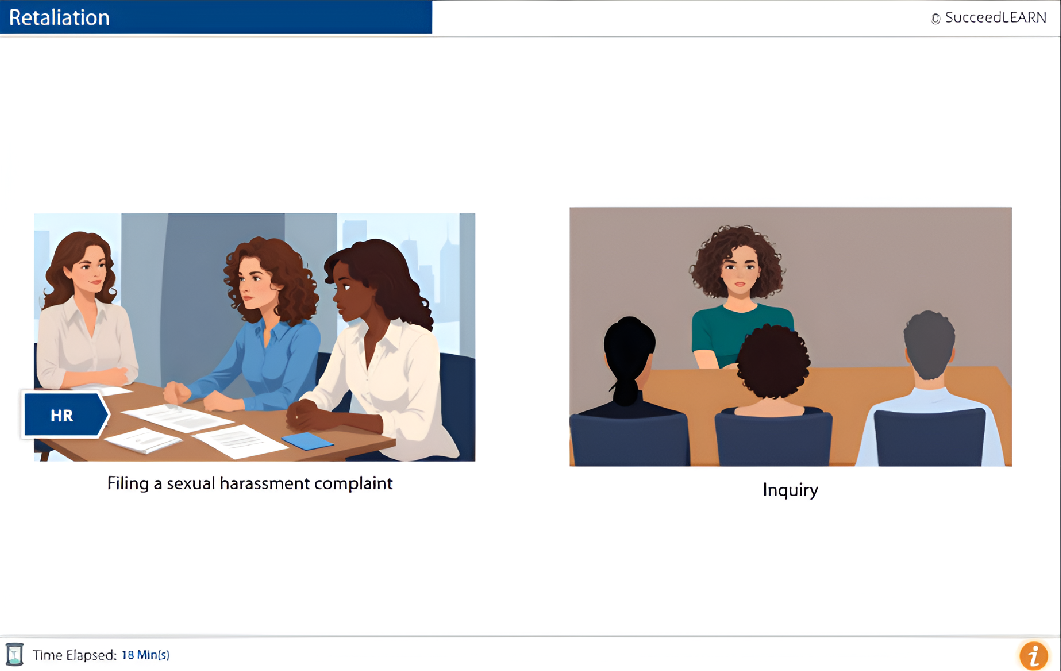
Retaliation
Activity: A colleague tells a female employee that she believes she is being sexually harassed by their supervisor. The colleague helps her report the sexual harassment.
What is not Retaliation?
Filing false complaint
See how Succeed will work for your Organization

Request a Demo
FAQs
Prevention of Sexual Harassment at workplace training in a global framework context refers to a standardized workplace training program designed to prevent sexual harassment across multinational organizations, while aligning with international labor standards and local country laws. It ensures consistent global principles with local legal compliance.
Training helps employers prevent misconduct, reduce legal exposure, maintain a respectful environment, and demonstrate reasonable preventive measures. It enables employees to recognise inappropriate behaviour, understand reporting channels, and act before issues escalate.
Yes. When employees understand what constitutes harassment (including subtle behaviour), how to intervene as bystanders, and how to report safely, incidents are less likely to escalate or go unaddressed. Prevention reduces investigation burdens, conflict, absenteeism, and reputational damage.
The course covers definitions of harassment and sexual harassment, hostile work environment vs quid pro quo, intent vs impact, boundaries, personal relationships at work, bystander intervention, reporting procedures, false complaints, retaliation, and global reporting pathways.
Supervisors learn to recognise red flags early, respond appropriately to complaints, maintain confidentiality, avoid retaliation, and escalate to HR/Investigation authorities correctly — protecting both employees and the org.
Absolutely. Harassment can occur during work trips, team outings, conferences, virtual meetings, emails, chats, and on social media. The course highlights how modern digital and hybrid workplaces expand the definition of "work environment."
Yes, it uses realistic scenarios, decision-based questions, drag-and-drop tasks, and quizzes to help learners practice responses rather than passively read. Immediate feedback reinforces correct behaviour.
The training guides employees on how to give feedback, document incidents, file a formal complaint, and approach HR or designated authorities. It also emphasises confidentiality and fair investigation procedures.
The course clearly explains that lack of evidence ≠ false allegation; however, intentionally false complaints or forged documents can lead to disciplinary action. This helps ensure fairness in the complaint process.
Yes, it highlights what retaliation looks like (e.g., unfair shift changes, negative treatment due to reporting) and clarifies that complainants, witnesses, and supporters are legally protected against reprisals.
Yes, the module includes a Regional Reporting section, making it suitable for multinational rollouts. Local examples and procedures can be customised to country regulations (US, India, Pakistan, UK, UAE, Singapore, etc.).
The Bystander Intervention model (Direct, Distract, Delegate, Delay) equips employees to step in safely and prevent escalation. This fosters shared responsibility, not just HR-driven enforcement.
The delivery is fully flexible. If you have an in-house LMS, we can provide the course as a SCORM-compliant package. If not, we offer a seamless SaaS-based hosting option for easy access and deployment.
Yes. Company policy links, reporting contacts, hotline numbers, brand elements, and region-specific frameworks can be integrated so employees know exactly how to report internally.
The Canadian Human Rights Act, Amendments of Canada Labour Code, and Occupational Health and Safety Act protects the rights as a worker against sexual harassment in the workplace. These laws require employers to establish a system for filing complaints of sexual harassment and to take appropriate actions to prevent such behaviour.
In accordance with these regulations, any employee experiencing sexual harassment can file a complaint with the org’s HR team.
Additionally, individuals have the option to file a complaint with the Human Rights Tribunal or the Human Rights Commission.
In Germany, sexual harassment at workplace is governed by Federal Anti-Discrimination Agency and Gender Equal Treatment Act (Allgemeines Gleichbehandlungsgesetz), 2006. In accordance with these regulations, an org is committed to providing a safe and secure environment for all its employees.
An employee may file a complaint with HR or supervisor. If dissatisfied, they may
- File a complaint with the Federal Anti-Discrimination Agency.
- File a complaint with the labor court under the General Equal Treatment Act, where employees can seek legal redress for discrimination and harassment.
- File a civil lawsuit for damages if the harassment has affected your health or general personal rights, as stipulated in the Civil Code.
- File a complaint with the police if the harassment includes criminal elements such as assault.
Preventing sexual harassment in the workplace is governed by the Sexual Harassment of Women at Workplace (Prevention, Prohibition, and Redressal) Act, 2013 (POSH Act) in India.
To ensure a safe work environment, an Internal Committee (IC) is established in compliance with the POSH Act. If any woman faces sexual harassment within the workplace, they are encouraged to file a complaint within three months of the incident or, in the case of a series of incidents, within three months from the last incident.
These complaints will be promptly taken up and inquired into confidentially by the IC guaranteeing that no employee will face retaliation for filing a complaint. The Internal Committee will complete its inquiry within 90 days, submit its findings and recommendations within 10 days of completing the inquiry, and the employer will act on these recommendations within 30 days.
Sexual harassment complaints from women will be handled according to the POSH Act and complaints from employees of any other gender will be handled as per the org’s Code of Conduct Policy with adequate involvement from the HR team.
In Italy sexual harassment at workplace is governed by Equal Opportunity Code of 2006. In accordance with the code, an org is committed to providing a safe and secure environment for all its employees.
If an employee experiences sexual harassment:
- They can file a complaint with the HR or Supervisor within the org.
- The complaint will be promptly investigated, and disciplinary actions may be taken against the accused or referred to an appropriate disciplinary authority.
If they are dissatisfied with the org’s response, they have the right to:
- Pursue a civil claim against the harasser to seek compensation for any damage suffered.
The org ensures that they are protected from retaliation or any other adverse employment decisions that could negatively impact their working conditions.
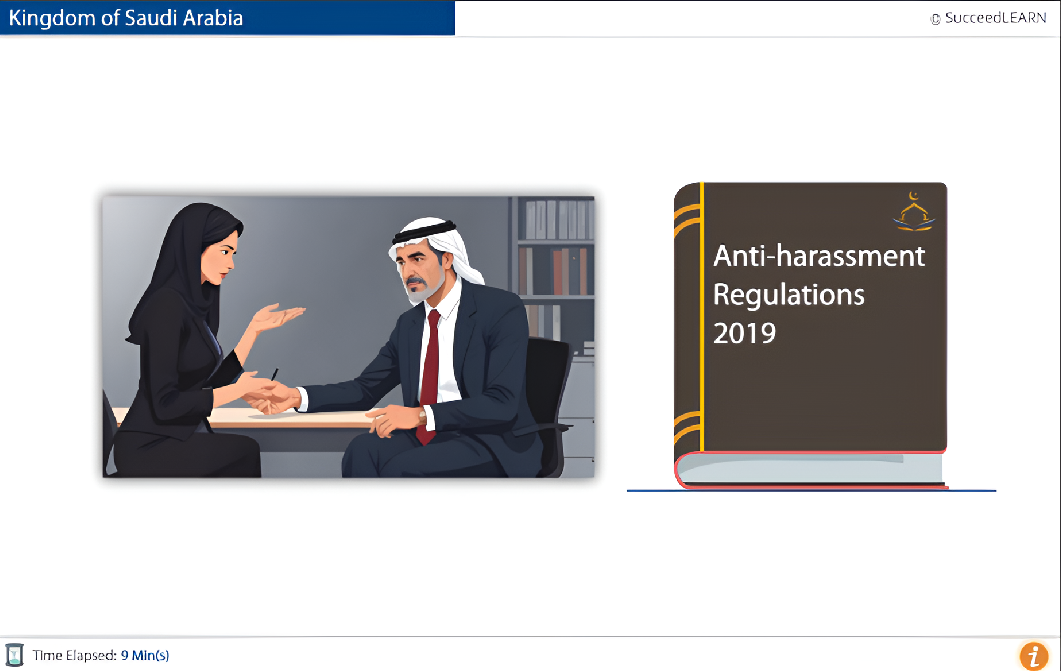
In Saudi Arabia, sexual harassment in the workplace is governed by anti-harassment regulations introduced in June 2018. In accordance with these regulations, an org is committed to providing a safe and secure environment for all employees.
If they face sexual harassment:
- They can file a complaint with HR or their supervisor within five working days of the incident.
- All information related to the case will be kept confidential, with documentation securely stored and accessible only to authorized personnel.
- All complaints will be promptly investigated, and appropriate action will be taken as per the org’s policy.
However, if they are unhappy with how their harassment complaint is handled internally, they also have the option to escalate their complaint to:
- Law enforcement, if the harassment is criminal, or
- Labor courts.
In Malaysia, sexual harassment at workplace is governed by the Employment Act 1955 and the Anti-Sexual Harassment Act (ASHA) 2022. In accordance with these acts, an org is committed to providing a safe and secure environment for all its employees.
If they face harassment:
- They can file a complaint with the HR or their supervisor in the org under Section 81B of the Employment Act 1955.
- All complaints will be promptly investigated, and disciplinary actions may be taken against the accused or referred to an appropriate disciplinary authority.
An employee can also directly file a complaint with the Tribunal established under the Anti-Sexual Harassment Act 2022. The Tribunal follows a structured process, ensures both parties are notified, and delivers a final decision within 60 days.
If they are not satisfied with the org's decision, they can:
- Reach out to the Director General of Labor (DG),
- File a police report if the harassment involves a criminal offense, or
- File a civil suit for damages against the perpetrator.
In Pakistan, incidents related to sexual harassment are governed by Protection Against Harassment of Women at the Workplace Act, 2010. In accordance with the Act, an org is committed to providing a safe and secure environment to all its employees.
The primary law that addresses sexual harassment in Singapore is the Protection from Harassment Act, (POHA).
If the complainant is unhappy with the decision of the HR or Supervisor, they can-
- File a complaint with the Magistrate if the harassment is less severe
- Apply for a Personal Protection Order (PPO) under POHA.
- File a civil lawsuit if the harassment has caused significant distress or loss.
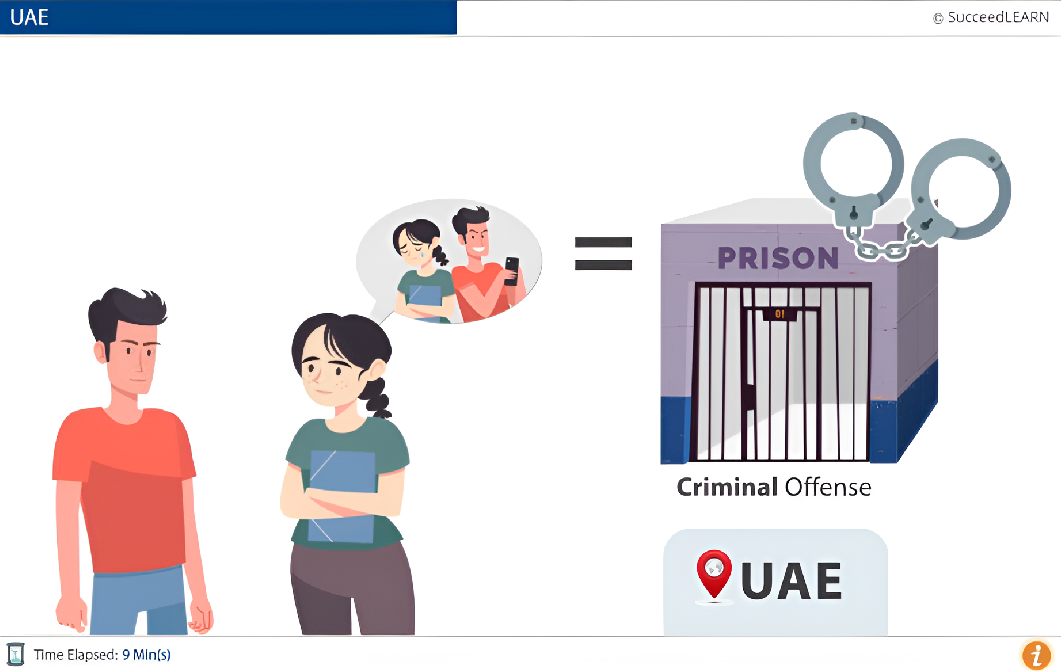
In UAE sexual harassment at workplace is governed by UAE Legislation, UAE Employment Law and Ministry of Human Resources and Emiratisation.
If the accused is found to be guilty, appropriate disciplinary action will be taken including termination without notice in accordance with Article 44(7) of the Employment Law.
If the problem continues despite internal intervention, the employee can
- File a complaint with the Dubai Police.
- File a complaint with the Ministry of Human Resources and Emiratisation.
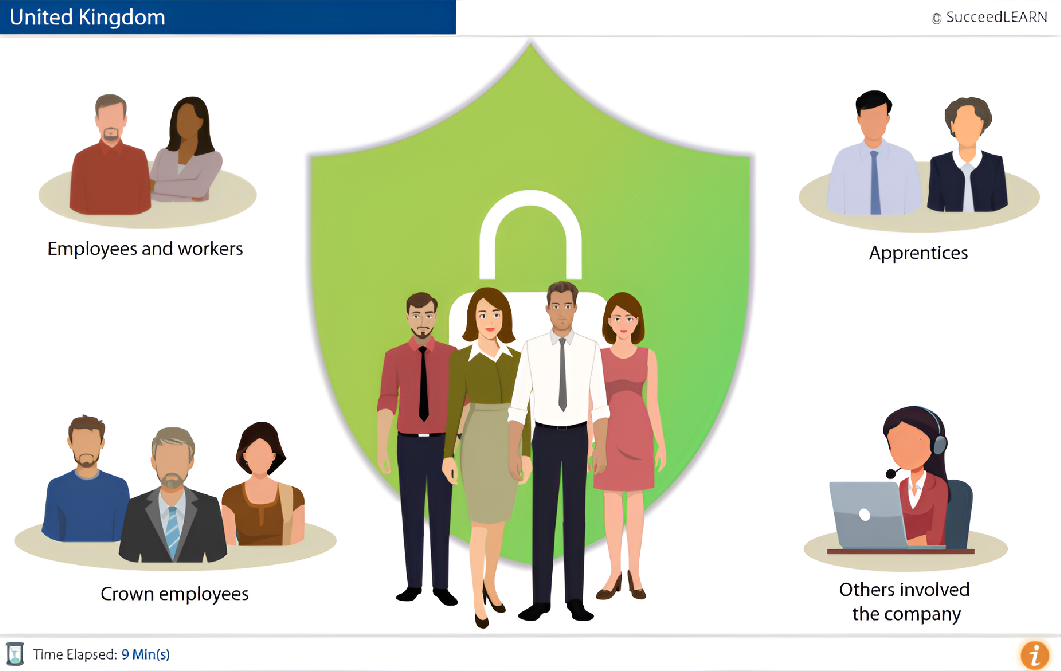
In the United Kingdom, sexual harassment in the workplace is governed by the Worker Protection Act 2023 which is an amendment to the Equality Act, 2010. In accordance with the Act, an org must be committed to providing a safe and secure environment for all employees, workers, apprentices, Crown employees, and others associated with the company, particularly those whose roles involve regular interaction with third parties.
The United States Equal Employment Opportunity Commission (EEOC) is the federal agency that enforces workplace anti-discriminative laws based on the protected characteristics or classes.
An individual can file a complaint with the EEOC within 300 days of the alleged sexual harassment. A complaint must be filed with the EEOC before filing it in the Federal Court.
Employees may also seek help from legal agencies based on the state in which they are employed.