- Dynamic animated visuals
- Clear, professionally narrated slide content
- Interactive, scenario-based activities
- Practical examples drawn from real workplace situations
- Regular quizzes to reinforce understanding
- A final assessment that awards certification

Learning Objectives
By the end of this course, learners will be able to:
- Define Unconscious Bias
- Describe the impact of Unconscious Bias
- List the different types of Unconscious Bias
- Identify the manifestations of Unconscious Bias
- Adopt strategies to prevent Unconscious Bias
Why Unconscious Bias eLearning Training?
Addresses a pressing issue
DEI (Diversity, Equity and Inclusion) fosters fairness and innovation, yet unconscious bias can hold progress back.
For instance, research shows that each extra inch in height can add about $800 to a man’s annual earnings - a clear example of hidden bias. This course helps employees recognize and overcome such biases through practical, scenario-based learning to create truly inclusive workplaces.
Bridges the knowledge gap
The unconscious bias eLearning course bridges the knowledge gap by helping employees understand how automatic assumptions and mental shortcuts influence their decisions without them realising it. Through practical scenarios and reflective learning, it equips them with strategies to recognise, challenge, and reduce these biases in everyday workplace interactions.
Awareness of the Ill-effects
According to a 2020 study by the Society for Human Resource Management, workplace bias cost American companies an estimated $280 billion in absenteeism, reduced productivity, and employee turnover largely driven by employees who felt they had experienced workplace bias, as emphasized in this article What’s wrong with bias training, and how to fix it - Workflow™.
The course helps companies prevent this bias by equipping employees with the awareness and practical strategies needed to recognise, interrupt, and make fair decisions free from hidden assumptions.
Practical & scenario-based learning
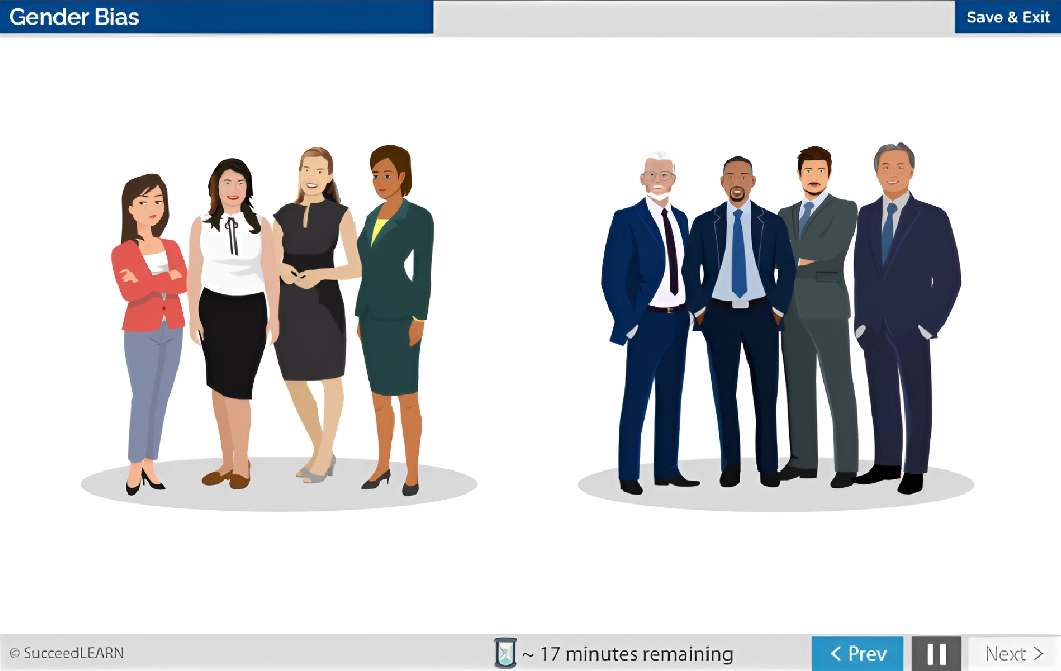
Though it is estimated that we have around 150 biases, some of the common biases we encounter at workplaces are: Affinity Bias, Halo Bias, Confirmation Bias, Conformity Bias, Gender Bias, Social Comparison Bias and Ageism. Each of these types of biases is explained with the help of real-world examples.
For instance, a project manager is so confident in his new initiative that he focuses only on data supporting his idea and ignores evidence from his team suggesting it may fail. This confirmation bias can lead to poor decisions, wasted resources, and strained team relationships.
Instead of simply defining bias, the course shows how it plays out in everyday workplace situations - from hiring and promotions to team dynamics and decision-making.
Customization
You can fully tailor the courses with your company’s logo, policies, workplace visuals, and other brand elements. You also have the option to customize scenarios that mirror real situations in your own work environment, making the training even more relatable and impactful.
Course's Screenshots
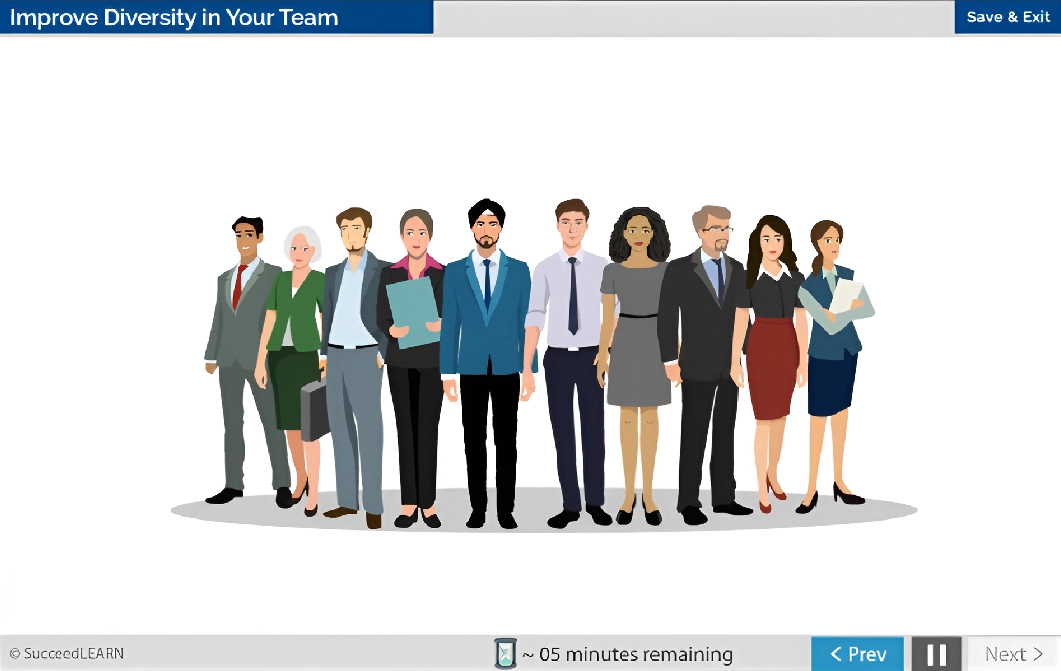
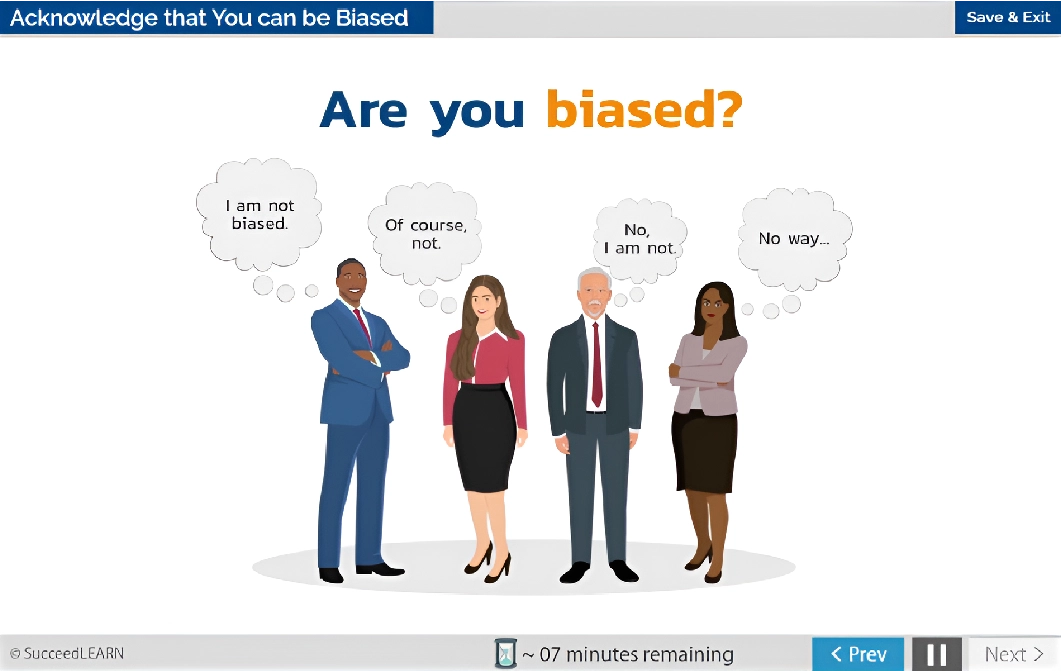
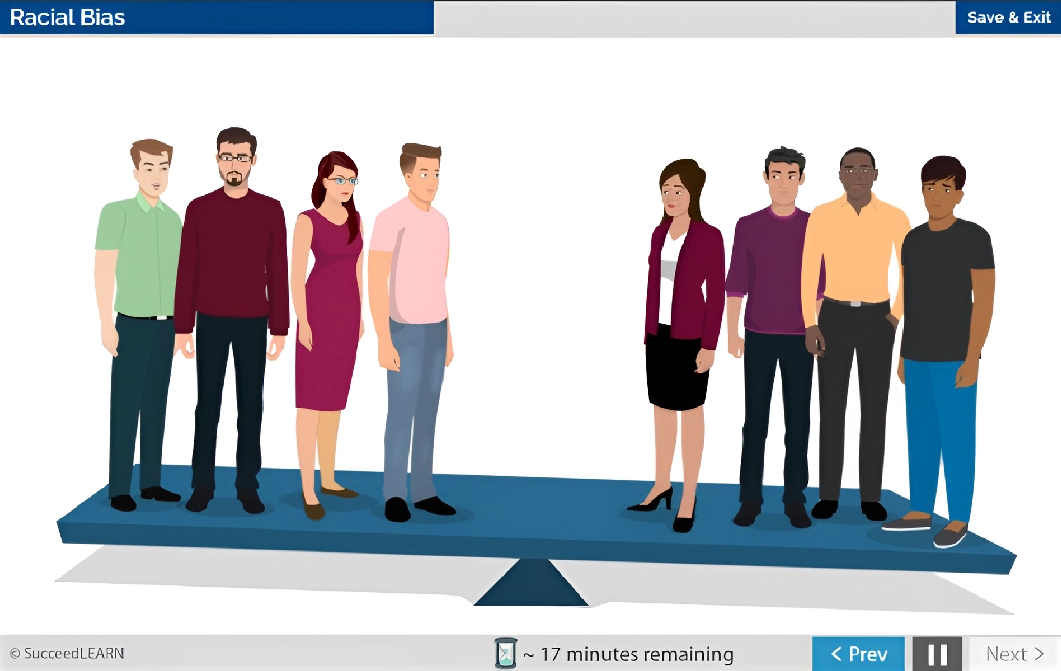
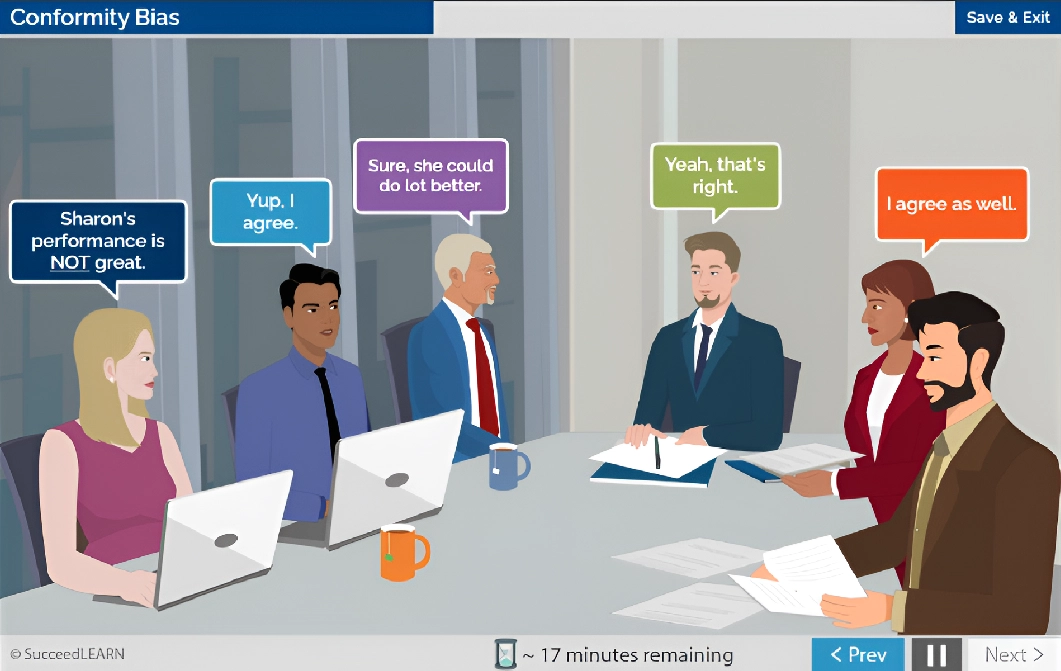
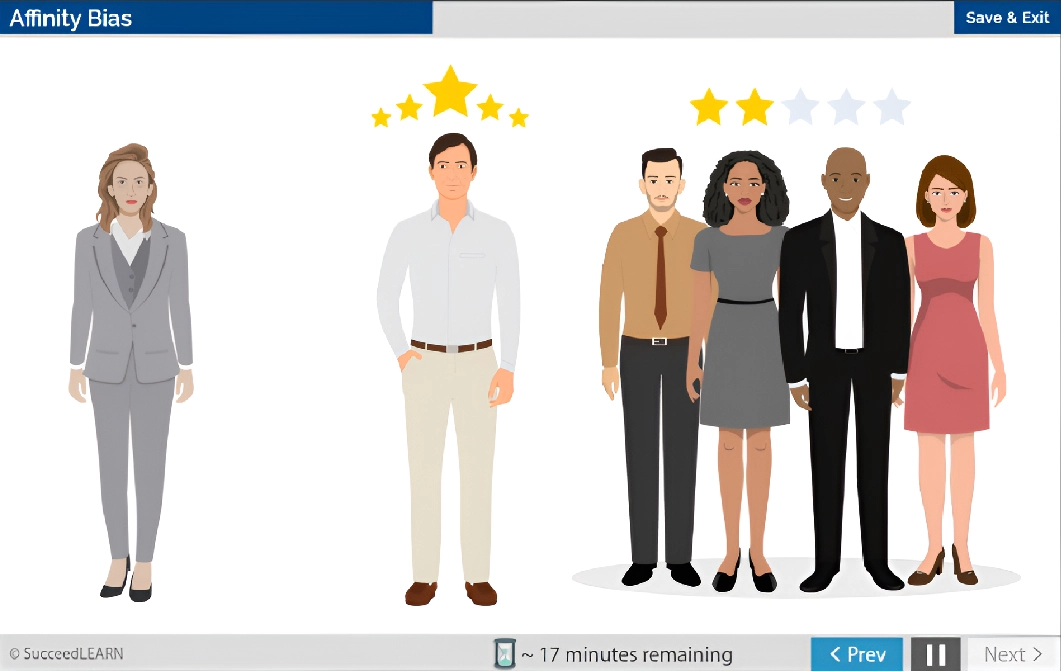
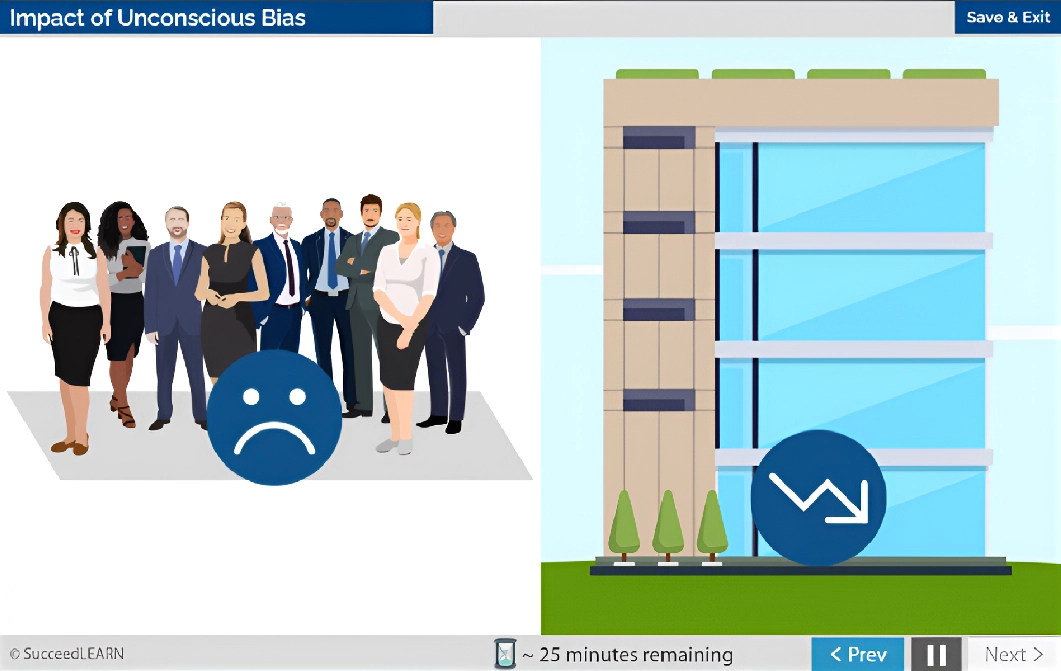
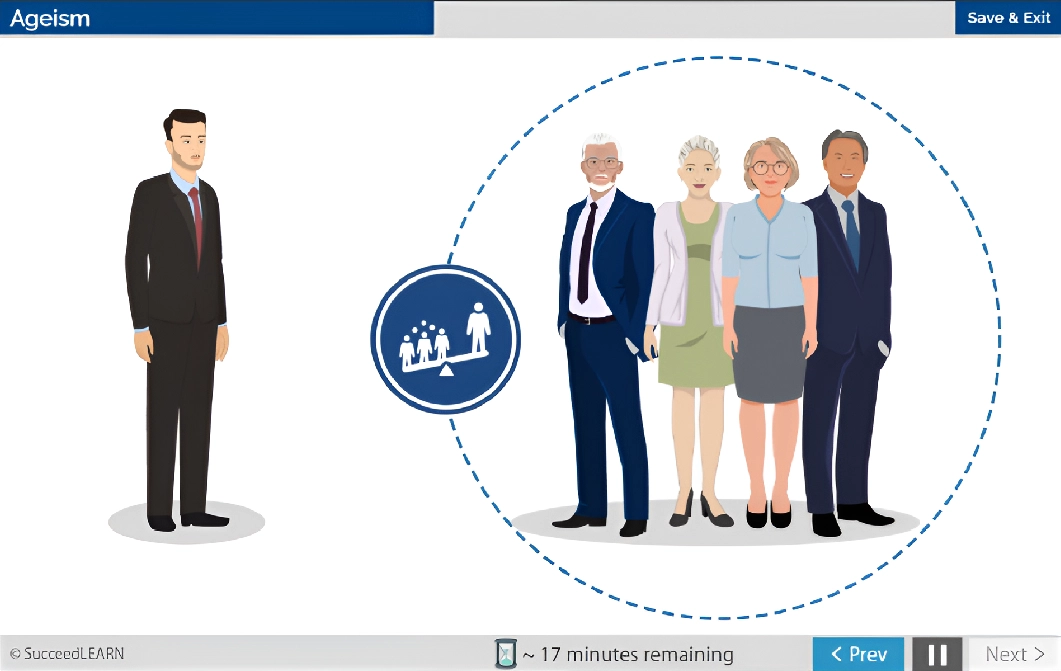

Course Structure
Learning elements
Format & accessibility
The platform offers fully responsive design across desktop, tablet, and mobile, along with a learner dashboard, progress tracking, employee reminders, and seamless integration with your existing systems.
Certificate
On successful completion and passing the assessment, learners can generate a completion certificate as proof of training (configurable per org).
Target Audience
From small, everyday choices of employees to major decisions made by managers that shape business outcomes, unconscious bias can quietly influence judgment at every level. This course helps employees recognize and correct these hidden biases, leading to fairer decisions and stronger, more effective organizational results.
The Unconscious Bias training applies to:
- HR teams and recruiters – to support unbiased recruitment, talent management, succession planning, and workplace investigations.
- Senior leadership and executives – to champion an inclusive culture, reduce organisational risk, and ensure diversity goals translate into real behaviour.
- Customer-facing staff – to prevent biased interactions that may harm client experience or create reputational or legal exposure.
- Compliance, Legal, Ethics & DEI teams – to meet regulatory expectations, reduce discrimination risks, and build a consistent inclusion framework.
- Global and cross-functional teams – to align behaviour across cultures, minimise misinterpretation, and strengthen collaboration.
- New hires and onboarding cohorts – to set expectations early and create consistent standards from day one.
In short, for employees across all levels to build awareness of everyday biases that affect teamwork, communication, and decision-making.
Case Studies: Real Consequences of Non-Compliance
Inequality and discrimination in the workplace often stem from unconscious biases - automatic assumptions and stereotypes that influence decisions without employees even realising it. When these hidden biases shape hiring, promotions, feedback, or daily interactions, they can unintentionally create unfair treatment and unequal opportunities for certain groups, further leading to serious setbacks to the firm.
The following are some examples:
- Google – Gender Bias Class Action (U.S.)
- Case: Ellis v. Google LLC
- Issue: Women were allegedly underpaid and placed in lower job levels compared to men.
- Outcome: Google agreed to a $118 million settlement in 2022.
- Reputational Impact: Massive global coverage highlighting systemic bias in tech.
- Starbucks – Racial Bias Incident (U.S.)
- Case: While not a formal lawsuit, two Black men were wrongfully arrested in a Philadelphia Starbucks store in 2018.
- Outcome: Company settled privately with massive international backlash.
- Relevance: Incident was widely attributed to racial bias in staff decision-making.
- Consequence: Starbucks closed 8,000 stores for one day to conduct bias training.
Course Outline
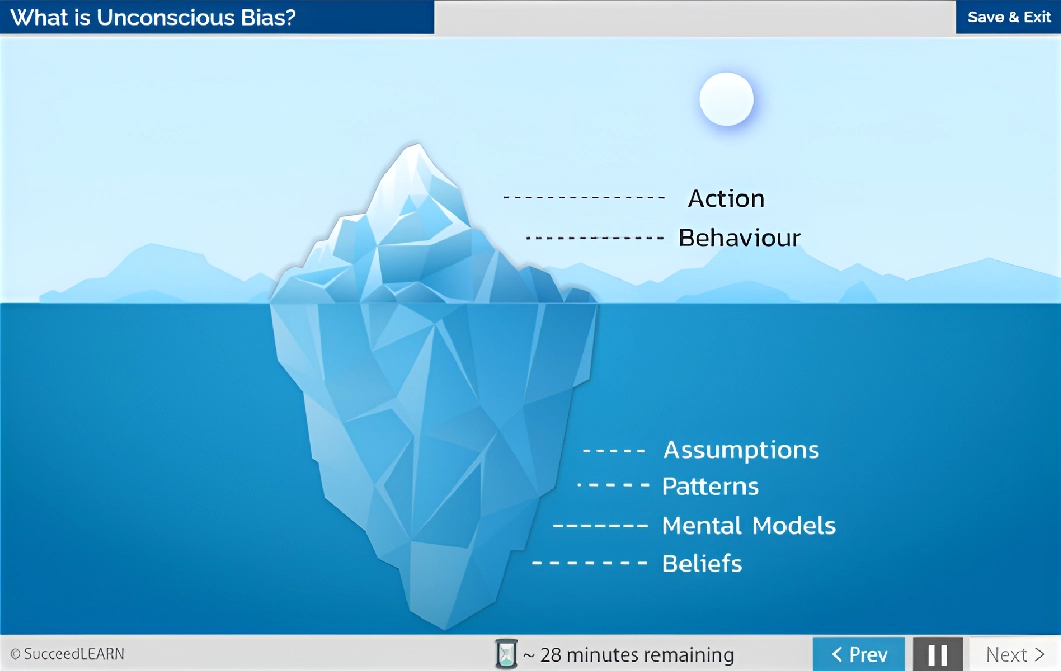
What is Unconscious Bias?
Impact of Unconscious Bias
Elements that contribute to Unconscious Bias
- Stereotypes
- Propinquity
Types of Unconscious Bias
Scenarios: All the types of biases are explained with the help of real-life scenarios.
Tips to prevent Unconscious Bias
See how Succeed will work for your Organization
Request a Demo
FAQs
Unconscious bias refers to automatic, unintentional assumptions or stereotypes that influence decisions and behaviour without conscious awareness.
The course provides an overview on how the brain conditionally functions and processes information and how the stereotypical decisions agitate the balance of the workplace. It also sensitizes on how crucial change in perceptions and fair mindset can quell any concern of the employees offering them an equitable and just work environment.
Unconscious biases affect how we perceive, evaluate, and interact with others, often without realizing it. Understanding these biases helps reduce unfair treatment, supports diverse talent, and improves decision-making, collaboration, and workplace culture.
The course is designed for employees at all levels, from individual contributors to senior leaders.
A Harvard Business Review article highlights how well-designed Unconscious Bias programs at companies like Microsoft and Starbucks helped employees move beyond denial, build empathy, expand diverse networks, and commit to lasting behavioral change.
Yes. The course uses relatable case studies and examples sensitizing you on consciously making decisions when it comes to a healthy workplace demeanor. There is also a practice activity where the participant is presented with a list of statements to identify the type of unconscious bias the statements portray.
For instance, a talent acquisition specialist, is hiring for a Cybersecurity role. Seeing mostly male applicants, he unconsciously assumes men are better suited for the job and overlooks female candidates; a bias that’s both unfair and could cost the organization a highly qualified expert.
A 50-year-old Product Manager, is overlooked for a key training program by his manager, who prefers a “young and energetic” employee instead. This age-biased decision is unfair, can demotivate the employee, and may lead older employees to feel undervalued or excluded.
Organizations that effectively address unconscious bias can gain a strong edge in attracting talent, fostering innovation, and understanding diverse markets while cultivating inclusive cultures that enhance employee engagement and retention.
For instance, GoDaddy has demonstrated a strong commitment to ensuring that all employees are paid and treated fairly. The company actively works to minimize unconscious bias throughout the organization, particularly in recruitment, performance evaluations, and career progression.
Reflecting this effort, GoDaddy’s 2020 Diversity Report and 2020 Global Salary Data revealed that women in technical roles earned one cent more on the dollar than men, while in non-technical roles, women earned equal pay to their male counterparts.
And in 2020, ethnic minorities comprised 34% of GoDaddy’s U.S. workforce (which was 1 percentage point above 2019) as emphasized in these articles -
GoDaddy Inc. - GoDaddy Releases 2020 Diversity and Salary Data
The course is available in English by default, but it can be tailored to suit your preferred language.
The course typically takes about 30 minutes to complete, depending on the learner’s pace and level of interaction with course activities and reflections.
Yes. The module usually includes short knowledge checks and a final quiz to test understanding and reinforce key learning points. A minimum passing score of 80% is required to complete the training.
Yes. The participant will receive a Course completion Certificate.
The course emphasizes that everyone has biases, regardless of nationality or culture, making the topic inclusive and relatable worldwide. It promotes inclusive communication, curiosity about other cultures, and strategies to mitigate bias in global teamwork and decision-making.
The delivery is fully flexible. If you have an in-house LMS, we can provide the course as a SCORM-compliant package. If not, we offer a seamless SaaS-based hosting option for easy access and deployment.